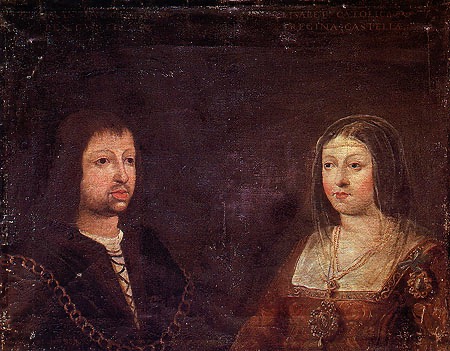
History often struggles to place women who rule openly. When power is exercised without disguise, without standing behind a husband or a son, it unsettles expectations. Isabella of Castile does not fit easily into the category of women “behind” the throne—because she sat on it. And yet, her story belongs in this series precisely because she ruled in a world that did not imagine women as sovereign architects of states.
This is Part Four of Women Behind the Throne, following Eleanor of Aquitaine and Madame de Pompadour, and turning to a woman who transformed influence into formal authority.
A Queen Who Refused to Be Secondary
Isabella was not raised with the certainty of power. Her early life unfolded on the margins of court politics, shaped by uncertainty, rivalry, and the constant threat of being sidelined. When she claimed the throne of Castile, she did so not as a passive inheritor, but as a woman who understood that legitimacy had to be asserted, defended, and performed.
Her marriage to Ferdinand of Aragon has often been remembered as a partnership of equals. In reality, it was a carefully negotiated balance of power. Isabella ensured that Castile remained hers to govern, not a territory absorbed by her husband. Coins bore both their images, but Castilian authority bore her imprint.
She ruled not as a consort, but as a sovereign.
Power as Order, Not Compromise
Unlike Catherine de’ Medici, who ruled through mediation, or Madame de Pompadour, who ruled through access, Isabella ruled through consolidation. Her vision of power was uncompromising. She believed stability required unity—of faith, law, and crown. This belief shaped every major decision of her reign.
Under her authority, the Spanish monarchy moved toward centralization. Nobles were restrained, institutions strengthened, and royal authority made visible and unavoidable. Isabella did not soften power. She clarified it.
Yet clarity came at a cost.
Faith as a Political Instrument
Religion was not merely personal conviction for Isabella; it was a tool of governance. She saw religious unity as inseparable from political order. This conviction placed her at the center of some of the most consequential and controversial actions of early modern Europe.
The establishment of the Inquisition and the expulsion of Jews and Muslims were not moments of passion, but of policy. They reveal a ruler willing to sacrifice diversity for cohesion, mercy for control. Isabella did not act in ignorance of the suffering caused. She acted in pursuit of a vision she believed essential for the survival of the state.
This is where her legacy fractures. She is both founder and destroyer, architect and enforcer.
The World Expands Under Her Reign
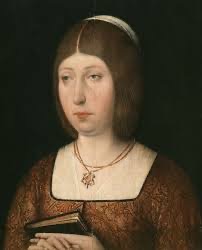
In 1492, the year that marked the fall of Granada and the consolidation of Christian rule in Iberia, Isabella made another decision whose consequences would echo far beyond her lifetime. She supported Christopher Columbus not out of romantic curiosity, but strategic calculation. Expansion promised wealth, prestige, and divine justification.
With that decision, the world changed.
The Spanish empire was born not solely from ambition, but from Isabella’s conviction that Castile’s destiny extended beyond Europe. She would never see the full scope of what followed. But the direction was unmistakably hers.
A Woman Judged by Extremes
Isabella of Castile is often remembered in absolutes. To some, she is a saintly ruler, defender of faith, and mother of a nation. To others, she is the embodiment of intolerance, whose policies paved the way for persecution and conquest.
Both images are incomplete.
What emerges more clearly is a woman who understood power as responsibility rather than privilege. She did not rule to influence men behind curtains. She ruled to impose structure on a fragmented world. Where others hesitated, she decided. Where compromise beckoned, she insisted.
She did not ask whether a woman should rule. She ruled.
What Remains After Isabella
Isabella of Castile reshaped Spain and altered the trajectory of global history. She did not merely inherit a crown—she defined what it meant to wield one. Her reign marks a turning point between medieval sovereignty and the early modern state.
In a series about women behind the throne, Isabella stands as a deliberate disruption. She reminds us that the boundary between influence and authority is neither fixed nor natural. Some women rule from shadows. Others step fully into the light.
And history, uncomfortable with both, continues to struggle with what to do with them.
- Христо Кръстев: сред победителите във въздушния бой на 1 август 1943 г.

- Петър Бочев: последният полет на един български летец

- Стоян Стоянов: защитникът на София, който стана екскурзовод в Рилския манастир

- Чудомир Топлодолски: от защитник на българското небе до строител на стадион „Васил Левски“

- Жените до трона: Кераца Петрица – майката на Йоан Александър, до която писа папата
- Българските земи през 1437 година: разказът на един баварски бенедиктински монах
Вашият коментар