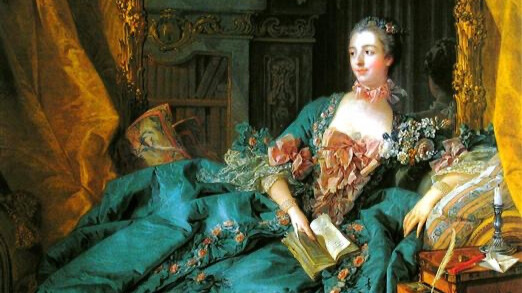
Power does not always sit on a throne. Sometimes it leans against it, speaks softly beside it, and reshapes an entire era without ever claiming authority in name. Jeanne-Antoinette Poisson, known to history as Madame de Pompadour, never ruled a kingdom. Yet for nearly two decades, France moved to a rhythm she helped set.
This is Part Three of the series Women Behind the Throne, following Eleanor of Aquitaine and continuing our exploration of women who shaped power without ruling in name.
A Woman Not Born to Power
Madame de Pompadour did not enter history through inheritance or marriage into royalty. She was born outside the aristocratic order, in a society where birth defined destiny with brutal clarity. What set her apart was not lineage, but preparation. From an early age, she was educated with unusual care, trained to converse, to charm, to read the moods of men who believed themselves superior.
She learned early that access mattered more than titles.
When she entered the orbit of Louis XV, it was not as a passive ornament. She arrived with awareness, ambition, and an instinctive understanding of court dynamics. Her rise was swift, but not accidental. The court saw another royal favorite. What it failed to see was a woman who understood power as a system, not a privilege.
The Favorite Who Refused to Be Disposable
Royal favorites were meant to be temporary. Desired, enjoyed, and then replaced. Madame de Pompadour understood this rule—and broke it.
When her romantic relationship with the king ended, she did not disappear. She remained. Not as a lover, but as an indispensable presence. She reshaped her role from intimacy to influence, proving that access did not require desire to remain effective.
She became advisor, confidante, and political buffer. Ministers came and went. Policies shifted. Wars were lost and won. Through it all, she stayed.
Her enemies underestimated her because she lacked official authority. That mistake cost them dearly.
Power Without a Crown
Madame de Pompadour’s strength lay in mediation. She softened the king’s indecision, filtered demands, and controlled access. In a court obsessed with proximity, she was the gatekeeper. Decisions passed through her presence before reaching the monarch’s ear.
She did not command armies or sign treaties. Yet she influenced appointments, supported alliances, and shaped France’s political direction during a volatile period. Those who dismissed her as merely decorative misunderstood the nature of influence itself.
She governed not through decree, but through continuity.
Culture as Political Strategy
Where others ruled through fear, Madame de Pompadour ruled through culture. She understood that power was also spectacle, taste, and image. Under her patronage, art, architecture, and philosophy flourished. She supported artists, philosophers, and architects, turning culture into a language of authority.
This was not indulgence. It was strategy.
By defining taste, she defined legitimacy. By shaping the image of the court, she shaped how France imagined itself. Even critics who despised her influence could not escape the world she helped create.
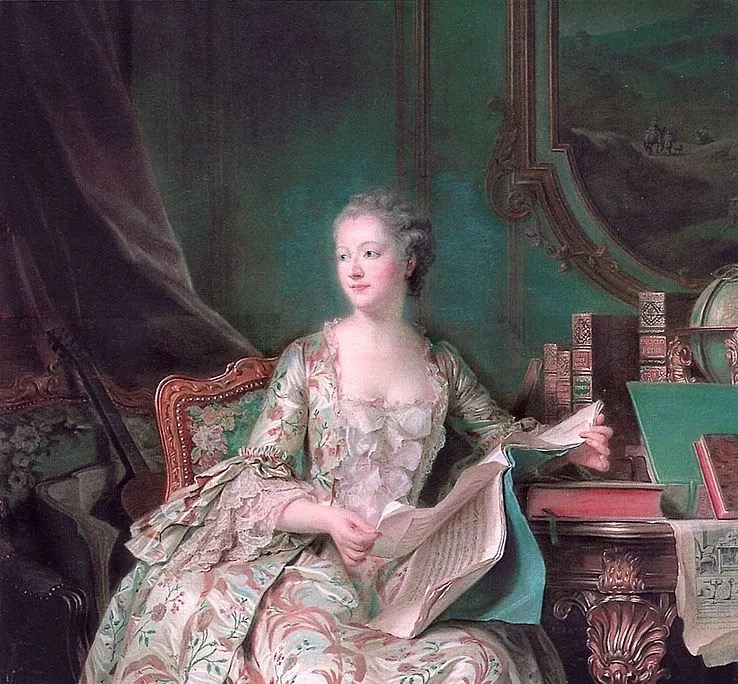
A Woman Under Constant Attack
Madame de Pompadour paid dearly for her position. Pamphlets mocked her origins. Courtiers questioned her morality. Nobles resented her access. The hostility was relentless and deeply gendered.
A man exercising similar influence would have been called powerful. She was called dangerous.
Yet she endured. Not by confrontation, but by presence. She absorbed attacks without retreat, understanding that survival at court depended not on purity, but on resilience.
The Cost of Influence
Her health suffered. The strain of constant vigilance, criticism, and responsibility wore her down. Unlike queens protected by ritual and tradition, Madame de Pompadour stood exposed. Her authority depended entirely on her ability to remain useful. And she did. Until the end.
What Remains After Madame de Pompadour
When she died, France did not collapse. But something shifted. The court lost its balance. The king lost his anchor. Her absence revealed how much of the system had quietly relied on her presence.
Madame de Pompadour was never meant to rule. History had no category ready for her. She was neither queen nor regent, neither mother of kings nor wife of rulers. Yet she stands among the most influential women in European history. Not because she held power. But because she understood it.
- Христо Кръстев: сред победителите във въздушния бой на 1 август 1943 г.

- Петър Бочев: последният полет на един български летец

- Стоян Стоянов: защитникът на София, който стана екскурзовод в Рилския манастир

- Чудомир Топлодолски: от защитник на българското небе до строител на стадион „Васил Левски“

- Жените до трона: Кераца Петрица – майката на Йоан Александър, до която писа папата

- Българските земи през 1437 година: разказът на един баварски бенедиктински монах
Вашият коментар