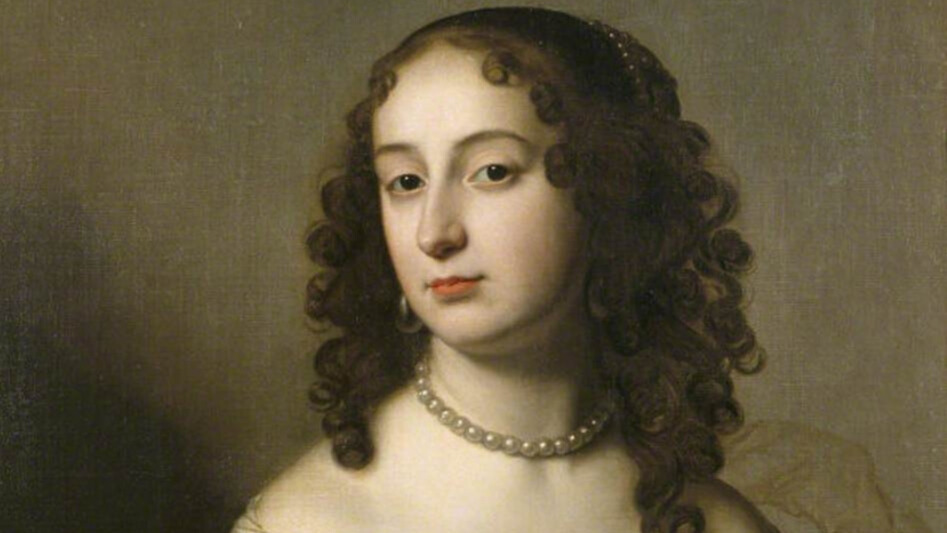
This is Part Ten of the series Women Behind the Throne, continuing our exploration of women who shaped monarchies not by ruling from the throne, but by preparing it for those who would follow. History is often cruel to women who come within reach of power only to miss it by a moment. Sophia of Hanover was born into exile, lived most of her life far from any crown, and died just weeks before she would have become Queen of Great Britain. And yet, no modern British monarch reigns without passing through her.
Sophia never wore a crown. She never ruled a kingdom. But the future of the British monarchy was legally and deliberately rebuilt around her body and her bloodline. In a series devoted to women behind the throne, Sophia of Hanover represents one of the clearest truths of dynastic power: sometimes the most decisive figure is the one who never reigns at all.
Born Into Loss and Exile
Sophia was born in 1630 in The Hague, far from the lands her family had lost. Her parents were Frederick V of the Palatinate and Elizabeth Stuart, daughter of King James I of England. Once hailed as King and Queen of Bohemia, they were swiftly overthrown and reduced to wandering royalty—symbols of a Protestant cause defeated by Catholic power during the Thirty Years’ War.
Sophia’s childhood was shaped by displacement, insecurity, and the quiet education of survival. She grew up among exiles, scholars, and diplomats, absorbing languages, ideas, and a deep understanding of political fragility. From an early age, she learned that crowns could vanish, that legitimacy could be contested, and that survival often depended on adaptability rather than force.
This early instability forged a woman of unusual intellectual resilience.
Marriage Without Illusion
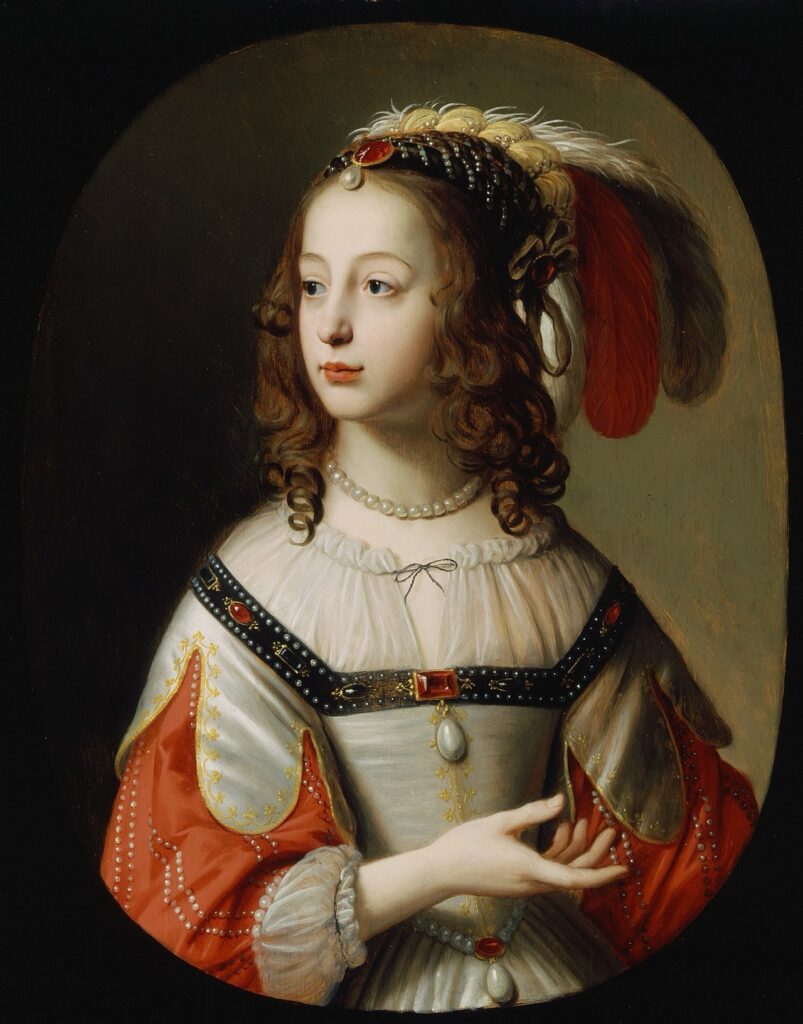
Sophia’s marriage to Ernest Augustus of Brunswick-Lüneburg was not a fairy tale, nor was it a simple dynastic bargain. It was a partnership built on mutual ambition and political realism. Ernest Augustus was not born an elector; that dignity was achieved later, through careful alignment and imperial favor. Sophia understood precisely what was at stake.
As Electress consort of Hanover, she did not dominate the public stage. Her influence operated through correspondence, patronage, and the careful cultivation of alliances. She was deeply involved in shaping the cultural and intellectual life of Hanover, transforming it into a court known for learning rather than spectacle.
Her friendship with Gottfried Wilhelm Leibniz was not decorative. Their correspondence reveals a woman deeply engaged with philosophy, theology, and political theory. Sophia was not merely adjacent to power; she understood it.
Preparing a Dynasty
Sophia’s greatest act of historical significance was not performed in Hanover, but in London—without her ever setting foot there as ruler. As the Stuart line weakened and religious tensions intensified, England faced a familiar fear: the return of a Catholic monarch.
The solution chosen by Parliament was radical in its clarity. In the Act of Settlement of 1701, the English crown was deliberately removed from closer Catholic claimants and reassigned to Sophia of Hanover and her Protestant heirs. This was not sentiment. It was strategy.
Sophia became heir presumptive not because she demanded it, but because she embodied what the state required: Protestant legitimacy, dynastic continuity, and distance from civil war. At seventy years of age, she was transformed into the keystone of Britain’s future.
She did not campaign for the throne. She prepared herself for it.
Power at a Distance
Unlike many women in this series, Sophia never stood physically close to the throne she shaped. Queen Anne, deeply suspicious and insecure, refused to allow Sophia into England, fearing a rival court forming around her. The irony is striking: the woman chosen to secure the future of the monarchy was kept at arm’s length by the monarch she was destined to replace.
Sophia waited.
She remained active, alert, and politically aware into her eighties. She followed parliamentary developments closely, corresponded with English statesmen, and ensured that her son George was prepared to assume the role fate had assigned him. She understood that her own reign, if it came, would be brief. What mattered was continuity.
This was dynastic thinking at its most disciplined.
Death on the Threshold
In June 1714, Sophia collapsed while walking in the gardens of Herrenhausen. She died at the age of eighty-three—healthy, alert, and painfully close to her destiny. Less than two months later, Queen Anne died, and the crown passed to Sophia’s son, George I.
Sophia had missed the throne by weeks. Yet the monarchy she created endured.
From that moment onward, the British crown became legally defined by descent from her. Every reigning monarch since has inherited not only her bloodline, but the political decision that placed stability above proximity.
What Sophia of Hanover Represents
Sophia of Hanover never ruled, never crossed the Channel as queen, and never wore a crown. Yet her role in shaping the British monarchy was decisive and lasting. Her story follows naturally after that of Madame de Maintenon—another woman whose power existed without formal authority, whose influence was real precisely because it remained unofficial. Together, their lives reveal a recurring pattern in this series: the throne is often shaped not by those who sit upon it, but by those who prepare it, guard it, or stand just close enough to ensure its survival.
- Открадната история: Операция „МАРАТОН“ и кражбата на „История славянобългарска“
- Открадната история: Как от Лувъра изчезнаха бижута за 88 милиона евро за 8 минути

- Открадната история: редки книги за 3,2 милиона долара, сред които първи издания на Галилей и Нютон, са открити в къща в Румъния
- Открадната история: нюйоркски колекционер връща 180 артефакта от 11 държави на стойност 70 милиона долара
- Христо Кръстев: сред победителите във въздушния бой на 1 август 1943 г.

- Петър Бочев: последният полет на един български летец

Вашият коментар