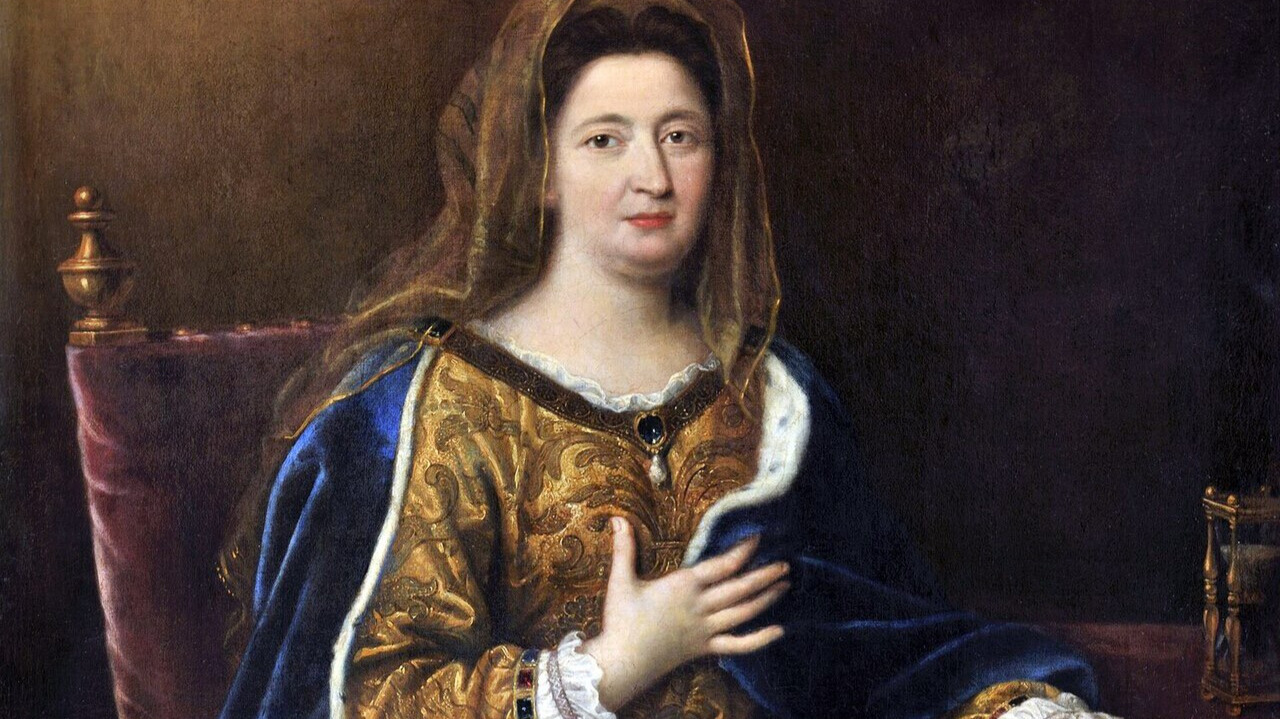
This is Part Nine of the series Women Behind the Throne, focusing on Madame de Maintenon and continuing our exploration of women whose power was exercised not through crowns or titles, but through endurance, proximity, and influence in the most restricted spaces of power.
A Wife Without a Crown
Françoise d’Aubigné occupies one of the most paradoxical positions in European royal history. She was married to the most powerful monarch of her age, Louis XIV of France, yet she was never queen. There was no coronation, no public recognition, no official title beyond that of Marquise de Maintenon. Her marriage to the Sun King was secret, unequal, and deliberately invisible. And yet, for more than three decades, she stood closer to the center of power than almost anyone in France.
Maintenon’s story is not one of sudden elevation, but of gradual, improbable ascent. Born into poverty, shaped by instability, and trained in survival rather than ambition, she did not set out to rule. She learned instead how to endure—how to observe, adapt, and remain indispensable in a world where women were expected to be either decorative or disposable.
From Margins to Court
Françoise d’Aubigné’s early life offered no hint of royal destiny. She was born into a family marked by religious division, imprisonment, and financial ruin. Her childhood moved between confinement and neglect, between Protestant discipline and Catholic conversion, leaving her with little security but considerable emotional intelligence. Education, when it came, was limited and often harsh, but it taught her restraint, literacy, and—most importantly—the ability to listen.
Her first marriage, to the poet Paul Scarron, was not a love match but a doorway. Through him, she entered Parisian intellectual society, learning how conversation, wit, and discretion could open doors that birth and fortune had closed. When Scarron died, she was once again vulnerable, surviving on pensions and favors, always one step away from obscurity.
What changed her fate was not romance, but usefulness.
Governess to the King’s Secrets
Françoise’s true entry into royal life came through Madame de Montespan, the powerful mistress of Louis XIV. Tasked with raising the king’s illegitimate children, Françoise proved herself competent, discreet, and morally serious. She did not exploit her position, nor did she scandalize. She created order where there had been secrecy, and stability where there had been chaos.
Louis XIV noticed.
As governess to his children, Françoise gained something far more valuable than favor: access. She was allowed to speak to the king honestly. She was trusted with what others were forbidden to see. In a court defined by performance and flattery, her gravity and restraint stood out. Slowly, almost imperceptibly, she replaced spectacle with counsel.
By the late 1670s, she had supplanted Montespan not as a mistress, but as a presence. She did not compete in beauty or charm. She offered something rarer: calm, conscience, and continuity.
Marriage Without Recognition
After the death of Queen Maria Theresa in 1683, Louis XIV married Françoise in a private ceremony. The marriage was morganatic—unequal by law and custom—and intentionally secret. Françoise did not become queen. She gained no public authority, no ceremonial role, no legal standing as consort.
This was not an accident. It was the condition of her power.
As a queen, she would have been scrutinized, constrained, and politically vulnerable. As a wife without a crown, she could advise without ruling, influence without accountability, and remain beyond the reach of factional attack. Her apartments were near the king’s. Her voice was heard daily. Her counsel shaped his habits, his faith, and his private decisions.
She ruled nothing officially. She shaped everything quietly.
Power Through Piety
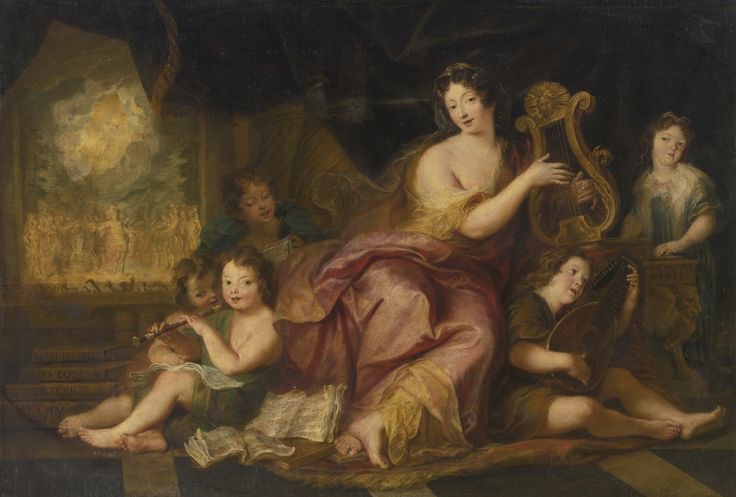
Maintenon’s influence over Louis XIV was moral rather than legislative. Under her presence, the king abandoned open mistresses and embraced a more austere, religious court culture. She encouraged discipline, restraint, and a vision of monarchy rooted in duty rather than pleasure. To admirers, she was a stabilizing force. To critics, she was an agent of repression.
History has often blamed her for policies she did not formally enact, particularly the harsh measures taken against Protestants. Yet the record shows a woman acutely aware of her vulnerability—one who avoided overt political intervention precisely because her authority was unofficial. Her power lay not in issuing commands, but in shaping the king’s conscience.
In a court obsessed with appearances, Maintenon mastered invisibility.
Education as Legacy
If Maintenon’s political role remains contested, her educational legacy is not. The founding of the Maison royale de Saint-Louis at Saint-Cyr revealed her deepest convictions: that discipline and education could shape character, and that women of impoverished nobility deserved preparation for life beyond marriage or the convent.
Saint-Cyr was not a radical institution, but it was a modern one. It emphasized literacy, moral reasoning, and practical skills. In a society that treated female education as ornamental, Maintenon insisted on seriousness. This, more than any court intrigue, became her enduring contribution.
She shaped minds rather than laws.
The Final Withdrawal
After Louis XIV’s death in 1715, Maintenon did not attempt to retain influence. She withdrew to Saint-Cyr, declining political involvement and refusing to become a symbol of the past regime. Her final years were marked by reflection, correspondence, and controlled distance from power.
She died in 1719, having survived poverty, scandal, court intrigue, and one of the longest reigns in European history.
What Madame de Maintenon Represents
Madame de Maintenon was never Queen of France. That absence defines her place in history. She was a wife without a crown, a counsellor without office, and a power that never needed formal recognition. Her influence existed in proximity, routine, and trust—quiet, persistent, and deeply personal. In this sense, she follows naturally after Catherine of Braganza, another woman whose authority was shaped not by public rule, but by endurance and restraint. Together, their stories reveal a recurring truth of this series: that some of the most decisive forms of power in history belonged to women who never sat on the throne, yet stood close enough to shape it.
- Открадната история: Операция „МАРАТОН“ и кражбата на „История славянобългарска“

- Открадната история: Как от Лувъра изчезнаха бижута за 88 милиона евро за 8 минути

- Открадната история: редки книги за 3,2 милиона долара, сред които първи издания на Галилей и Нютон, са открити в къща в Румъния
- Открадната история: нюйоркски колекционер връща 180 артефакта от 11 държави на стойност 70 милиона долара

- Христо Кръстев: сред победителите във въздушния бой на 1 август 1943 г.

- Петър Бочев: последният полет на един български летец

Вашият коментар