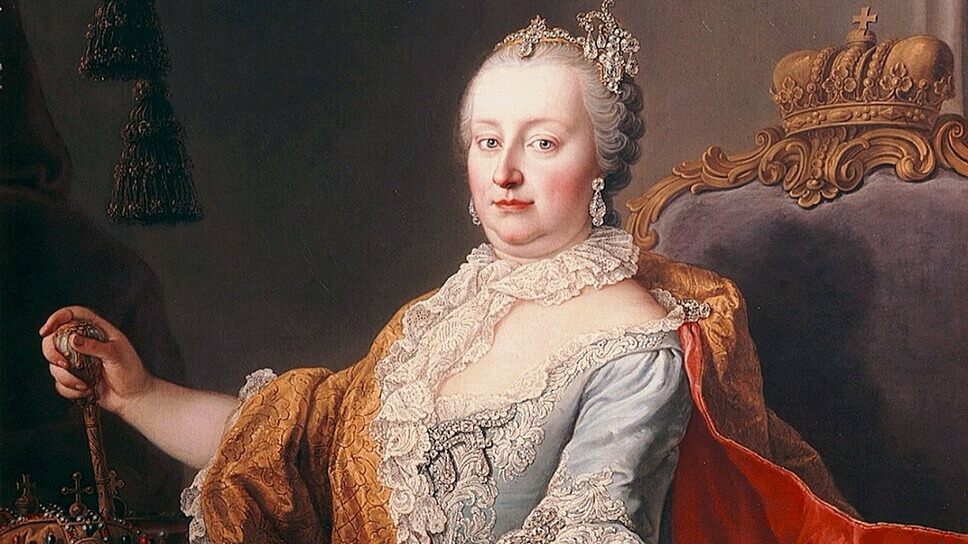
History rarely forgives women who inherit power rather than seize it. When authority is passed to a woman by law, blood, or necessity, it is often treated as an error to be corrected. Maria Theresa of Austria ruled in precisely such a moment—when the world believed her crown was a mistake, temporary at best, disastrous at worst.
This is Part Five of Women Behind the Throne, following Isabella of Castile, and continuing the exploration of women who shaped power not by standing formally above men, but by enduring systems built to exclude them.
An Inheritance No One Wanted Her to Keep
Maria Theresa did not rise through intrigue or calculated ambition. She inherited the Habsburg lands because there was no male heir. The Pragmatic Sanction permitted her succession, but legality did not guarantee acceptance. From the first days of her reign, her authority was questioned, contested, and openly challenged.
Foreign powers moved swiftly. Allies turned into rivals. Territories were invaded under the assumption that a young woman—newly married and pregnant—could not possibly defend an empire. Maria Theresa was expected to negotiate away her inheritance, to retreat behind a male figurehead, or to fail.
She did none of these things.
Instead, she remained, insisting on her legitimacy through persistence rather than proclamation.
Authority Without the Imperial Title
Formally, Maria Theresa never bore the title of Holy Roman Empress. That dignity belonged to her husband, Francis Stephen, elected emperor in 1745. Yet political reality diverged sharply from ceremonial hierarchy. It was Maria Theresa who governed the Habsburg realms, issued decrees, shaped policy, and dominated final decisions.
Her authority did not rely on symbolism. It was reinforced through constant presence, administrative control, and an unrelenting sense of responsibility. Power, for Maria Theresa, was not declared—it was exercised daily until resistance lost its momentum.
Her reign unfolded amid war, reform, and personal strain. She governed while enduring repeated pregnancies, chronic illness, and political isolation. Motherhood did not soften her authority. It anchored it.
War as a Test of Legitimacy
The wars that defined the early years of her reign were not merely conflicts over territory. They were judgments. Each invasion questioned whether a woman could rule.
Maria Theresa answered not through military brilliance, but through endurance and political resolve. She refused to abandon her lands. She appealed directly to loyalty rather than ideology. Her address to the Hungarian nobility—delivered while visibly pregnant—became one of the most emblematic moments of her reign.
She did not promise conquest. She promised continuity.
Reform as an Instrument of Control
Once immediate threats were contained, Maria Theresa turned inward. She understood that an empire fractured by privilege and regional autonomy could not survive sustained pressure. Reform, for her, was not philosophical enlightenment—it was discipline.
She centralized administration, restructured taxation, and curtailed the political independence of the nobility. Education became a state responsibility. Military organization was professionalized. The church was placed under firmer state supervision.
These reforms were often severe. Tolerance was limited. Efficiency mattered more than compassion. Yet the result was a more coherent, resilient state—capable of surviving beyond her lifetime.
Maria Theresa – Tradition and Modernity
Maria Theresa occupied a transitional space between worlds. She was deeply religious, socially conservative, and emotionally intense. At the same time, she laid foundations for rational governance and bureaucratic modernity.
She distrusted radical thinkers but embraced empirical administration. She rejected philosophical abstraction while accepting structural change. Her reign resists easy categorization, which is precisely why it endured.
Unlike rulers obsessed with personal legacy, Maria Theresa built institutional continuity.
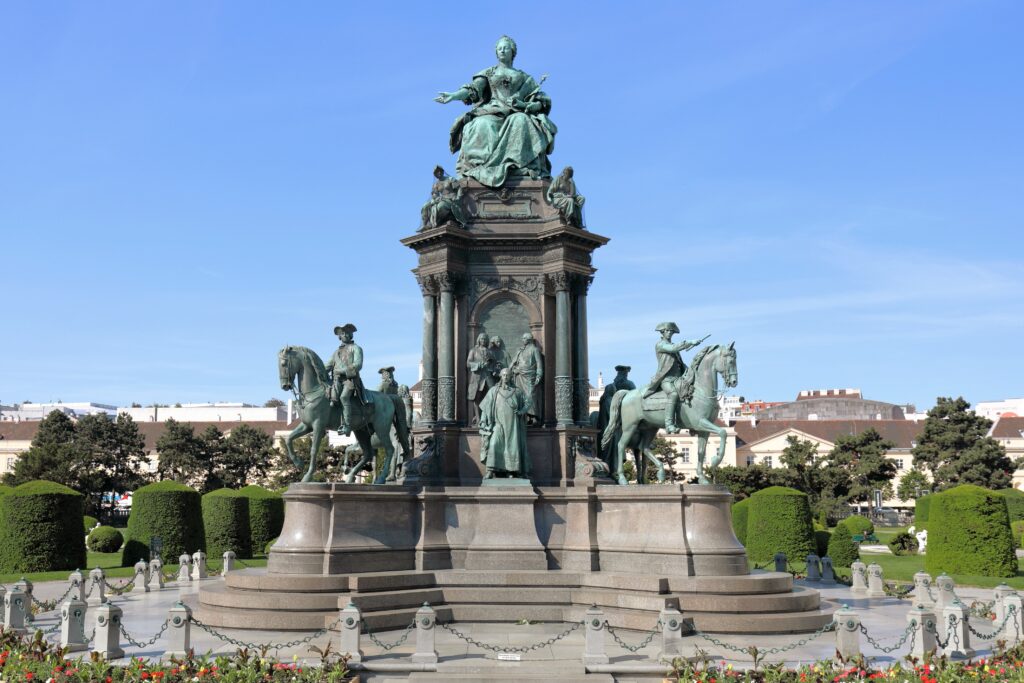
Legacy Without Illusion
History has treated Maria Theresa more generously than many women of power. She is remembered as a stabilizing force, a reformer, a maternal figure for an empire. Yet even this praise risks simplifying her complexity.
She was not gentle. She was not tolerant by modern standards. She governed with conviction, believing that mercy without order invited collapse.
Within a series devoted to women behind the throne, Maria Theresa occupies a pivotal position. She ruled without the highest ceremonial title, without universal acceptance, and without mythologized charm. Her authority rested on stamina.
She did not dazzle history.
She outlasted it.
- Христо Кръстев: сред победителите във въздушния бой на 1 август 1943 г.
- Петър Бочев: последният полет на един български летец

- Стоян Стоянов: защитникът на София, който стана екскурзовод в Рилския манастир
- Чудомир Топлодолски: от защитник на българското небе до строител на стадион „Васил Левски“
- Жените до трона: Кераца Петрица – майката на Йоан Александър, до която писа папата
- Българските земи през 1437 година: разказът на един баварски бенедиктински монах
Вашият коментар