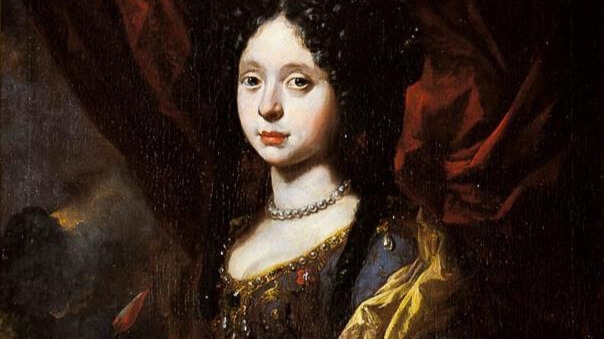
On the night of 9 July 1737, Florence did not echo with tolling bells. There was no grand funeral, no solemn farewell. In silence died Gian Gastone de’ Medici, the last male heir of one of the most powerful families in European history. With him ended more than three centuries of rule, intrigue, cultural brilliance, and political sin. The Medici—who had shaped Florence into what it was—no longer governed it. But the story was not over. For standing in the shadow of this ending was a woman history rarely speaks of loudly. Anna Maria Luisa de’ Medici – Gian Gastone’s sister, the last of her line. Not a crowned ruler, not a general, not a reformer. And yet, the fate of Florence rested in her hands.
The end of a dynasty and the fear of emptiness
Gian Gastone’s death was more than a biological end. It was a symbolic collapse. The rule of Tuscany was to pass into other hands, a decision already made far from Florence. Europe’s great powers had agreed that authority would transfer to the House of Lorraine, a dynasty closely tied to Austria.
For the people of Florence, this meant more than new rulers. It meant danger. In the eighteenth century, a change of power was rarely gentle. Palaces were emptied, collections dispersed, art transported elsewhere. Culture followed power, not place. What was not anchored to the ground could vanish forever.
Florence knew what it stood to lose. The city was built not only of stone but of images, forms, books, and spaces shaped and guarded over generations. All of it now stood on the edge.
A family that believed in beauty
The Medici were never ordinary rulers. From the beginning, they understood that true power was not only military or financial, but cultural. They turned Florence into a stage where art was not decoration but a language of authority.
Across centuries, the family gathered works not as spoils, but as testimony—of taste, ambition, and memory. The city slowly filled with ideas and forms that belonged not to a single person, but to an entire civilization. Without fully realizing it, the Medici created something unprecedented: a place where history walked the streets.
And it was precisely this inheritance that now seemed most vulnerable.
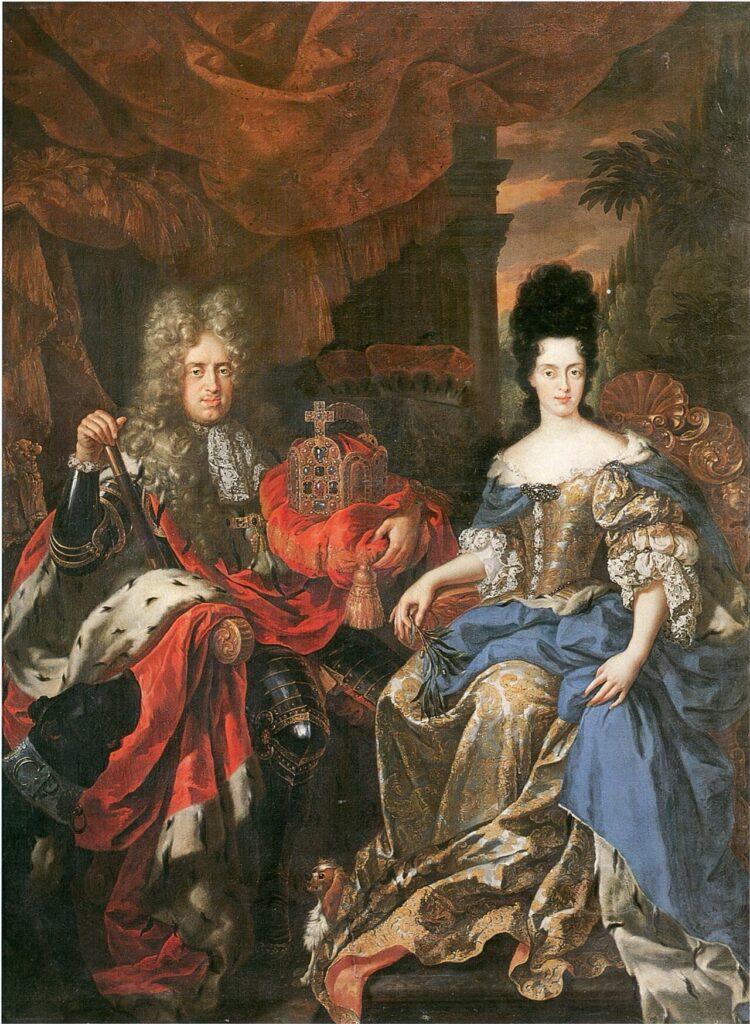
Anna Maria Luisa de’ Medici was not meant to decide—yet she did.
Anna Maria Luisa had not been prepared for this moment. Her life unfolded in the shadow of the men of her house—fathers, uncles, brothers. She commanded no armies and held no reins of government. But law and tradition granted her something else: the right to decide the fate of the Medici possessions.
That right placed her at the center of attention. Envoys appeared. Proposals were voiced carefully, but clearly. If she wished, she could sell the collections and become one of the richest women in Europe. If she remained silent, the new rulers would “sensibly” redistribute the legacy.
No one expected resistance. History rarely expects it from a woman without power.
The autumn when Florence held its breath
As 1737 drew to a close, tension grew within the city. Whispers spread of artworks that would be “temporarily relocated.” Of libraries that would be “better preserved” elsewhere. Florence sensed that it could be stripped—not physically, but spiritually.
On 31 October 1737, Anna Maria Luisa signed a document that spoke softly yet echoed across centuries. The Patto di Famiglia, the Family Pact, was not a declaration of authority, but an act of refusal. A refusal to sell. A refusal to gift. A refusal to allow.
With it, she transferred the entire Medici inheritance not to the new dynasty, but to Florence itself.
A document that did not belong to its time
The text of the Patto di Famiglia was extraordinary. It spoke neither of glory nor compensation, but of public benefit and the future. Art was defined not as personal property, but as ornament of the state and for the good of the people. It even acknowledged something we would today call cultural tourism—the attraction of foreign visitors.
Most crucially, it declared that nothing was ever to be removed from Florence or Tuscany.
In an age when rulers were considered owners of everything, this was a radical idea. Anna Maria Luisa did not merely protect her inheritance. She removed it from the logic of dynasties and placed it in the care of the city.
A city as heir
With a single signature, Florence became something new. No longer merely a capital, it became a guardian of memory. The collections remained where they had been created and understood. The spaces retained their integrity. The city was not fragmented, but preserved in time.
The new rulers accepted the pact with reluctance, yet could not ignore it. It was legal, explicit, and defensible. Florence survived not as a political power, but as a cultural heart.
Anna Maria Luisa de’ Medici and her silence
Anna Maria Luisa lived several more years. She sought neither recognition nor glory. She remained in the city she had saved and watched life continue. She died in 1743, without heirs, but not without legacy.
She was buried among her ancestors in the Medici Chapels—the final thread of a family that refused to let its memory be sold piece by piece.
A legacy without a name, yet with a face
Today, millions walk through Florence without knowing her name. They admire paintings, sculptures, and spaces they assume have always been there. Few realize that all of this is the result of a single word: no.
While Anna Maria Luisa de’ Medici chose to preserve Florence’s past, the life of Sophia of Hanover reveals how patient endurance can shape the future of Europe. Anna Maria Luisa de’ Medici was not an artist, nor a ruler. But she understood that some things must not be owned, only protected.
And that is why Florence is still Florence.
- Открадната история: Операция „МАРАТОН“ и кражбата на „История славянобългарска“
- Открадната история: Как от Лувъра изчезнаха бижута за 88 милиона евро за 8 минути
- Открадната история: редки книги за 3,2 милиона долара, сред които първи издания на Галилей и Нютон, са открити в къща в Румъния
- Открадната история: нюйоркски колекционер връща 180 артефакта от 11 държави на стойност 70 милиона долара
- Христо Кръстев: сред победителите във въздушния бой на 1 август 1943 г.

- Петър Бочев: последният полет на един български летец

Вашият коментар