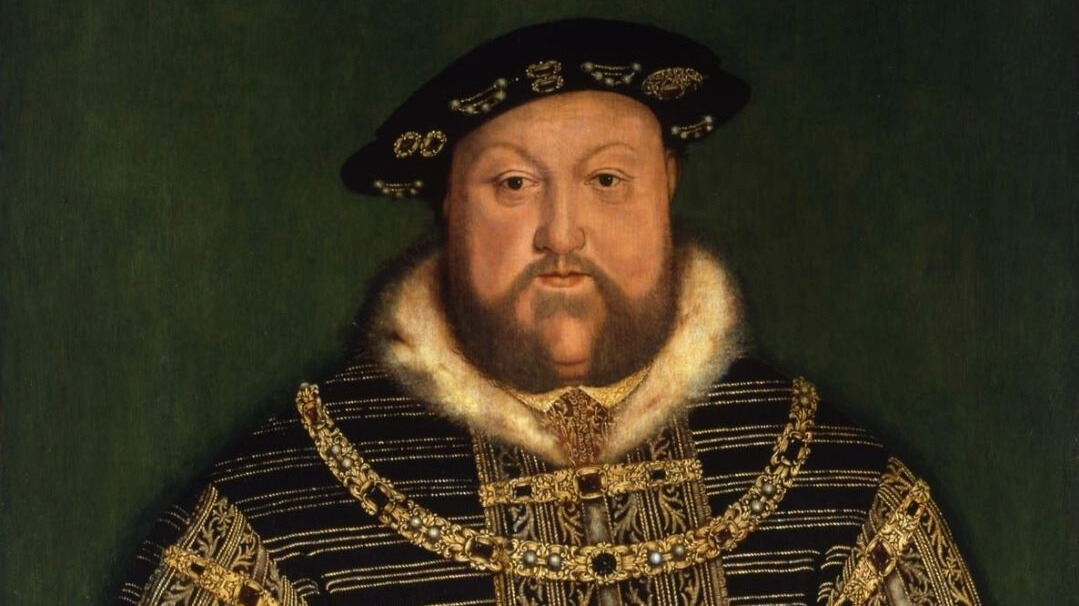
The death of Henry VIII marked not only the end of a powerful and turbulent reign, but also produced a series of coincidences so striking that they continue to fascinate historians centuries later. His final hours, the timing of his death, and the narrow escape of one of Tudor England’s most powerful nobles together form a story where fate, power, and chance collide.
A King in Decline
By January 1547, Henry VIII was only fifty-five years old, yet his body was broken by illness. Years of excess, jousting injuries, and chronic disease had left him obese, largely immobile, and in constant pain. Infected leg ulcers plagued him, and those closest to him knew that death was approaching.
Yet even as his health failed, Henry remained king in both name and action. Authority did not leave him until his final breath.
Henry’s Last Day on Earth
On the morning of 27 January 1547, Henry VIII heard his confessor and received holy communion. Gravely ill though he was, he continued to act as monarch.
Later that day, he discussed matters of state with his councillors. One of the last actions carried out in his name was the signing of a death warrant for Thomas Howard, 3rd Duke of Norfolk. The signature was applied by dry stamp, a mechanical device used when the king was too weak to sign himself. The execution was scheduled for the following day.
It would never take place.
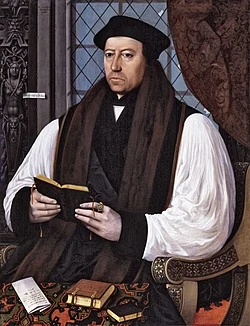
By evening, Henry’s condition worsened rapidly. His groom of the stool, Anthony Denny, urged him to prepare for death and seek God’s mercy. When asked whether he wished to speak to a learned man, Henry named Thomas Cranmer, Archbishop of Canterbury.
Yet when Denny moved to summon him, the king replied that he would sleep first and decide afterward.
Those were his last words.
By the time Cranmer arrived, Henry was beyond speech. He died around two o’clock in the morning on 28 January 1547.
A Death Marked by Coincidence
The date of Henry VIII’s death carries a haunting symbolism. 28 January was the birthday of his father, Henry VII, founder of the Tudor dynasty, who would have turned ninety that day.
The coincidence is striking: the king who inherited and expanded Tudor power died on the very day his father had been born.
The pattern of strange timing extends further. Henry’s mother, Elizabeth of York, died on 11 February 1503—also on her birthday. Queen, peacemaker, and the living symbol of the union between York and Lancaster, her life began and ended on the same date.
Such moments have long fueled the sense that the Tudors lived under a shadow of symbolic destiny.
A Very Lucky Man: Thomas Howard
No Tudor coincidence proved more consequential than that involving Thomas Howard, Duke of Norfolk.
Head of the powerful Howard family, Norfolk was uncle to Anne Boleyn and Catherine Howard, two queens who both lost their heads. For decades, he was one of the most influential figures in England—soldier, statesman, and councillor to the king.
By 1547, however, his fortunes had collapsed. He and his son, Henry Howard, Earl of Surrey, were accused of treason. Surrey was executed. Norfolk was stripped of his titles and imprisoned in the Tower of London.
His fate seemed sealed.
Henry VIII signed Norfolk’s death warrant by dry stamp, and the execution was fixed for 28 January 1547.
But Henry VIII died during the night before the sentence could be carried out. With the king’s death, the warrant lost its authority. It existed on paper—but without a living monarch, it was powerless.
Under the reign of Edward VI, Thomas Howard was released from the Tower and later restored to favour. He had survived a death sentence that was already signed, sealed, dated, and waiting.
Coincidence, Irony, or Fate?
These events read almost like a carefully written drama:
- a king dying on his father’s birthday,
- a queen dying on her own,
- a nobleman spared because death claimed the king first.
In Tudor England, power was absolute, life was fragile, and timing could determine whether a man lived or died. Sometimes history did not turn on great battles or bold decisions—but on a single night, a single breath, or a single moment too late.
Henry VIII’s last day on earth reminds us that even the most powerful ruler in England could not command time itself.
- Открадната история: Операция „МАРАТОН“ и кражбата на „История славянобългарска“

- Открадната история: Как от Лувъра изчезнаха бижута за 88 милиона евро за 8 минути

- Открадната история: редки книги за 3,2 милиона долара, сред които първи издания на Галилей и Нютон, са открити в къща в Румъния
- Открадната история: нюйоркски колекционер връща 180 артефакта от 11 държави на стойност 70 милиона долара

- Христо Кръстев: сред победителите във въздушния бой на 1 август 1943 г.

- Петър Бочев: последният полет на един български летец

Вашият коментар