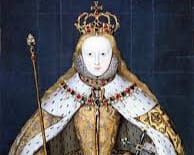
Elizabeth I (1533–1603): The Queen Who Forged a Nation
Elizabeth I is one of the most influential rulers in European history. On November 17, 1558, she ascended the English throne and reigned for more than 44 years, turning a country torn apart by religious conflict into a stable and prosperous kingdom. Her reign entered history as the Elizabethan Era – a time marked by cultural renaissance, maritime expansion, and rising national confidence.
Birth, Scandal, and the Fight for Survival
Elizabeth was the daughter of King Henry VIII and Anne Boleyn, the woman for whom England broke away from the papacy. Only two and a half years after Elizabeth’s birth, Anne Boleyn was executed, the marriage was annulled, and Elizabeth was declared illegitimate. Raised in an atmosphere of insecurity and court intrigue, she developed the qualities that later defined her rule – elf-control, careful observation, and sharp political instinct.
After the death of Edward VI, the throne briefly passed to Lady Jane Grey, but nine days later Mary I was proclaimed queen. During Mary’s reign, Elizabeth was accused of supporting a Protestant conspiracy and spent nearly a year imprisoned in the Tower of London. She survived and waited silently for her moment.
First Steps as Queen: Stability over Fanaticism
On November 17, 1558, Queen Mary died and Elizabeth became queen. With her very first decisions, she demonstrated statesmanship and restraint. She restored the independence of the Church of England and placed the monarch at its head, shaping Anglicanism as a lasting religious identity.
Unlike her predecessors, Elizabeth chose moderation. She ended the bloody persecutions and religious oppression. Her motto “Video et taceo” (“I see, and say nothing”) symbolized a political style built on observation, discretion, and careful balancing of opposing forces.
The “Virgin Queen” — Refusal to Marry as Political Strategy
In an era when queens were expected to serve as instruments of dynastic marriage alliances, Elizabeth made a decisive choice: she would never marry. She was courted by King Philip II of Spain, French princes, and English nobles, yet used every potential marriage as a diplomatic tool without binding herself to any of them. Thus was born the image of the Virgin Queen — a myth that strengthened her authority and evolved into a powerful political symbol.
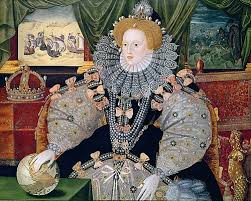
Clash with Spain — The Defeat of the Invincible Armada
In the 1580s, open conflict between England and Spain became inevitable. In 1588, King Philip II launched the Spanish Armada, a massive fleet intended to invade England and overthrow Elizabeth. Despite being severely outnumbered, the English navy achieved a historic victory, aided by fierce storms in the English Channel. The defeat of the Armada not only saved the country — it transformed Elizabeth into a symbol of national salvation and elevated England’s prestige across Europe.
Cultural Flourishing — Theater, Discovery, and a New Identity
Elizabeth’s reign coincided with the golden age of English Renaissance theater, marked by names such as:
- William Shakespeare
- Christopher Marlowe
- Ben Jonson
Alongside the great explorers like Francis Drake, this era laid the foundations for what would later become the British Empire — economically, culturally, and ideologically. England developed a sense of shared national destiny and a growing awareness of its role on the world stage.
Final Years and Legacy
Elizabeth’s later years were marked by economic difficulties and ongoing wars. Her conflict with Mary, Queen of Scots — a rival claimant to the English throne — ended in Mary’s execution, a decision controversial both then and now.
On March 24, 1603, Elizabeth I died, bringing an end to the Tudor dynasty. Despite the challenges and political intrigues she faced, she left behind a stable state, a strengthened national identity, and a cultural legacy that continues to inspire the world.
Why History Remembers Her
Elizabeth I did not merely rule — she transformed her nation. Without a husband, without an heir, and without guaranteed political support at the start of her reign, she relied on intellect, strategy, and charisma to turn England into a power that the world had to reckon with. For this reason, history remembers her not only as the “Virgin Queen”, but as the woman who changed the destiny of an empire.
Вашият коментар