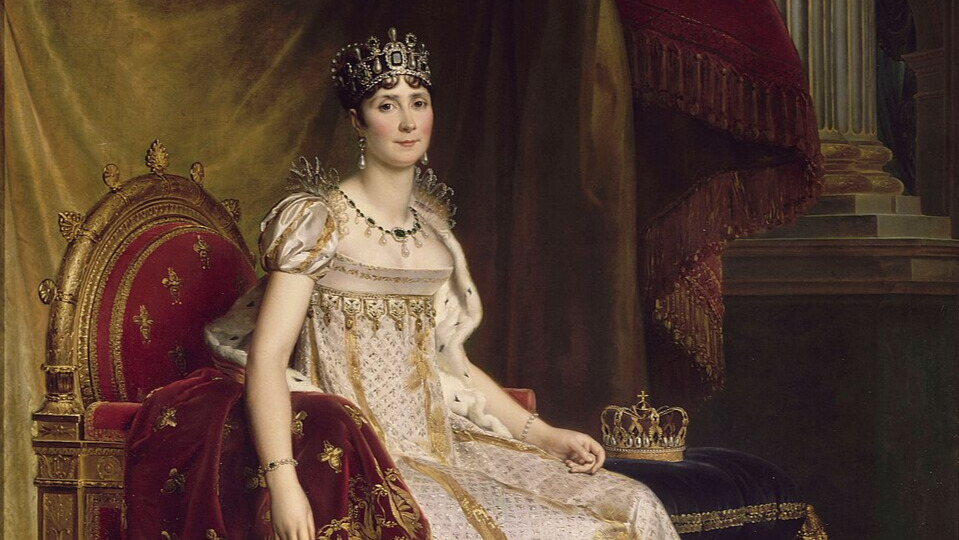
History often mistrusts women whose power leaves no official trace. When authority flows not through decrees or armies, but through presence, persuasion, and emotional gravity, it is dismissed as superficial. Joséphine de Beauharnais ruled in precisely this space—where influence was visible everywhere, yet recorded nowhere.
This is Part Six of Women Behind the Throne, following Maria Theresa, and continuing the exploration of women who shaped political reality without commanding it openly.
A Survivor Before She Was an Empress
Joséphine’s life did not begin in splendor. Born in the Caribbean, shaped by displacement, debt, and uncertainty, she entered adulthood already fluent in survival. The French Revolution did not elevate her—it nearly destroyed her. Widowed, imprisoned, and threatened by the machinery of terror, she learned quickly that endurance was not passive. It was adaptive.
By the time she met Napoleon Bonaparte, Joséphine was not seeking power. She was seeking stability. What followed, however, was not merely a marriage, but a transformation of the image of authority itself.
The Making of an Imperial Presence
Napoleon conquered through force. Joséphine ruled through atmosphere.
At court, she became the axis around which social legitimacy turned. Generals, diplomats, and artists did not simply obey Napoleon; they belonged to Joséphine’s world. Her salons softened the raw edges of military rule. Her charm translated conquest into acceptance.
She understood instinctively what Napoleon did not: power that terrifies must eventually be humanized.
Joséphine’s authority was emotional, aesthetic, and symbolic. She did not command loyalty—she inspired attachment.
Influence Without Control
Unlike Isabella of Castile or Maria Theresa, Joséphine held no illusion of sovereignty. Her power was fragile by nature, dependent on favor, affection, and perception. Yet within those limits, she operated with remarkable precision.
She intervened in appointments, reconciled enemies, and shielded those who had fallen out of favor. Mercy became her political language. Where Napoleon punished, Joséphine pleaded. Where he imposed, she mediated.
This division was not accidental. Together, they formed a dual image of rule: the iron hand and the velvet presence.
The Cost of Being Indispensable
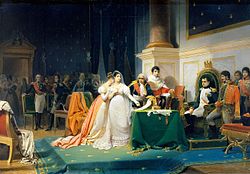
Joséphine’s greatest strength was also her greatest vulnerability. Her inability to produce an heir gradually transformed affection into liability. In an empire obsessed with legacy, her body became a political problem.
Napoleon’s decision to divorce her was not personal. It was structural.
Yet even in separation, Joséphine retained influence. She did not disappear from public life, nor from Napoleon’s emotional landscape. Malmaison became her domain—a space of memory, culture, and quiet authority. Ambassadors continued to visit. Letters continued to arrive.
Power, once learned, does not vanish with a title.
Soft Power Before the Term Existed
Joséphine reshaped the cultural language of empire. Fashion, gardens, art, and etiquette became tools of governance. She made the imperial court desirable rather than merely dominant.
Through her patronage, the Napoleonic regime acquired refinement. Through her taste, it acquired legitimacy. She turned conquest into civilization in the public imagination.
Long before the term existed, Joséphine practiced soft power with instinctive mastery.
A Woman History Struggles to Classify
Historians have often diminished Joséphine by reducing her to emotion—vain, indulgent, frivolous. This judgment reveals more about historical bias than about her actions.
Influence exercised through empathy is often dismissed because it leaves no clear archive. Yet regimes are sustained not only by law and violence, but by consent, familiarity, and desire. Joséphine understood this better than most.
She did not rule France. But France learned to accept Napoleon through her.
What Remains After Joséphine
Joséphine de Beauharnais occupies a unique place in the history of power. She was neither ruler nor regent, neither strategist nor reformer. Yet her presence shaped the tone of an empire at its height.
In a series devoted to women behind the throne, she represents the most elusive form of authority—the kind that operates without visibility, without permanence, and without recognition.
She was not feared.
She was felt.
And history, uncertain how to measure such power, has often underestimated it.
- Петър Бочев: последният полет на един български летец

- Стоян Стоянов: защитникът на София, който стана екскурзовод в Рилския манастир

- Чудомир Топлодолски: от защитник на българското небе до строител на стадион „Васил Левски“

- Жените до трона: Кераца Петрица – майката на Йоан Александър, до която писа папата
- Българските земи през 1437 година: разказът на един баварски бенедиктински монах
- Съкровище от Мурано край Бургас? Загадката на стотици венециански стъклени съдове от Черно море

Вашият коментар