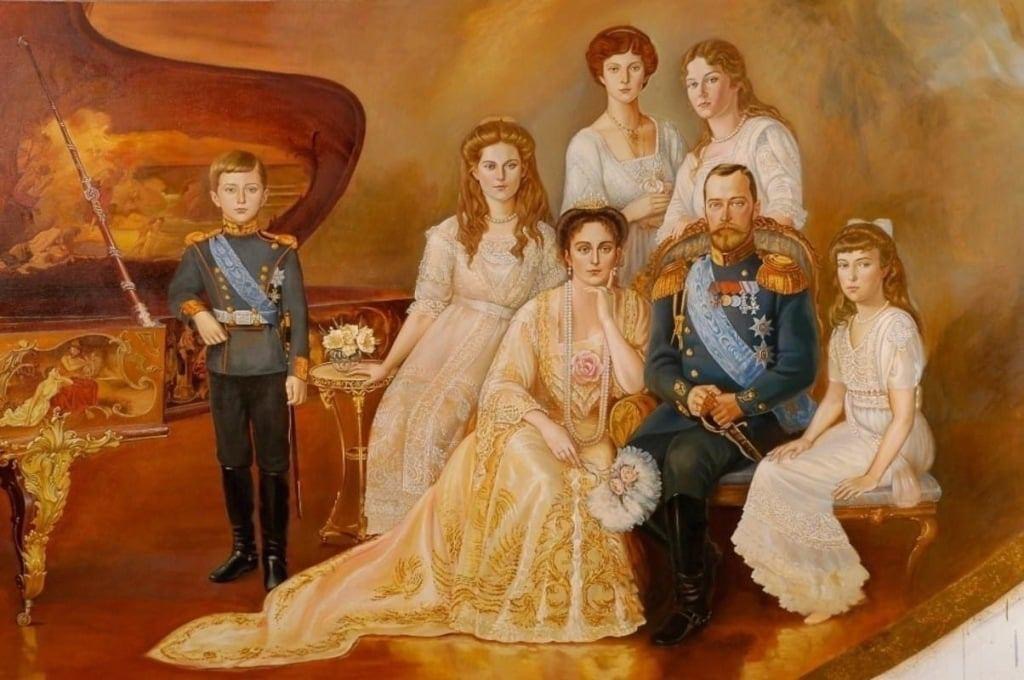
History often feels inevitable when we look back on it, as if events could only have unfolded in one way. The fall of the Romanov dynasty, the rise of the Bolsheviks, and the creation of the Soviet Union are usually seen as part of a single, unbroken chain. Yet history is not fixed—it is shaped by choices, timing, and chance. And few moments invite more speculation than the fate of the Romanovs family in 1918.
What if they had survived?
What if Nicholas II, his wife Alexandra Feodorovna, and their children had escaped Russia, as other members of their extended family did? What if the execution in Yekaterinburg had never taken place, or had been delayed long enough for rescue to arrive?
The answers are uncertain, but the possibilities are revealing.
Exile Instead of Execution
Had the Romanovs survived, the most likely outcome would not have been a restoration of power, but exile. By 1918, the political reality in Russia had shifted too dramatically for the monarchy to be easily reestablished. The authority of the imperial family had already collapsed, and revolutionary forces had reshaped the country’s structure.
Like many European royals who lost their thrones, the Romanovs would likely have settled abroad. Britain, Denmark, or perhaps France might have become their new home, supported by distant relatives and royal connections.
In this scenario, Nicholas II would not be remembered as the last tsar who died with his family, but as a former ruler living out his days in quiet obscurity, reflecting on a lost empire.
A Symbol for a Different Russia
Even in exile, however, the Romanovs would not have been irrelevant. Their existence alone would have carried political meaning.
During the Russian Civil War, the anti-Bolshevik forces—the Whites—fought not only against the new regime, but for a different vision of Russia. A living Romanov family could have served as a unifying symbol for these forces, even if they never returned to power directly.
A surviving heir, particularly Alexei Nikolaevich, would have represented continuity, legitimacy, and an alternative future. His presence might have strengthened monarchist movements or influenced the shape of opposition to Bolshevik rule.
Yet this possibility raises another question: would it have changed the outcome of the war?
Most historians would argue that it would not. The Bolsheviks’ victory depended on a complex combination of factors—organization, leadership, and control of key territories—that went beyond the symbolic power of a royal family.
Still, the presence of the Romanovs might have altered the narrative, even if it did not change the result.
The Possibility of a Constitutional Monarchy
Another intriguing possibility lies in a different path for Russia itself. Had the Romanovs escaped earlier—perhaps in 1917 rather than 1918—the story might have taken a different turn.
Nicholas II had already abdicated, and there were discussions about transforming Russia into a constitutional monarchy, similar to Britain. In such a system, the monarch would retain symbolic authority while political power shifted to elected institutions.
If the imperial family had been removed from immediate danger and placed under protection, it is conceivable that they could have played a role in such a transition. A young heir, guided by advisors and a parliamentary system, might have represented a compromise between tradition and reform.
This scenario, however, depends on timing. By 1918, the opportunity for gradual reform had largely disappeared, overtaken by революция and conflict. The window for a constitutional monarchy had likely closed.
A Life Reimagined
For the Romanov children, survival would have meant an entirely different life. Instead of becoming symbols of tragedy, they might have grown into adulthood in exile, adapting to new cultures and identities.
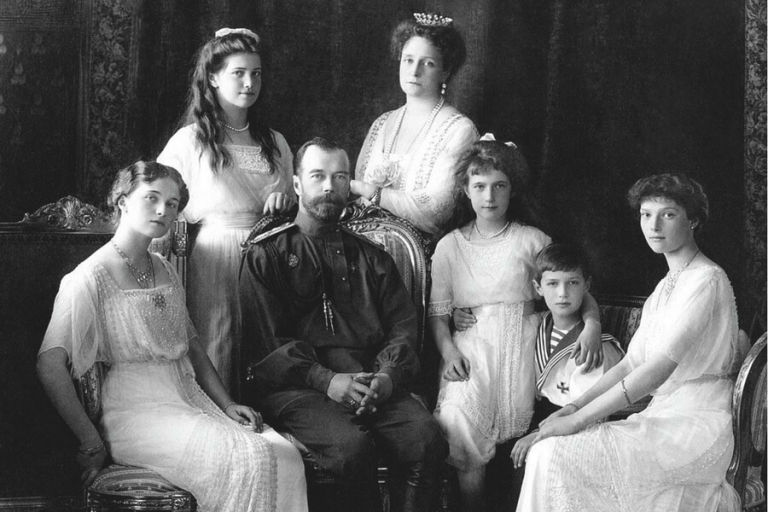
Olga, thoughtful and introspective, might have pursued intellectual or charitable work. Tatiana, disciplined and capable, could have taken on organizational or leadership roles within émigré communities. Maria, warm and open, might have built a family life far removed from politics. Anastasia, energetic and curious, might have embraced the freedom of a life no longer defined by court expectations.
Their identities would have shifted—from grand duchesses of Russia to members of a displaced aristocracy navigating a changing world.
And Alexei, whose life was shaped by illness, might have faced both challenges and new possibilities in a different environment, perhaps benefiting from medical advances unavailable to him in Russia.
The World Without a Martyr Narrative
One of the most profound differences in this alternative history lies not in politics, but in memory.
The execution of the Romanov family transformed them into symbols—of innocence, suffering, and the human cost of revolution. Their deaths became central to how they are remembered, shaping their legacy for generations.
Had they survived, that narrative would not exist.
They would not be martyrs. They would not be canonized in the same way. Their story would be less defined by tragedy and more by adaptation, resilience, and perhaps even obscurity.
Paradoxically, survival might have made them less famous.
The Soviet Union and Its Legacy
It is unlikely that the survival of the Romanovs would have prevented the rise of the Soviet Union. The forces driving the revolution were too deep, too widespread, to be undone by the existence of a single family.
However, their survival might have influenced how the Soviet state presented its own history. The execution of the Romanovs became a defining moment—a symbolic break with the past. Without it, the narrative of revolution might have been less absolute, less final.
A living Romanov family in exile would have remained a reminder of what had been lost, and perhaps of what might have been restored.
Why This Question Still Matters
The question of whether the Romanovs could have survived is not only about historical curiosity. It reflects a deeper human impulse—the desire to imagine alternative outcomes, to revisit moments where history turned sharply and ask whether another path was possible.
In the case of the Romanovs, this impulse is particularly strong because their story combines political upheaval with deeply personal tragedy. They are not remembered only as rulers, but as a family.
To imagine their survival is to imagine a different ending—not just for a dynasty, but for individuals whose lives were cut short.
Conclusion
What if the Romanovs had survived?
The most likely answer is that they would have lived in exile, their political power gone, their lives reshaped by circumstances beyond their control. Russia’s broader trajectory might not have changed dramatically, but the symbolic landscape of history certainly would have.
They would not be remembered in the same way. Their story would be quieter, less defined by a single violent moment, and perhaps less powerful in its emotional impact.
History, however, chose a different path.
The Romanovs did not survive, and because of that, their story became something more than a political narrative. It became a symbol—of loss, of change, and of the fragile boundary between power and vulnerability.
And perhaps that is why we continue to ask the question.
Not because we expect a different answer, but because imagining one allows us to see history—and humanity—from another perspective.
- Открадната история: Операция „МАРАТОН“ и кражбата на „История славянобългарска“
- Открадната история: Как от Лувъра изчезнаха бижута за 88 милиона евро за 8 минути
- Открадната история: редки книги за 3,2 милиона долара, сред които първи издания на Галилей и Нютон, са открити в къща в Румъния
- Открадната история: нюйоркски колекционер връща 180 артефакта от 11 държави на стойност 70 милиона долара
- Христо Кръстев: сред победителите във въздушния бой на 1 август 1943 г.
Вашият коментар