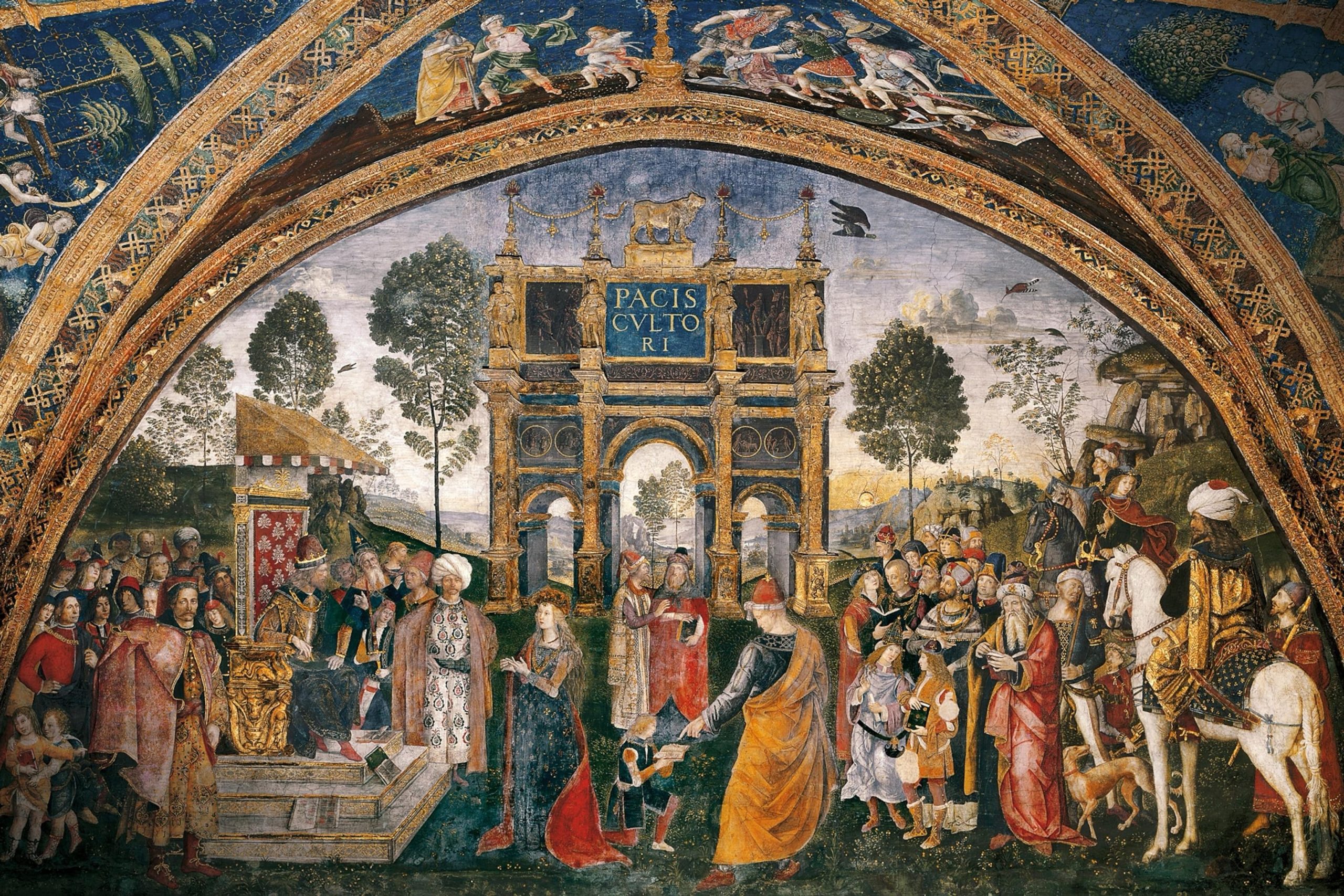
When Rodrigo Borgia ascended to the papal throne in 1492, he stepped into a role that was meant to represent the highest moral authority in Christendom. The Pope was expected to embody discipline, spiritual devotion, and a visible distance from worldly temptations. Yet from the very beginning of his papacy, Alexander VI stood in quiet contradiction to these expectations.
What made him different was not simply his private life, but the fact that he did little to conceal it. While other clerics of his time often maintained discreet relationships, Alexander acknowledged his children openly and integrated them into the structure of his power. This decision would define not only his reign, but also the reputation of the Borgia family for centuries to come.
Understanding this aspect of his papacy requires stepping beyond modern assumptions and into the political and cultural reality of Renaissance Rome, where the boundaries between spiritual authority and temporal ambition were far less rigid than they might appear today.
The Culture of Power in Renaissance Rome
The Rome over which Alexander VI presided was a city shaped as much by politics as by religion. The Papacy was deeply embedded in the power struggles of the Italian peninsula, where rival states and noble families competed for influence. In this environment, the Pope was not merely a religious figure, but a ruler who commanded territories, negotiated alliances, and influenced the balance of power across Europe.
Within this system, the ideals of the Church often coexisted uneasily with the realities of governance. Many high-ranking members of the clergy were drawn from noble families and were accustomed to privilege and authority. The expectation of clerical celibacy, though officially upheld, was not always strictly enforced in practice. Relationships and even children were not unheard of, though they were typically kept out of public view.
Alexander VI, however, operated with a different degree of openness. His acknowledgment of his children did not simply reflect personal inclination; it also signaled a deliberate shift in how he chose to wield power. Rather than separating his private life from his public role, he brought the two into alignment, using his family as an extension of his political strategy.
Family as a Political Instrument
The children of Alexander VI were not peripheral figures in his life. They stood at the very center of his ambitions. Through them, he sought to transform the influence of the Papacy into a lasting dynastic legacy.
His son Cesare Borgia was initially directed toward a career within the Church, a path that reflected both tradition and opportunity. As a cardinal, Cesare occupied a position of prestige and influence, one that aligned with his father’s authority. Yet this role never fully contained his ambitions. Over time, it became clear that his aspirations extended beyond ecclesiastical power into the more volatile world of politics and warfare.
His daughter Lucrezia Borgia played a different but equally significant role. Through her marriages, alliances were formed and strengthened, linking the Borgias to other powerful families. These unions were not simply personal arrangements, but calculated decisions shaped by the shifting dynamics of Italian politics.
In this way, the Borgia family became deeply intertwined with the broader political landscape. Their actions were not isolated incidents, but part of a coherent strategy aimed at consolidating power and extending influence.
The Expansion of Nepotism
Nepotism had long been a feature of the Papacy. Popes frequently appointed relatives to positions of authority, ensuring loyalty and strengthening their political base. The practice was so common that it became an accepted, if controversial, aspect of governance.
What distinguished Alexander VI was not the use of nepotism itself, but the scale and visibility with which he applied it. His children were not merely beneficiaries of his position; they were active participants in his plans. Titles, lands, and responsibilities were distributed in ways that reinforced their collective power.
Cesare’s transition from cardinal to secular leader marked a particularly striking development. It reflected both his personal ambitions and his father’s willingness to adapt traditional structures to serve new purposes. In supporting this shift, Alexander demonstrated a pragmatic approach to power, one that prioritized results over convention.
Lucrezia’s marriages, meanwhile, illustrate the strategic use of familial ties in securing alliances. Each union connected the Borgias to influential figures and regions, embedding them more deeply within the political fabric of Italy.
The Transformation of Cesare Borgia
The evolution of Cesare Borgia from churchman to military commander represents one of the most significant aspects of Alexander VI’s papacy. His decision to abandon his position as cardinal was highly unusual and reflected a broader transformation in the role he was meant to play.
Freed from the constraints of ecclesiastical life, Cesare entered the sphere of military and political action with determination. Supported by his father’s authority and resources, he began to build a reputation for both strategic skill and ruthlessness. His campaigns in central Italy would later draw the attention of contemporaries such as Niccolò Machiavelli, who saw in him a model of effective, if uncompromising, leadership.
This transformation was not merely personal. It symbolized the extent to which the Borgias were willing to reshape traditional roles in pursuit of power. By placing Cesare at the head of military efforts, Alexander extended his influence beyond the boundaries of the Church and into the contested territories of Italy.
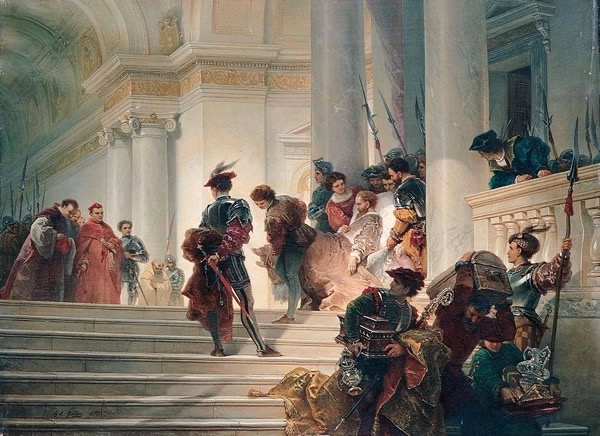
Lucrezia Borgia and the Weight of Reputation
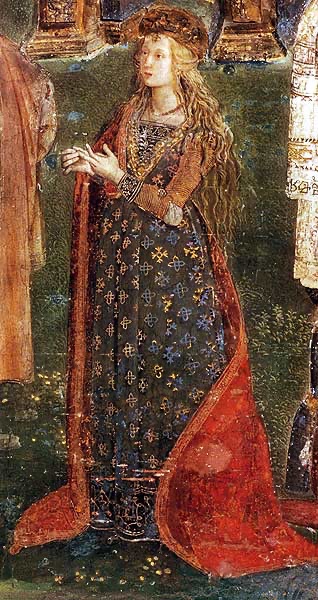
If Cesare embodied the outward expansion of Borgia power, Lucrezia became its most contested symbol. Her life unfolded within a web of political alliances, expectations, and scrutiny. Each of her marriages reflected the strategic priorities of her family, linking the Borgias to key players in the Italian political landscape.
Yet her reputation would come to be shaped as much by rumor as by reality. Accusations of intrigue, manipulation, and even poisoning circulated widely, often originating from those who opposed the Borgias. These stories, repeated and embellished over time, contributed to an image that has proven difficult to separate from the historical figure.
Modern scholarship has approached these claims with greater caution, emphasizing the lack of concrete evidence and the role of political hostility in their creation. Viewed in this light, Lucrezia appears less as a central architect of scandal and more as a figure navigating the complex and often dangerous environment of Renaissance politics.
Scandal, Perception, and Political Rivalry
The controversies that surrounded Alexander VI cannot be understood in isolation from the broader context of rivalry and competition that defined the period. Powerful families and factions had strong incentives to undermine one another, and reputation became a key battleground.
Stories of corruption, excess, and moral failing circulated widely, shaping perceptions both within Rome and beyond. Some of these accounts were based on observable behavior, while others were likely exaggerated or entirely fabricated. The difficulty lies in distinguishing between them.
The so-called “Banquet of Chestnuts,” often cited as evidence of extreme decadence, illustrates this challenge. While it appears in contemporary sources, its details are debated, and its significance may have been amplified over time.
In this environment, the image of the Borgias became a construct shaped by both reality and narrative. Their actions provided material for criticism, but their enemies ensured that this material was presented in the most damaging possible light.
The Broader Impact on the Church
The papacy of Alexander VI contributed to a growing perception of the Church as an institution entangled in worldly concerns. His use of power, his promotion of his family, and the controversies that surrounded him all reinforced criticisms that would later gain greater prominence.
It would be an oversimplification to attribute these developments solely to his actions. The issues they reflected were broader and more deeply rooted. However, his papacy became a symbol of these concerns, illustrating the tension between spiritual ideals and political realities.
In the years that followed, this tension would play a role in shaping the course of European history, influencing movements that sought reform and redefining the relationship between religion and power.
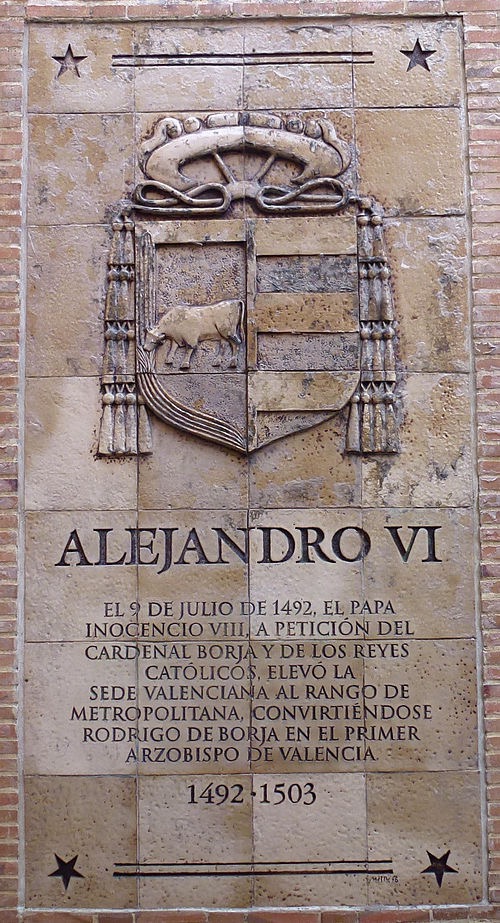
Conclusion: A Legacy Defined by Power
The story of Alexander VI and his children is not easily reduced to a simple narrative of corruption or ambition. It is, instead, a reflection of the complexities of the world in which they lived.
By bringing his family into the center of his rule, Alexander reshaped the nature of the Papacy, aligning it more closely with the dynamics of dynastic politics. This approach brought immediate advantages, allowing the Borgias to expand their influence and secure their position.
At the same time, it exposed them to greater scrutiny and opposition. The very visibility that strengthened their power also magnified the controversies that surrounded them.
As their influence grew, so too did the forces that sought to challenge it.
And in this tension between ambition and resistance, the next chapter of their story would unfold.
- Открадната история: Как от Лувъра изчезнаха бижута за 88 милиона евро за 8 минути
- Открадната история: редки книги за 3,2 милиона долара, сред които първи издания на Галилей и Нютон, са открити в къща в Румъния
- Открадната история: нюйоркски колекционер връща 180 артефакта от 11 държави на стойност 70 милиона долара

- Христо Кръстев: сред победителите във въздушния бой на 1 август 1943 г.
- Петър Бочев: последният полет на един български летец

- Стоян Стоянов: защитникът на София, който стана екскурзовод в Рилския манастир

Вашият коментар