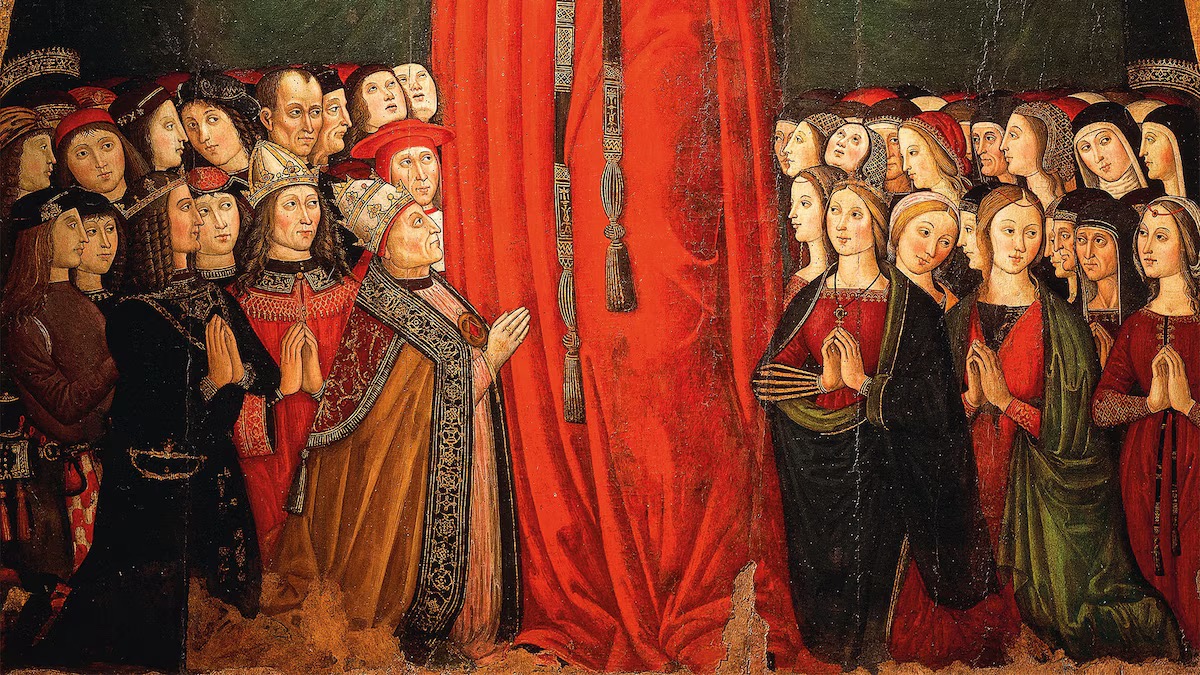
In August 1492, the Catholic world witnessed the election of a new Pope — a moment that would mark the rise of the Borgias. To many, it was a moment of spiritual importance — the selection of a leader meant to guide Christendom through uncertain times. But behind the closed doors of the Vatican, the reality was far more complex. The man who emerged victorious from the conclave was Rodrigo Borgia — a figure whose name would become synonymous with corruption, ambition, and scandal. Was he truly one of the most corrupt Popes in history, as later accounts would suggest? Or was his reputation shaped as much by political enemies as by his own actions?
To understand the rise of the Borgias, one must first understand the world into which Rodrigo Borgia stepped — a world where religion and politics were inseparable, and power was often won not through faith, but through strategy.
The World of Renaissance Rome
By the late 15th century, Rome was no longer simply the spiritual heart of Christianity. It had become a center of political intrigue, wealth, and competition among powerful families.
The Papacy itself functioned not only as a religious institution but also as a political power. Popes commanded armies, controlled territories known as the Papal States, and played a crucial role in the balance of power across Italy and Europe.
Italy at the time was not a unified nation but a patchwork of city-states — Florence, Venice, Milan, Naples, and the Papal States — each vying for dominance. Alliances shifted constantly, and warfare was frequent. In this environment, the position of Pope carried enormous influence.
It also attracted ambitious men.
The College of Cardinals, responsible for electing the Pope, was itself deeply entangled in political networks. Many cardinals came from powerful families and were more concerned with advancing their own interests than with spiritual leadership.
It was within this system that Rodrigo Borgia built his career.
The Early Life of Rodrigo Borgia
Rodrigo Borgia was born in 1431 in the Kingdom of Valencia, part of the Crown of Aragon (modern-day Spain). His family, though not initially among the most powerful in Europe, had connections that would prove decisive.
His uncle, Alfonso de Borgia, rose within the Church and was eventually elected Pope Callixtus III in 1455. This event dramatically changed Rodrigo’s fortunes.
Through his uncle’s influence, Rodrigo was appointed a cardinal at a young age — a clear example of nepotism, a common practice at the time. He was also given important administrative roles, including Vice-Chancellor of the Church, a position that provided both wealth and influence.
Rodrigo quickly demonstrated skill in navigating the complex political landscape of Rome. He was known for his intelligence, charm, and ability to build alliances.
However, even during his early career, his reputation was mixed. While some saw him as capable and effective, others viewed him as overly ambitious and morally questionable.
Ambition and Influence
Over the decades, Rodrigo Borgia accumulated significant wealth. As Vice-Chancellor, he controlled important Church revenues and had access to resources that allowed him to maintain a lavish lifestyle.
He also developed relationships that were unusual for a clergyman. Unlike the ideal of clerical celibacy, Rodrigo had several known children, including Cesare Borgia and Lucrezia Borgia.
While this might seem shocking from a modern perspective, it is important to note that clerical celibacy was not always strictly enforced during the Renaissance. Many members of the clergy had children, though few were as open about it as Rodrigo.
Still, his personal life contributed to a reputation that would later be used against him.
At the same time, Rodrigo was building a powerful network of allies. He understood that influence in Rome depended not only on wealth but also on loyalty — and loyalty often had to be secured through favors, appointments, and strategic marriages.
The Papal Election of 1492
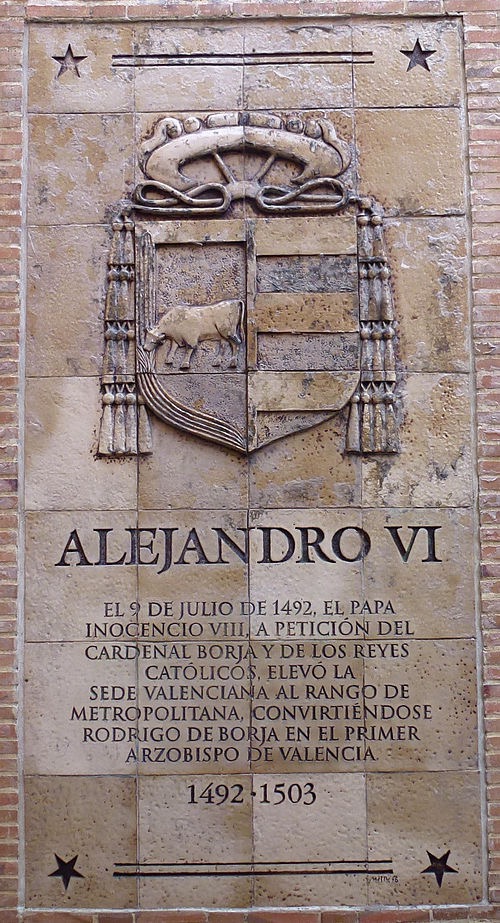
The death of Pope Innocent VIII in 1492 created an opportunity — and a crisis. The election of a new Pope would determine the direction of the Church and influence the political balance of Italy.
Several candidates competed for the position, each backed by different factions within the College of Cardinals.
Rodrigo Borgia was among the most prominent contenders.
The conclave that followed has been the subject of intense historical debate. Contemporary sources and later accounts suggest that simony — the buying and selling of Church offices — played a role in the election.
It is often claimed that Rodrigo secured votes by offering wealth, positions, and influence to other cardinals. Some accounts describe promises of lucrative appointments and control over territories.
However, historians caution that while such practices were not uncommon, the extent to which they determined the outcome is difficult to measure with certainty.
What is clear is that Rodrigo Borgia was elected Pope.
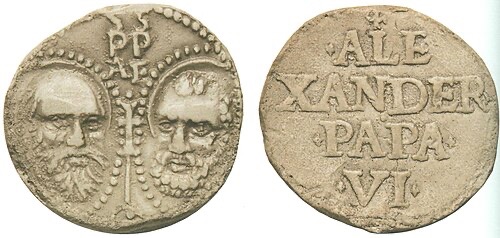
He took the name Alexander VI.
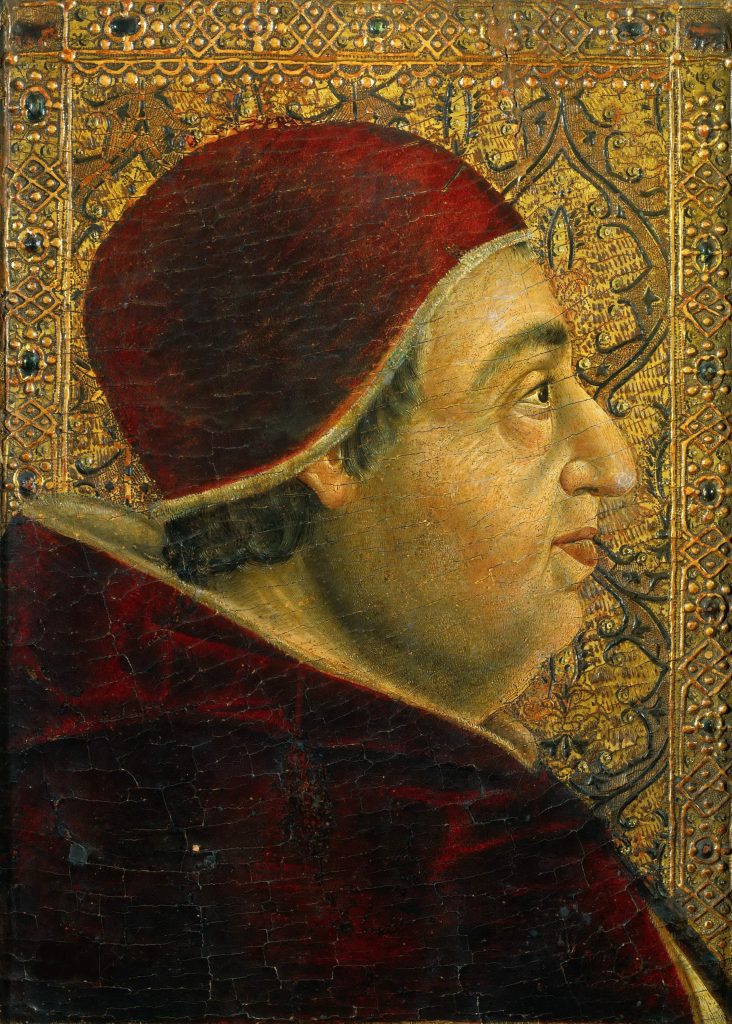
(c. 1495, oil on canvas, Vatican Museums)
A New Kind of Papacy
The election of Alexander VI marked the beginning of a new phase in the history of the Papacy.
Unlike some of his predecessors, Alexander was openly political. He worked actively to strengthen the position of the Papal States and to expand his family’s influence.
He appointed allies to key positions and ensured that his children were placed in roles that would increase their power. His son Cesare, for example, would eventually become a military leader, while Lucrezia would be involved in strategic marriages.
Alexander’s papacy also coincided with major events in European history, including the beginning of the Italian Wars, which would bring foreign powers such as France and Spain into conflict over control of Italian territories.
In this turbulent environment, Alexander VI sought to maintain and expand his influence — often through controversial means.
Controversy and Reputation
Almost from the beginning, Alexander VI’s papacy was surrounded by controversy.
Critics accused him of corruption, immorality, and abuse of power. Stories circulated about his personal life, his relationships, and his alleged involvement in various scandals.
However, it is important to approach these claims with caution.
Many of the sources that describe Alexander VI in highly negative terms were written by his political enemies or by later historians influenced by those accounts. During the Renaissance, propaganda was a powerful tool, and powerful families often sought to discredit their rivals.
This does not mean that all accusations were false — but it does suggest that his reputation may have been shaped as much by opposition as by reality.
The Foundations of a Dynasty
Despite the controversies, Alexander VI succeeded in establishing the Borgia family as a major force in Italian politics.
His children, particularly Cesare and Lucrezia, would play central roles in this process. Through military campaigns, political alliances, and strategic marriages, the Borgias expanded their influence.
For a time, it seemed that the family might establish a lasting dynasty.
But the very methods that brought them power — ambition, manipulation, and reliance on personal authority — would also make their position fragile.
Conclusion: The Beginning of a Legend
The rise of Rodrigo Borgia was not simply the story of a man becoming Pope. It was the beginning of a legend — one that would blend fact and myth, history and rumor. To some, the Borgias represented everything that was wrong with the Renaissance Church: corruption, excess, and moral decay. To others, they were products of their time — ambitious figures navigating a world where power and survival often required difficult choices.
What is certain is that their story did not end with Rodrigo’s election. In many ways, it had only just begun. Because the real power of the Borgias would not lie in the Papacy alone……but in what they would do next.
Вашият коментар