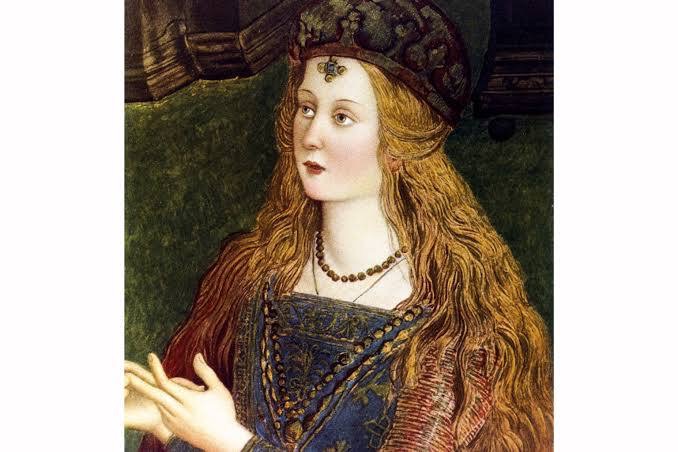
Few figures of the Renaissance have been as persistently misunderstood as Lucrezia Borgia. For centuries, her name has been associated with intrigue, scandal, and poison, often presented as evidence of the moral corruption of the Borgia family. Yet the image that has endured in popular imagination is not easily separated from the political tensions and rivalries of her time.
As the daughter of Rodrigo Borgia and the sister of Cesare Borgia, Lucrezia occupied a position that made her both powerful and vulnerable. She stood at the center of alliances, expectations, and scrutiny, her life shaped less by personal choice than by the strategic needs of her family.
To understand Lucrezia Borgia is to move beyond the legends that surround her and examine the historical reality of her life within the complex world of Renaissance Italy.
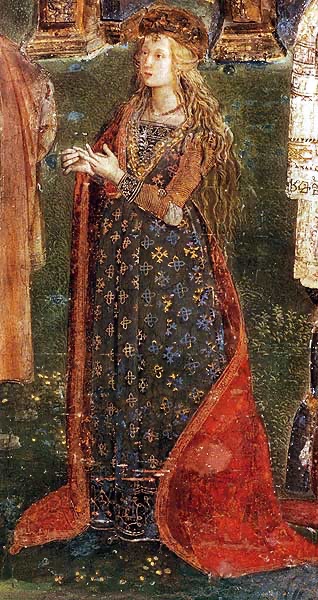
The World She Inherited
Lucrezia was born into a world defined by ambition and instability. The Italy of her lifetime was divided into competing states, each seeking to expand its influence. Within this environment, the Papacy functioned not only as a religious authority but also as a political power deeply involved in the affairs of the peninsula.
Her father’s election as Pope in 1492 elevated the Borgia family to an unprecedented level of influence. This rise, however, also intensified the hostility of rival families, who viewed the Borgias as outsiders and competitors.
From an early age, Lucrezia became part of the family’s political strategy. Her position as the Pope’s daughter made her a valuable link in the creation of alliances, and her future would be shaped accordingly.
Marriage as Strategy
Lucrezia’s marriages are often presented as scandalous episodes, but they are more accurately understood as instruments of political calculation shaped by the changing alliances of Renaissance Italy.
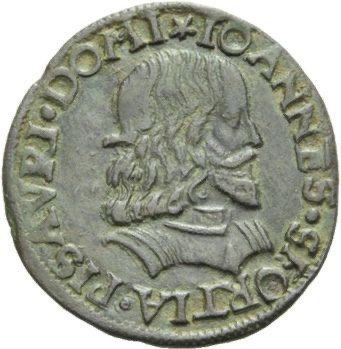
Her first marriage, to Giovanni Sforza, was arranged to secure a connection with the powerful Sforza family of Milan. When the political situation shifted, the marriage was annulled in 1497, officially on the grounds that it had not been consummated. The annulment led to public conflict, during which Giovanni Sforza made accusations against the Borgia family that contributed significantly to the spread of damaging rumors.
Her second marriage, to Alfonso of Aragon, strengthened ties with the Kingdom of Naples. However, this alliance became increasingly fragile as relations between Naples and the Borgias deteriorated. In 1500, Alfonso was attacked in Rome and later killed under circumstances that remain debated. While many contemporaries and later sources suspected the involvement of Cesare Borgia, definitive proof has never been established, and the event remains a subject of historical uncertainty.
Lucrezia’s third marriage marked a turning point. In December 1501, she was married by proxy to Alfonso d’Este, heir to the Duchy of Ferrara, with the formal ceremony taking place in early 1502 when she arrived in Ferrara. This union connected the Borgias to one of the most established ruling families in Italy and provided Lucrezia with a more stable and enduring position.
Power, Influence, and Responsibility
Although frequently portrayed as a passive figure in political arrangements, Lucrezia Borgia exercised a degree of authority that reflects both her education and her position within the Borgia family.
In 1501, during a period when her father was absent from Rome, she was entrusted with a formal representative role in the Vatican. This responsibility, though limited in scope, demonstrated the confidence that Alexander VI placed in her ability to manage administrative and diplomatic matters.
Her later life in Ferrara further illustrates her active role. As Duchess, she participated in court life, engaged with political and social affairs, and became associated with the cultural environment of one of the most refined courts in Italy. Her presence there was not merely ceremonial; it reflected an ongoing involvement in the structures of power and influence.
The Origins of the Poison Myth
The association of Lucrezia Borgia with poison remains one of the most enduring aspects of her reputation. Stories describing hidden toxins, secret plots, and deadly intrigue have circulated for centuries, shaping perceptions of her character.
Yet the historical evidence supporting these claims is limited. Much of the material comes from sources influenced by political rivalry, where accusations served as tools to damage reputations. In the competitive environment of Renaissance Italy, such narratives were both effective and difficult to challenge.
Poison, in particular, carried symbolic weight. It suggested secrecy, control, and betrayal, making it a powerful element in stories designed to portray the Borgias as dangerous and morally corrupt.
Modern historians generally approach these accounts with caution, noting the absence of concrete proof and emphasizing the role of propaganda in their development.
Reputation and Political Narrative
The reputation of Lucrezia Borgia was shaped not only by her actions, but also by the broader political context in which she lived. Rival families and factions sought to undermine the Borgias, and one of the most effective ways to do so was through the manipulation of narrative.
Accusations of immorality, intrigue, and corruption were common weapons in these struggles. For Lucrezia, whose position made her highly visible, such accusations were particularly persistent.
Over time, these stories were repeated and expanded, becoming embedded in historical and cultural memory. The distinction between documented events and constructed narratives grew increasingly blurred, complicating efforts to assess her life accurately.
Life in Ferrara
Lucrezia’s years in Ferrara present a more stable and well-documented phase of her life. As Duchess, she became part of a court known for its cultural and intellectual activity. Her role included participation in court life as well as engagement with artistic and literary circles.
Contemporary accounts from Ferrara often describe her in terms that differ markedly from the hostile portrayals associated with her earlier years. She is depicted as composed, capable, and attentive to her responsibilities.
This contrast suggests that her reputation was not fixed, but rather shaped by the perspectives of those who observed and recorded her life.
The Weight of a Name
To be a member of the Borgia family was to live under constant scrutiny. Their rise to power brought both opportunity and opposition, and every action was subject to interpretation.
For Lucrezia, this meant that her identity was closely tied to the broader reputation of her family. Her personal experiences were often viewed through the lens of political rivalry, making it difficult to separate individual agency from collective image.
This dynamic played a central role in shaping how her story was told and remembered.
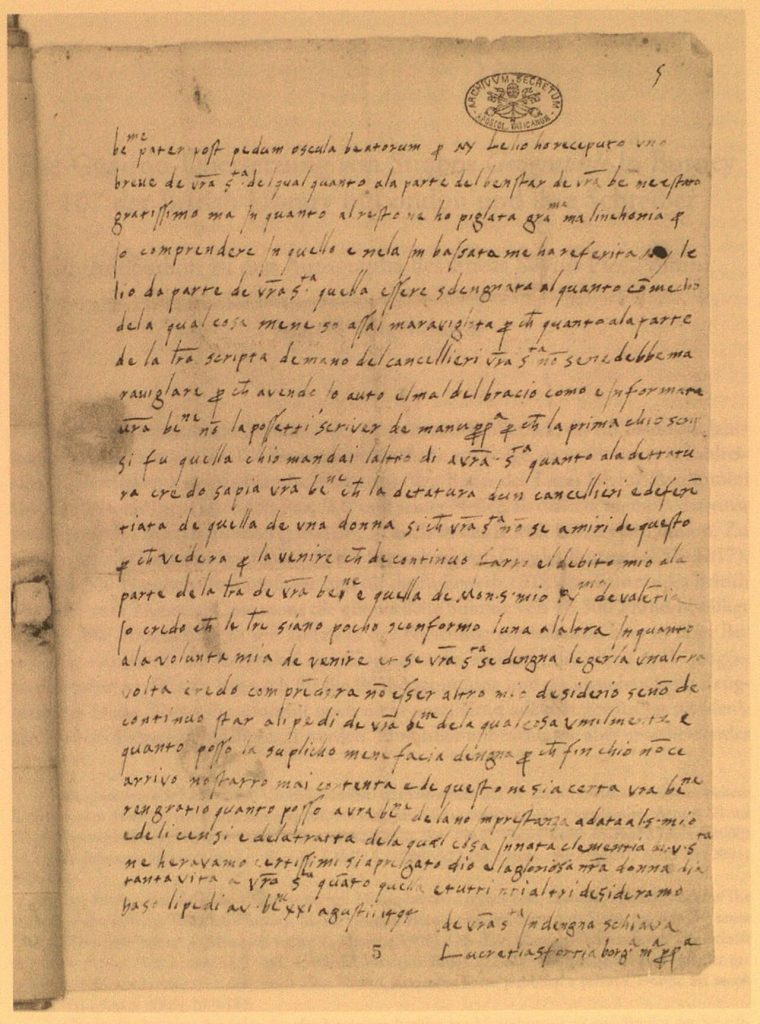
Conclusion: Between Myth and History
Lucrezia Borgia’s legacy exists at the intersection of history and legend. The narratives that surround her reflect not only the events of her life, but also the motivations of those who recorded and interpreted them.
While it would be misleading to dismiss all criticism as unfounded, it is equally important to recognize the influence of exaggeration and political hostility in shaping her image.
Seen within the context of Renaissance Italy, Lucrezia emerges as a figure navigating a complex and often dangerous environment, rather than a simple embodiment of scandal.
Her story invites a more careful reading of the past, one that distinguishes between evidence and narrative, and between reputation and reality.
And as the power of the Borgias began to decline, the consequences of their rise would soon become impossible to ignore.
- Открадната история: Как от Лувъра изчезнаха бижута за 88 милиона евро за 8 минути
- Открадната история: редки книги за 3,2 милиона долара, сред които първи издания на Галилей и Нютон, са открити в къща в Румъния
- Открадната история: нюйоркски колекционер връща 180 артефакта от 11 държави на стойност 70 милиона долара
- Христо Кръстев: сред победителите във въздушния бой на 1 август 1943 г.
- Петър Бочев: последният полет на един български летец
Вашият коментар