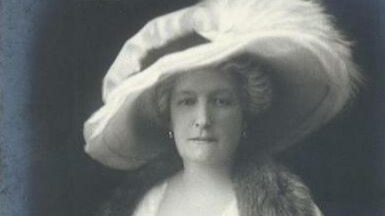
The life of Princess Louise of Belgium is one of those European tragedies in which the glitter of crowns fails to hide profound loneliness, and court intrigues prove more merciless than war itself. Born a king’s daughter, married to a prince, confined as “insane,” condemned as a scandalous woman, and finally dying poor and forgotten, her life reads like a novel written by history itself.
Childhood in the Shadow of the Throne
Louise Marie Amélie was born on 18 February 1858, the first child of King Leopold II of Belgium and his wife, Queen Marie Henriette of Austria. She was not the longed-for male heir—Belgium demanded a son to continue the dynasty. A year later, that wish seemed fulfilled with the birth of Prince Leopold, followed by Louise’s sisters Stéphanie and Clémentine.
As the eldest child, Louise was raised to be an example. The royal children were brought up in the “English fashion,” with strict discipline, sober bedrooms, and little outward affection. Louise’s happiest moments were spent with her mother on carriage rides or wandering through the gardens and greenhouses of the Castle of Laeken—places that would later live on in her memory as symbols of lost innocence.
Her childhood was shattered by tragedy. In 1869, her little brother Leopold fell into a pond, developed pneumonia, and died at the age of nine. The loss devastated the family. Queen Marie Henriette never truly recovered, and King Leopold II was left without a male heir—an outcome with both political and personal consequences.
Decades later, Louise would write of her brother with enduring grief:
“I could no more imagine existence without him than the day without light. And I still weep for him, though more than fifty years have passed since he left me.”
A King’s Daughter, But Never a Cherished Child
Louise’s relationship with her father was distant and formal. She saw him less as a parent and more as her sovereign. She felt closer to her mother, though even that bond was marked by restraint rather than warmth. Louise was an inquisitive child, earning the nickname “Madame Pourquoi”—“Miss Why”—because of her constant questions. What today might be praised as intellectual curiosity was then considered unbecoming, especially for a royal girl.
A Marriage Without Love
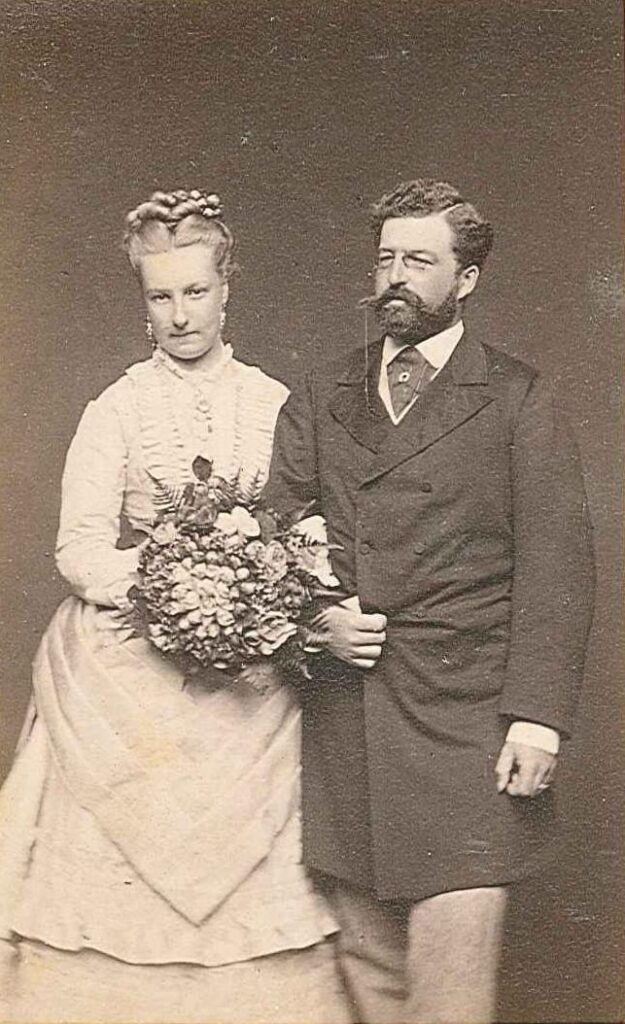
At only fifteen years old, Louise was officially betrothed to her second cousin, Prince Philipp of Saxe-Coburg and Gotha, a man fourteen years her senior. The match was political, not emotional. Though King Leopold II disliked the idea, Queen Marie Henriette supported it, believing life at the Austrian court would benefit her daughter.
They were married on 4 February 1875 in Brussels. Louise was completely unprepared for married life and especially for her wedding night. In her memoirs, she described the experience as a fall from “a heaven of love” into “a bed of thorns.” When Philipp left her in the early morning hours, Louise fled barefoot into the Orangery, hiding among the camellias, whispering her despair to their fragile beauty. A sentry eventually found her and brought her back to her mother.
Shortly thereafter, Louise was sent away from Belgium—without her familiar maids, frightened, isolated, and bound to a man she barely knew.
Vienna and Disillusionment with Empire
Life in Vienna brought no comfort. Louise was initially impressed by Emperor Franz Joseph, but later wrote bitterly of him:
“Nature deprived him of a heart. He was an emperor, but not a man.”
Her marriage deteriorated rapidly. Philipp humiliated her, forced her to drink, and mocked her openly. Nevertheless, Louise bore two children: a son, Leopold, and a daughter, Dorothea. She endured even childbirth in emotional isolation, hiding her labor pains to avoid her husband’s presence.
Scandal and Rebellion
Louise refused to accept the role of a silent, obedient princess. She sought affection and understanding elsewhere. While Philipp’s affairs were tolerated, Louise’s relationships were condemned as scandalous. When she fell deeply in love with Count Géza Mattachich, she resolved to seek a divorce—an almost unthinkable act for a woman of her rank.
What followed was a descent into chaos: debts, confrontations, duels, and flight across Europe. Ultimately, Louise was forcibly removed from her bed and committed to the Döbling Lunatic Asylum in Vienna. Declared insane, she was effectively erased from society—her diagnosis serving as a convenient tool for her husband and her father.
Seven Years in a “Gilded Cage”
Louise spent seven long years confined in various institutions. She later described these years as a form of torture, more unbearable than physical pain. Her royal status offered no protection. Her mother died without seeing her again. Her father never visited her.
Escape and a Brief Taste of Freedom
In 1904, Count Mattachich orchestrated a daring escape—one worthy of a novel. Under cover of night, aided by sympathetic guards, Louise fled her confinement and reached Paris via the Orient Express. There, French physicians examined her and declared her perfectly sane.
Freedom, however, did not bring security. King Leopold II disinherited her, cutting her off financially. Though her divorce was finalized in 1906, she would spend years battling for financial survival.
The Final Years
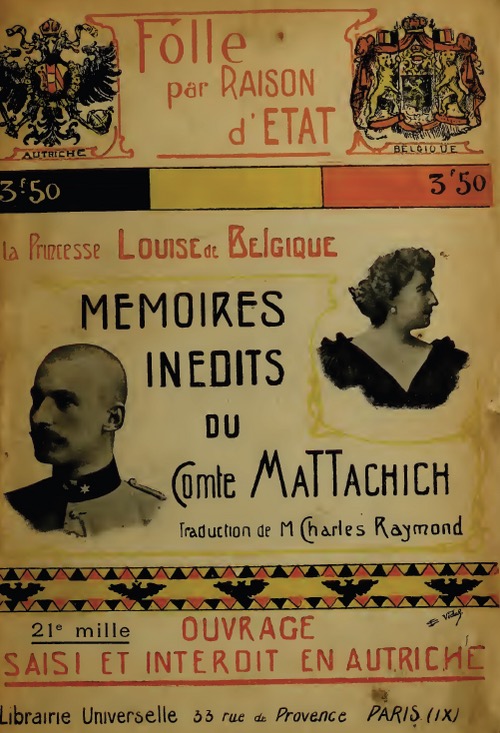
The First World War found Louise homeless, stateless, and impoverished. She was expelled, mocked, and manipulated. Her only true support remained Mattachich, to whom she dedicated the final pages of her memoirs, published in 1921—a deeply moving tribute to a man who had sacrificed everything for her freedom.
After his death in 1923, Louise was left utterly alone. She died of pneumonia on 1 March 1924 in Wiesbaden, aged sixty-six. She was buried quietly, without honors, far from Belgium and the court that had once defined her existence.
A Life That Exposed the Cost of Monarchy
Louise of Belgium’s story is more than a personal tragedy. It is an indictment of a system in which women were treated as political currency, and “madness” was a convenient weapon against defiance. Her life reveals how a crown can weigh heavier than chains—and how freedom sometimes arrives too late to heal all wounds.
- Открадната история: Операция „МАРАТОН“ и кражбата на „История славянобългарска“
- Открадната история: Как от Лувъра изчезнаха бижута за 88 милиона евро за 8 минути
- Открадната история: редки книги за 3,2 милиона долара, сред които първи издания на Галилей и Нютон, са открити в къща в Румъния
- Открадната история: нюйоркски колекционер връща 180 артефакта от 11 държави на стойност 70 милиона долара
- Христо Кръстев: сред победителите във въздушния бой на 1 август 1943 г.

- Петър Бочев: последният полет на един български летец

Вашият коментар