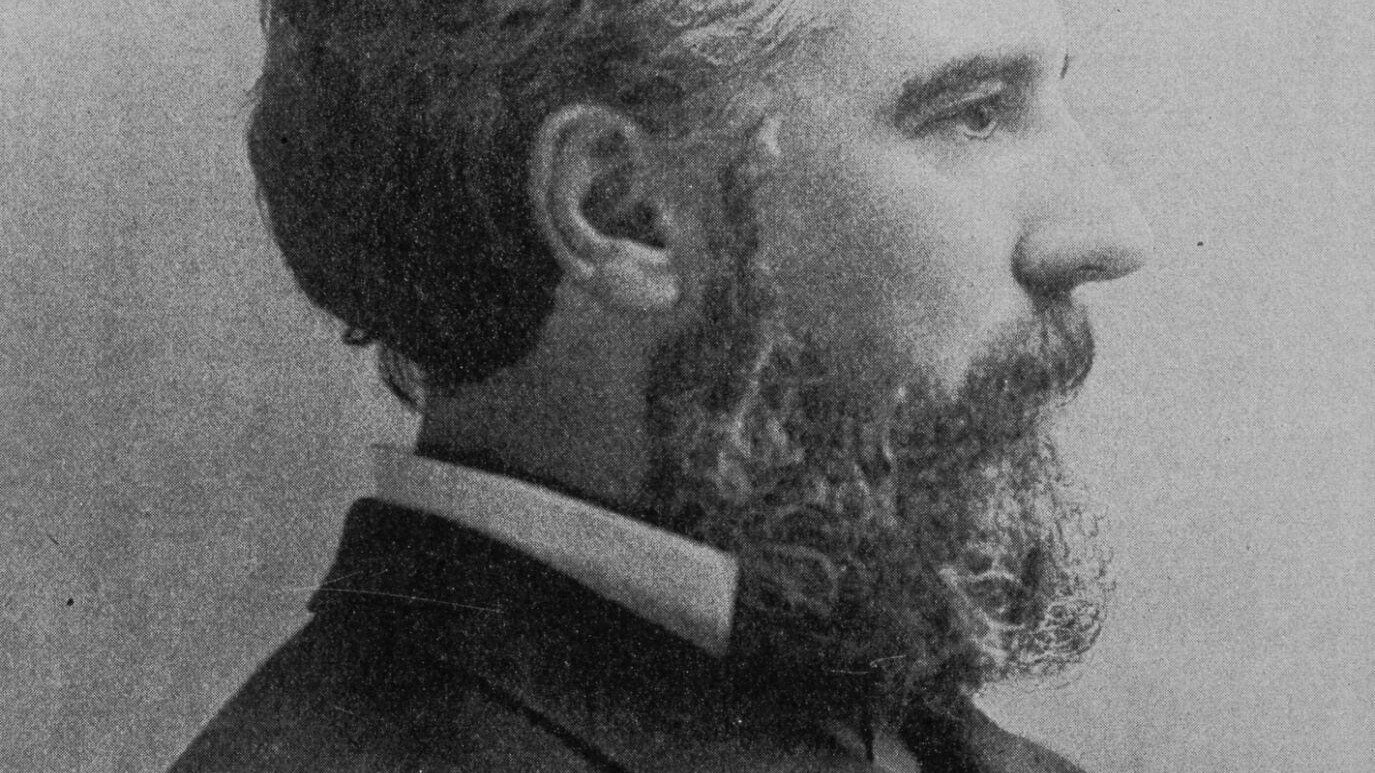
Alexander Bell was a man whose curiosity knew no boundaries. While history textbooks often reduce his legacy to a single, world-changing invention—the telephone—Bell himself viewed the world as a vast laboratory. Born in Scotland, he became a „citizen of the world,“ spending his life between the United Kingdom, the United States, and Canada, driven by a singular mission: to improve how humans communicate.
The Roots of a Visionary: Edinburgh to America
Alexander Bell was born on March 3, 1847, in Edinburgh, Scotland. He was the son of Alexander Melville Bell, a famous linguist who developed „Visible Speech“—a system of symbols designed to help the deaf learn to speak by visualizing sound. This family background was not just a profession; it was a calling. Bell’s mother, Eliza Grace Symonds, was nearly deaf, yet she was an accomplished pianist. Watching her struggle to hear fueled young Alexander’s lifelong obsession with the mechanics of sound.
Bell’s early education was unconventional. He was largely homeschooled by his father and later attended the Royal High School in Edinburgh. However, he was often an indifferent student, more interested in biology and „tinkering“ than in traditional curriculum. At the age of 15, he moved to London to live with his grandfather, also an elocutionist, who transformed him into a disciplined scholar.
Tragedy struck the family in the late 1860s when both of Alexander’s brothers died of tuberculosis. Fearing for their remaining son’s health, the Bells moved to Brantford, Ontario, Canada, in 1870. It was here, in the „Telephone City,“ that Bell began his experiments that would eventually lead to his greatest fame.
The Invention of the Telephone: „Mr. Watson—Come Here“
In 1871, Bell moved to Boston to teach at the Boston School for Deaf Mutes. While working with his students, he became fascinated by the idea of transmitting multiple telegraph messages over a single wire—a concept called the „harmonic telegraph“.
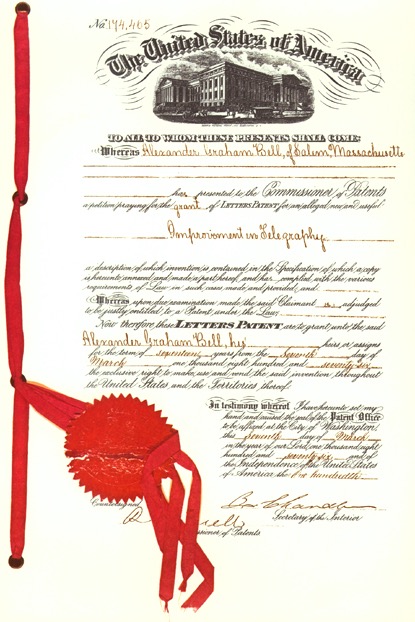
By 1875, with the financial backing of Thomas Sanders and Gardiner Hubbard (his future father-in-law), Bell hired a talented young machinist named Thomas Watson. Together, they worked tirelessly to turn sound into electrical impulses. On March 7, 1876, Bell was granted U.S. Patent No. 174,465—often cited as the most valuable patent in history.
The breakthrough came just three days later, on March 10, 1876. While testing a liquid transmitter, Bell famously called out to his assistant in the next room: „Mr. Watson—come here—I want to see you“. These were the first intelligible words ever transmitted via electricity. Though the device was primitive, the world would never be the same. In 1877, he formed the Bell Telephone Company, which would eventually evolve into the global giant AT&T in 1885.
Beyond the Wire: The Photophone and Metal Detector
Bell often remarked that he was an inventor by necessity and a teacher of the deaf by choice. In 1880, he used the prize money from the French Volta Prize to establish the Volta Laboratory in Washington, D.C.. It was here that he developed what he considered his greatest invention: the photophone.
The photophone transmitted speech on a beam of light rather than a wire. By using a vibrating mirror to modulate sunlight onto a selenium receiver, Bell successfully sent a message over 200 yards. Although it was impractical at the time due to weather interference, the photophone is today recognized as the direct ancestor of modern fiber optics.
Bell’s ingenuity also extended to medicine. In 1881, after the assassination attempt on President James A. Garfield, doctors could not locate the bullet lodged in the president’s back. Bell quickly developed an induction-balance device—the world’s first practical metal detector—to help. While the device failed to find the bullet (largely because the President was lying on a new-fangled metal coil mattress that interfered with the signal), the technology was later used successfully in wars to save countless lives.
A Lifelong Mission: Helen Keller and Deaf Education
Despite his fame as an inventor, Bell’s heart remained with the deaf community. He became a mentor and close friend to Helen Keller. In 1886, Keller’s parents contacted Bell seeking help for their blind and deaf daughter. Bell directed them to the Perkins School for the Blind, which led to the appointment of Anne Sullivan as her teacher. Keller later dedicated her autobiography to Bell, stating he was the one who opened the „door through which I should pass from darkness into light“.
However, Bell’s legacy in the deaf community is complex. He was a staunch advocate for oralism—the belief that deaf people should be taught to speak and read lips rather than use sign language. He feared that the use of sign language would create a „deaf variety of the human race“ through intermarriage, a view that has drawn significant criticism from modern Deaf culture advocates.
Kites, Planes, and Hydrofoils: The Final Frontier
In his later years, Bell turned his attention to the skies and the seas. He spent his summers at his estate, Beinn Bhreagh, in Baddeck, Nova Scotia. Fascinated by aerodynamics, he experimented with massive tetrahedral kites—structures that were incredibly strong yet light.
In 1907, he co-founded the Aerial Experiment Association (AEA) with his wife Mabel’s funding. The group’s work culminated in the Silver Dart, which on February 23, 1909, performed the first powered flight in Canada and the British Empire. Bell also contributed to the invention of the aileron, the hinged part of a wing that allows a pilot to roll an aircraft.
Not content with the air, Bell also conquered the water. In 1919, his HD-4 hydrofoil set a world marine speed record of 70.86 mph (114 km/h), a record that stood for a decade.
The Legacy of a Curious Mind
Alexander Graham Bell passed away on August 2, 1922, at the age of 75. He was buried atop a mountain at his beloved Beinn Bhreagh. On the day of his funeral, every telephone in the United States and Canada was silenced for one minute in a poignant tribute to the man who gave the world its voice.
Beyond the gadgets, Bell’s legacy lives on through the National Geographic Society, which he co-founded in 1888 and served as its second president. He wasn’t just an inventor; he was a visionary who believed that science should be used to benefit humanity. As he once said: „An inventor is a man who looks upon the world and is not contented with things as they are. He wants to improve whatever he sees“.
- Открадната история: Операция „МАРАТОН“ и кражбата на „История славянобългарска“
- Открадната история: Как от Лувъра изчезнаха бижута за 88 милиона евро за 8 минути

- Открадната история: редки книги за 3,2 милиона долара, сред които първи издания на Галилей и Нютон, са открити в къща в Румъния
- Открадната история: нюйоркски колекционер връща 180 артефакта от 11 държави на стойност 70 милиона долара

- Христо Кръстев: сред победителите във въздушния бой на 1 август 1943 г.

- Петър Бочев: последният полет на един български летец

Вашият коментар