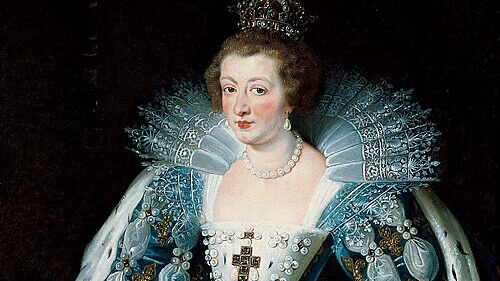
History often overlooks women whose power is exercised patiently. Those who rule quietly, through endurance rather than spectacle, rarely fit heroic narratives. Anne of Austria did not conquer, did not dazzle, and did not rule through dramatic reform. Yet for more than two decades, France was shaped by her decisions, her restraint, and her ability to hold authority together in moments of deep instability.
This is Part Seven of the series Women Behind the Throne, following Joséphine de Beauharnais, and continuing our exploration of women who governed not by standing at the center of the stage, but by sustaining power when it was most fragile.
A Queen Trained to Endure
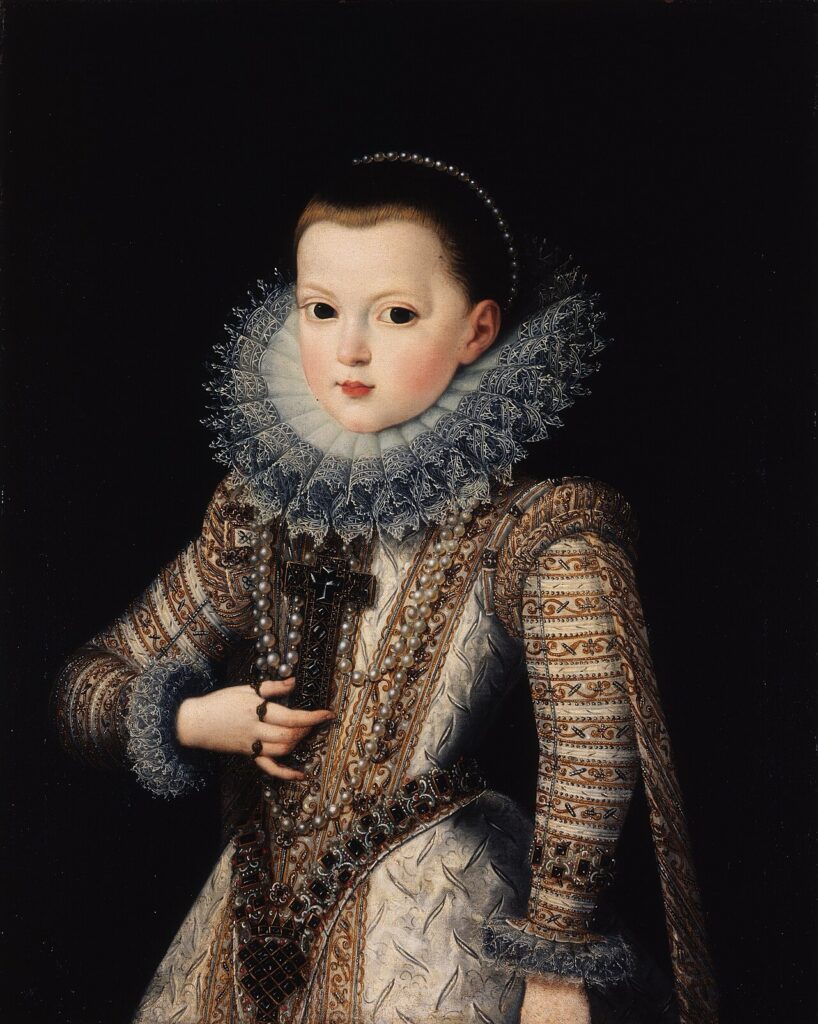
Anne of Austria was born in Spain into the powerful Habsburg dynasty, raised in an environment of strict Catholic devotion and rigid court etiquette. From an early age, she learned discipline, patience, and emotional restraint—qualities that would later define her political survival.
At fourteen, she was married to Louis XIII of France as part of a diplomatic alliance between rival powers. The marriage was distant and deeply unhappy. For many years, Anne remained isolated at the French court, surrounded by suspicion, political hostility, and persistent rumors questioning her loyalty. Her long childlessness intensified her vulnerability and undermined her position as queen consort.
For more than two decades, Anne held a title without power. She learned to wait.
Power Arrives Late
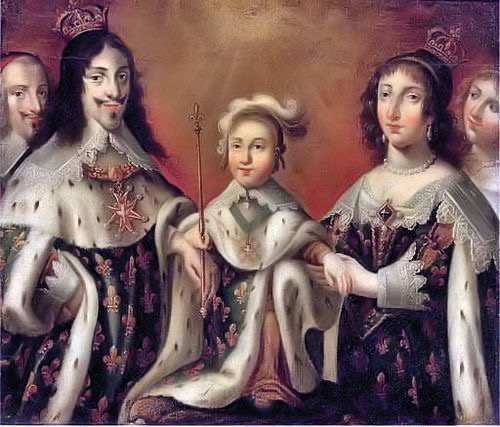
Anne’s authority did not emerge gradually. It arrived suddenly, at the moment of greatest crisis. When Louis XIII died in 1643, the throne passed to their four-year-old son, Louis XIV. France was exhausted by war, factional conflict, and noble unrest. The kingdom required stability, not spectacle.
Anne secured the regency against powerful rivals who doubted both her ability and her legitimacy. She asserted her authority calmly, relying on law, procedure, and institutional continuity rather than confrontation. Her first and most decisive act was the appointment of Cardinal Mazarin as her chief minister.
This decision defined her rule.
Governing Through Trust
Anne of Austria understood that power did not require constant visibility. Mazarin became the public face of governance, absorbing criticism, hostility, and blame. Behind him stood Anne—steady, resolute, and unwavering in her support.
This was not abdication. It was strategy.
By delegating authority without surrendering control, Anne insulated the monarchy from direct attack. She protected her son’s future by allowing political storms to break elsewhere. Her loyalty to Mazarin never faltered, even when rebellion and exile threatened to undo the government entirely.
Her power lay in persistence.
The Fronde and the Test of Authority
The Fronde, a series of civil conflicts led by the French nobility, was the defining trial of Anne’s regency. Paris rebelled. Authority fractured. The royal family was forced to flee the capital.
Anne did not collapse under pressure. She endured humiliation, displacement, and public hostility without surrendering long-term control. She refused to appease rebellion at the cost of royal authority. Instead, she waited.
The Fronde ultimately exhausted itself. The monarchy survived intact. When order returned, noble resistance had been permanently weakened.
Anne’s victory was quiet but decisive.
Motherhood as Statecraft
Anne ruled above all as a mother. Every decision during her regency was shaped by a single objective: to deliver a stable and unquestioned throne to her son.
She shielded Louis XIV from political chaos while preparing him for authority. The absolute monarchy that would later define his reign was not created suddenly. It was forged during the years of his mother’s regency.
Anne did not rule for personal legacy. She ruled for continuity.
Withdrawal from Power
When Louis XIV reached his majority, Anne did not cling to authority. She withdrew gradually, allowing her son to assume full control of the state. Unlike many regents, she did not attempt to govern through him indefinitely.
Her retreat was deliberate. Her task was complete.
Anne spent her final years in relative seclusion, devoted to religious life. She died in 1666, having secured the survival of the French monarchy through one of its most vulnerable periods.
What Remains After Anne of Austria
Anne of Austria rarely commands popular fascination. She lacks the drama of Catherine de’ Medici, the longevity of Eleanor of Aquitaine, or the allure of Joséphine de Beauharnais. Yet her impact is no less profound.
She ruled when ruling was thankless. She governed when endurance mattered more than vision. She exercised power not to create legend, but to preserve stability.
In a series devoted to women behind the throne, Anne of Austria represents one of its purest forms. She did not seek the spotlight.
She held the crown steady until it could stand on its own.
Previously in Women Behind the Throne:
Catherine de’ Medici
Eleanor of Aquitaine
Madame de Pompadour
Joséphine de Beauharnais
Вашият коментар