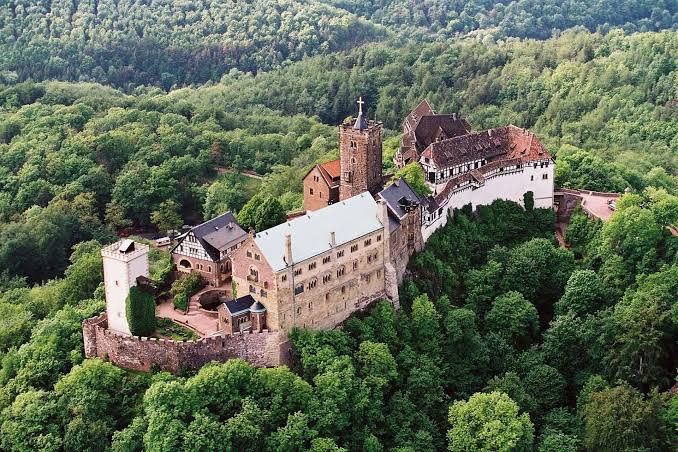
High above the forests of central Germany stands Wartburg Castle, one of Europe’s most remarkable medieval fortresses. For nearly 1,000 years, it has witnessed kings, saints, poets, and reformers, becoming one of Germany’s greatest cultural landmarks.
Unlike many castles remembered only for battles, Wartburg changed history through ideas. It was here that Martin Luther, while living in exile, translated the New Testament into German, forever transforming both Christianity and the German language.
A Fortress Above the Forest
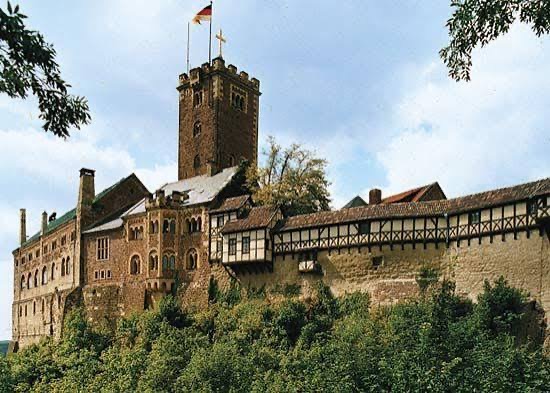
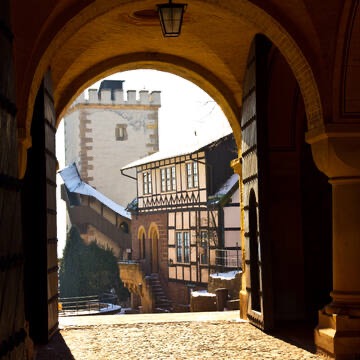
Wartburg Castle was founded around 1067 by Louis the Springer, Landgrave of Thuringia. Perched about 400 meters above the surrounding countryside near Eisenach, the fortress commanded important routes through central Germany and quickly became one of the region’s most powerful strongholds.
The magnificent palace built during the 12th century remains one of the finest surviving examples of Romanesque secular architecture in Germany.
The Castle of Poets and Legends
Long before Martin Luther arrived, Wartburg had already become famous throughout medieval Europe.
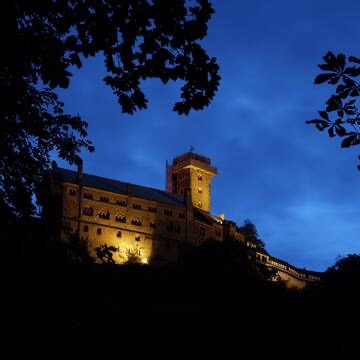
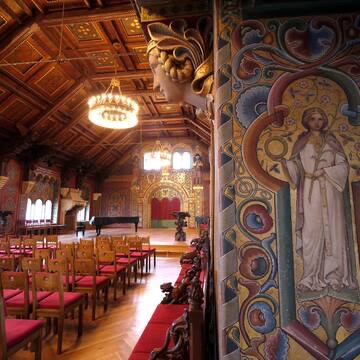
During the reign of Hermann I, Landgrave of Thuringia, the castle became a center of German literature and culture. Great medieval poets such as Walther von der Vogelweide and Wolfram von Eschenbach visited the court, giving Wartburg the reputation of being the „Court of the Muses.“
Legend also places the famous Sängerkrieg—the Contest of the Minstrels—within its walls, a story that later inspired Richard Wagner’s opera Tannhäuser.
Martin Luther’s Exile
The castle’s most famous chapter began in 1521.
After refusing to renounce his beliefs at the Diet of Worms, Martin Luther was declared an outlaw by Emperor Charles V.
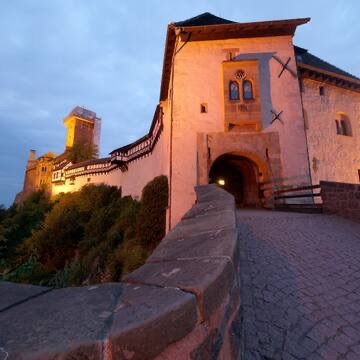
To protect him, Frederick the Wise secretly arranged for Luther to be brought to Wartburg Castle, where he lived under the name „Junker Jörg“ (Knight George).
During nearly ten months of exile, Luther completed one of the most influential works in European history—his translation of the New Testament into German.
For the first time, ordinary people could read the Scriptures in a language they understood. His translation helped shape modern written German and became one of the defining achievements of the Protestant Reformation.
The Castle of Saint Elizabeth
Wartburg is also closely connected with Saint Elizabeth of Hungary, one of Europe’s most beloved medieval saints.
Living at the castle during the early 13th century, Elizabeth became renowned for her charity and devotion to the poor. Her compassion and generosity made her one of Christianity’s most admired figures, and pilgrims continue to associate Wartburg with her remarkable life.
A Symbol of Germany
By the 19th century, Wartburg had become much more than a medieval fortress.
In 1817, students gathered there during the famous Wartburg Festival, calling for German unity and greater political freedom. The event became one of the earliest symbols of the movement that eventually led to the unification of Germany.
During the same century, the castle underwent careful restoration, preserving its medieval character while reinforcing its symbolic importance for the German nation.

A UNESCO World Heritage Site
Today, Wartburg Castle welcomes hundreds of thousands of visitors every year.
Recognized as a UNESCO World Heritage Site since 1999, it is celebrated not only as an outstanding medieval fortress but also as a place where religion, literature, politics, and architecture shaped European history.
Few castles can claim such an extraordinary legacy.
Within its walls, saints cared for the poor, poets created legends, students dreamed of national unity, and Martin Luther produced a translation that forever changed the German language.
For nearly a thousand years, Wartburg Castle has stood not only as a fortress of stone, but as a fortress of ideas.
- Петър Бочев: последният полет на един български летец

- Стоян Стоянов: защитникът на София, който стана екскурзовод в Рилския манастир

- Чудомир Топлодолски: от защитник на българското небе до строител на стадион „Васил Левски“

- Жените до трона: Кераца Петрица – майката на Йоан Александър, до която писа папата
- Българските земи през 1437 година: разказът на един баварски бенедиктински монах
- Съкровище от Мурано край Бургас? Загадката на стотици венециански стъклени съдове от Черно море

Вашият коментар