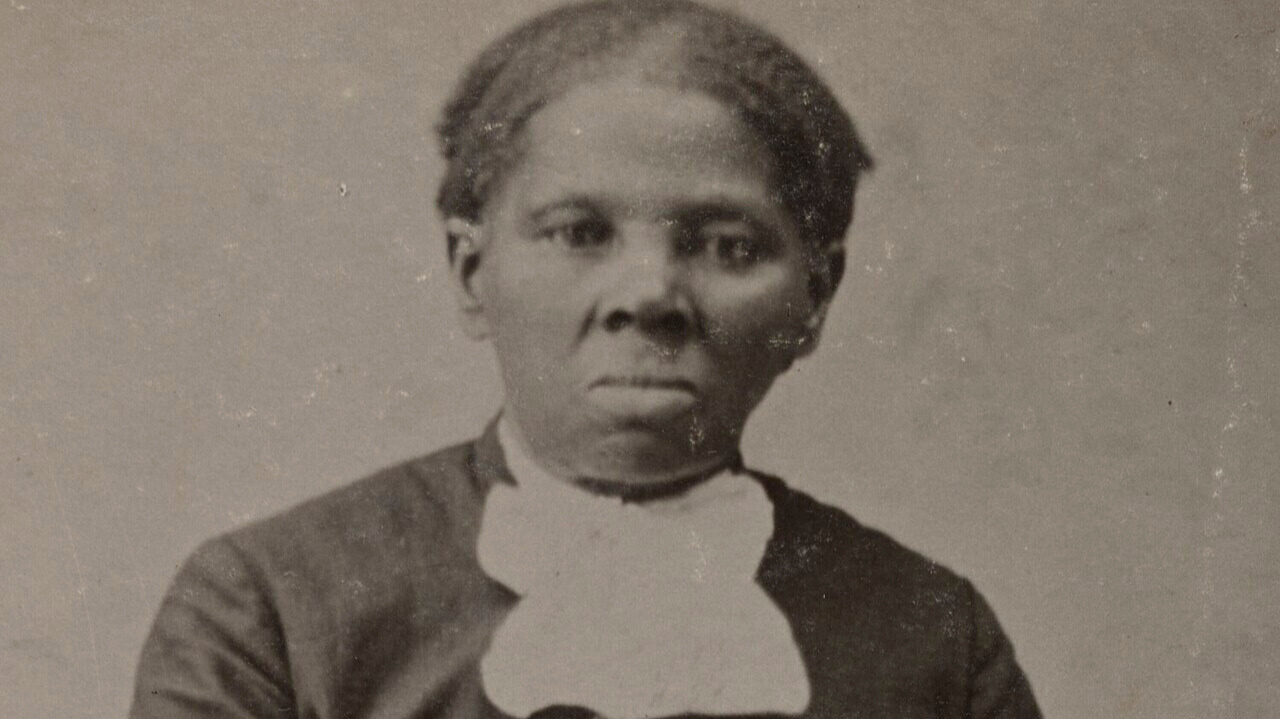
There are stories that sound like legend, yet are written in mud on worn shoes and fear caught in the throat. Harriet Tubman’s story does not begin with trumpets, but with whispers — the whispers of people who know that every word might be their last. Born as Araminta Ross in Maryland, she grew up in a world where a human body had a price, and a name had value only if someone owned it. Her childhood was not a memory of games, but of commands. Not of choice, but of survival.
One blow changed everything. Still a child, she stepped in to protect another enslaved person. The overseer hurled a heavy metal object. It missed the fleeing man. It struck her instead. From that day on, Harriet lived with pain, with sudden seizures and visions that came like waves. Some might call it weakness. She accepted it as a calling. The pain became part of her inner compass — a sign that her life would not be ordinary.
When she learned that she might be sold, her decision was not impulsive. It had matured in silence. Escape was not romance. It was walking through the night, where every rustle meant danger. When she reached free territory, she later described the feeling: “I looked at my hands to see if I was the same person.” Freedom did not arrive with celebration. It came with disbelief — with the question of whether it was a dream.
Returning to the Place You Fled
Most people would have stayed. They would have begun a new life and tried to forget the old one. But for Harriet, freedom was unbearable if it was not shared. The thought of her family, her friends, those still behind the line of fear, gave her no rest. And so she did the unthinkable — she turned back.
What the world calls the Underground Railroad was not a railway, but human faith in humanity. Houses with hidden rooms. Farms where a candle in the window was a signal. People risking not just reputation, but their lives. Harriet became a conductor. Not because she sought a title, but because she had direction. She knew the paths, the rivers, the trees that could conceal a shadow.
The journeys were at night. Silence was law. If someone panicked and wanted to turn back, she understood — fear was natural. But turning back meant death for everyone. In those moments she was firm. Not out of cruelty, but clarity. She carried the weight of responsibility — for every step, for every breath.
When she later said she had never lost a passenger, it was not boasting. It was testimony to discipline, to attention, to sleepless nights in which her mind mapped routes and her heart counted faces.
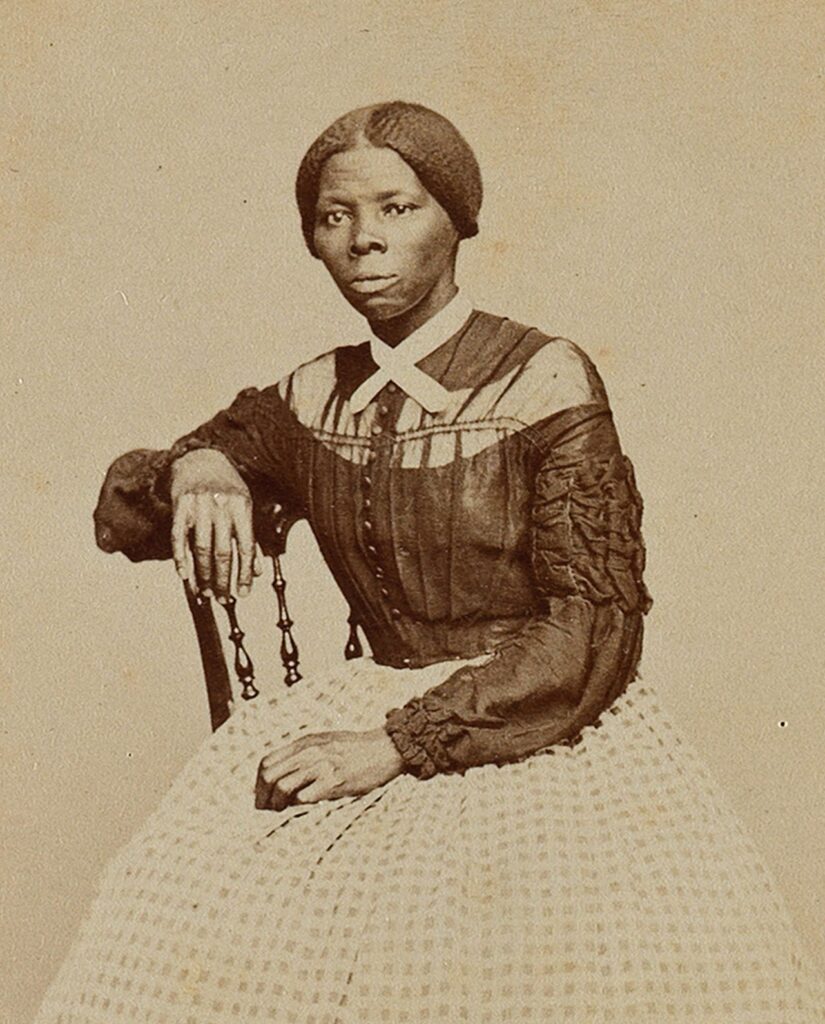
Between Fear and Faith
Harriet’s faith was not abstract. It was a conversation. She spoke to God as one speaks to a friend — sometimes quietly, sometimes insistently. Her visions frightened her, but they also guided her. She believed she was called. And that certainty gave her a calm that confused her enemies. How do you defeat someone who does not fear death, because she has already endured something worse — life without freedom?
Over time, her name began to travel like rumor. The rewards for her capture increased. But she moved like a shadow. Her weapon was not loud. It was knowledge — of people, of terrain, of the system’s weaknesses. She knew when to wait and when to move. She knew that sometimes the longest road was the safest.
The hardest moments were when she led children. A cry could betray them. Cold could break them. Then she became more than a guide — she became an anchor. Sometimes she told stories to distract them from fear. Sometimes she simply walked ahead so they could see her back and know there was direction.
War and a New Battlefield
When the Civil War shook America, Harriet did not remain a spectator. She entered camps that smelled of gunpowder and pain. She worked as a nurse, a cook, a scout. War was another kind of night — loud, chaotic, without guarantees. But she recognized in it an opportunity. An opportunity not to free small groups, but entire communities.
Her participation in the Combahee River Raid was not merely a military episode. It was a symbol. A woman, once enslaved, helping lead an operation that freed hundreds. It was a reversal of history that even the boldest imagination might hesitate to invent. Yet it happened.
After the war, the world did not greet her with honors. Life did not become easy. The pension owed to her came late. But she did not measure her worth in recognition. She continued to care for those around her. She continued to believe that freedom is a process, not an event.
A Home as Refuge
In her later years, Harriet established a home for the elderly and needy. She knew what it meant to have no place to return to. So she created such a place for others. Her home was not merely a building. It was an idea — that society owes something to those who have given more than they received.
In her conversations, she did not dramatize the past. She spoke simply. Sometimes she smiled remembering the nights she walked with a group of people, and above them the sky had been so clear that the stars looked like signposts. For her, they were exactly that — guides.
The Legacy of Quiet Strength
When she died in 1913, America was different. Slavery had been abolished, but wounds remained. Her story began to be told. Her portrait appeared in books, in museums, in conversations about courage. But the most important legacy was not the image. It was the example.
Harriet Tubman showed that morality is not convenience. It is a choice — often painful. She showed that freedom is not a gift, but a journey — sometimes long, sometimes dangerous, always requiring courage. She showed that a person can be both vulnerable and unbreakable.
Her story is not about heroism in the conventional sense. It is about persistence. About nights that seem endless but end in morning. About steps that may be small, yet lead far.
And if today we ask what it means to be free, perhaps the answer is not found in declarations and laws. Perhaps it is found in the willingness to return for another. To extend a hand. To walk at night, if necessary.
Because sometimes the strongest light does not come from torches, but from a person who refuses to leave others in the dark.
- Петър Бочев: последният полет на един български летец
- Стоян Стоянов: защитникът на София, който стана екскурзовод в Рилския манастир
- Чудомир Топлодолски: от защитник на българското небе до строител на стадион „Васил Левски“
- Жените до трона: Кераца Петрица – майката на Йоан Александър, до която писа папата
- Българските земи през 1437 година: разказът на един баварски бенедиктински монах
- Съкровище от Мурано край Бургас? Загадката на стотици венециански стъклени съдове от Черно море

Вашият коментар