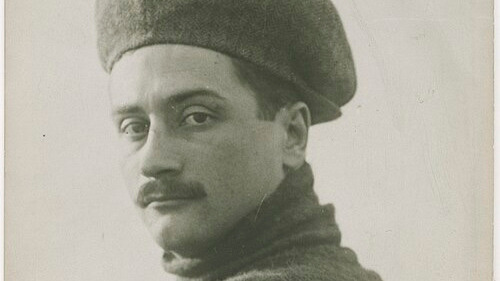
Today, millions of fans around the world will watch the final of the French Open, one of the most prestigious tournaments in world tennis. For most people, the name “Roland Garros” is synonymous with the red clay courts of Paris, legendary champions, and unforgettable sporting battles.
Yet few know that the man whose name the tournament bears never won a tennis title. He was not even a professional athlete. Roland Garros was one of the pioneers of aviation, a national hero of France, and a daring pilot who left his mark on history long before the first tennis ball was struck on the courts that now carry his name.
Born at the Edge of the French Empire
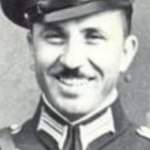
Roland Adrien Georges Garros was born on October 6, 1888, in Saint-Denis on the island of Réunion, a French territory in the Indian Ocean. Although he grew up far from mainland France, he later moved to Paris, where he studied at the HEC School of Business.
Fate, however, had different plans for him. At the beginning of the twentieth century, aviation was still in its infancy. Aircraft were unreliable, engines frequently failed, and every flight carried a real risk of death. It was this new and uncertain world that fascinated the young Garros.
In 1909, he began flying a Demoiselle aircraft designed by the Brazilian aviation pioneer Alberto Santos-Dumont. Within a few years, he had established himself as one of the most promising figures in French aviation.
The Age of Aviation Pioneers
Today, air travel is a routine part of life, but more than a century ago flying was regarded much like space exploration would be decades later. Pilots were seen as adventurers willing to challenge the unknown.
Garros quickly gained fame through air races, demonstrations, and record-breaking flights. His courage and confidence earned him a reputation as a man willing to attempt what others considered impossible.
It was this determination to push beyond accepted limits that would make him a legend.
The Flight That Amazed the World
On September 23, 1913, Roland Garros undertook a journey that many believed could not be done.
Taking off from Fréjus on France’s Mediterranean coast, he set course for Bizerte in Tunisia. Between the two points lay hundreds of kilometers of open sea. If his engine failed, survival would be unlikely.
For nearly eight hours he flew over the Mediterranean, relying solely on his aircraft, his skill, and his courage.
When he landed in Tunisia, he became the first person in history to cross the Mediterranean Sea by airplane.
The achievement made headlines around the world. Garros became an international celebrity and a symbol of a new era in which the skies were no longer beyond humanity’s reach.
When War Changed Everything
Less than a year after his historic flight, Europe descended into the chaos of the First World War.
Garros immediately joined the French Army as a military pilot. At the time, aerial combat was still a new concept, and aviation was only beginning to find its role on the battlefield.
One of the greatest challenges facing early fighter aircraft was how to fire a machine gun straight ahead without destroying the propeller. Garros helped develop a system that allowed bullets to pass through the propeller arc by using metal deflector plates mounted on the propeller blades.
Though imperfect, the solution proved revolutionary and gave French pilots a significant advantage.
Captured Behind Enemy Lines
In April 1915, during a combat mission, his engine failed.
Garros was forced to land behind German lines and was taken prisoner. Although he attempted to destroy his aircraft, German engineers managed to examine parts of the technology he had been using.
German aircraft designer Anthony Fokker later developed a more advanced synchronization system between machine guns and propellers, a breakthrough that would play a major role in Germany’s air war efforts.
Garros himself would spend nearly three years as a prisoner of war.
The Great Escape
After several failed attempts, he finally escaped captivity in 1918 together with another French officer. Following a dangerous journey across Germany, the two men reached the neutral Netherlands and eventually returned to France.
Many believed that his ordeal was reason enough to remain away from the front lines. Garros disagreed.
Despite concerns about his health, he insisted on returning to combat duty.
His Final Flight
On October 5, 1918, just one day before his thirtieth birthday, Roland Garros took off on another mission over the Ardennes.
His aircraft was shot down near the town of Vouziers.
The war would end only a few weeks later.
France had lost one of its most celebrated aviators, a man who had helped shape both the development of aviation and its role in modern warfare.
How an Aviator Gave His Name to Tennis
The most remarkable chapter of Roland Garros’s story began after his death.
In 1927, the French Davis Cup team, famously known as “The Four Musketeers” — René Lacoste, Jean Borotra, Henri Cochet, and Jacques Brugnon — defeated the United States and won the Davis Cup.
As defending champions, France needed a new stadium to host the next edition of the competition. Land for the project was provided by the Stade Français sports club, but on one condition: the new stadium had to be named after one of the club’s distinguished members.
Émile Lesieur, president of Stade Français and a close friend of Garros from their student days, proposed naming the stadium after the fallen aviator who had become a national hero.
The proposal was accepted.
In 1928, the new venue opened as Stade Roland Garros. Over time, it became the home of the French Open, and eventually the stadium’s name became synonymous with the tournament itself.
Thus, one of the most recognizable names in world sport was born.
A Legacy Greater Than Sport
Today, the name Roland Garros is known by millions of people across the globe. Most associate it solely with tennis.
Yet behind that name stands the story of a man who risked his life in the earliest days of aviation, crossed the Mediterranean, survived years of captivity, and returned to combat despite overwhelming odds.
His life is a reminder that history often works in unexpected ways. One of France’s greatest aviation heroes was not immortalized through an airport or an air force academy, but through a tennis tournament.
Perhaps that is what makes his legacy so remarkable. More than a century after his death, Roland Garros continues to be remembered around the world — even if many people do not realize the extraordinary story behind the name.
- Открадната история: Как от Лувъра изчезнаха бижута за 88 милиона евро за 8 минути
- Открадната история: редки книги за 3,2 милиона долара, сред които първи издания на Галилей и Нютон, са открити в къща в Румъния
- Открадната история: нюйоркски колекционер връща 180 артефакта от 11 държави на стойност 70 милиона долара

- Христо Кръстев: сред победителите във въздушния бой на 1 август 1943 г.

- Петър Бочев: последният полет на един български летец
- Стоян Стоянов: защитникът на София, който стана екскурзовод в Рилския манастир
Вашият коментар