As the Rhine winds past the legendary Lorelei Rock, two medieval castles rise above the river on neighboring hills. For more than six centuries, Burg Katz and Burg Maus have watched each other across the valley, giving birth to one of Germany’s most famous castle rivalries. Although their names sound playful today, the story behind the „Cat“ and the „Mouse“ was anything but.
A Rivalry Born Along the Rhine
During the Middle Ages, the Rhine was one of Europe’s busiest trade routes. Ships loaded with wine, timber, salt, cloth, and other valuable goods sailed through the narrow valley every day. Controlling the river meant collecting tolls, protecting territories, and displaying political power.
The rivalry began in 1356, when Archbishop Bohemond II of Trier started building Burg Maus, originally known as St. Peterseck. The fortress was designed to secure Trier’s lands on the eastern bank of the Rhine and to collect tolls from passing ships.
Only a few years later, around 1371, Count Wilhelm II of Katzenelnbogen answered by constructing Burg Neukatzenelnbogen, today’s Burg Katz, overlooking the same stretch of the river. The two castles soon became symbols of the struggle between the powerful Counts of Katzenelnbogen and the Archbishopric of Trier.
Why „Cat“ and „Mouse“?
Neither fortress originally carried its famous nickname.
Burg Katz was officially called Neukatzenelnbogen Castle, while Burg Maus was known as St. Peterseck or Deuernburg. Over time, local people began referring to them simply as the „Cat“ and the „Mouse.“ The names reflected the ongoing political rivalry between the two neighboring powers, with the larger and more aggressive Burg Katz playing the role of the cat and Burg Maus becoming the mouse.
The nicknames became so popular that they eventually replaced the castles’ original names.
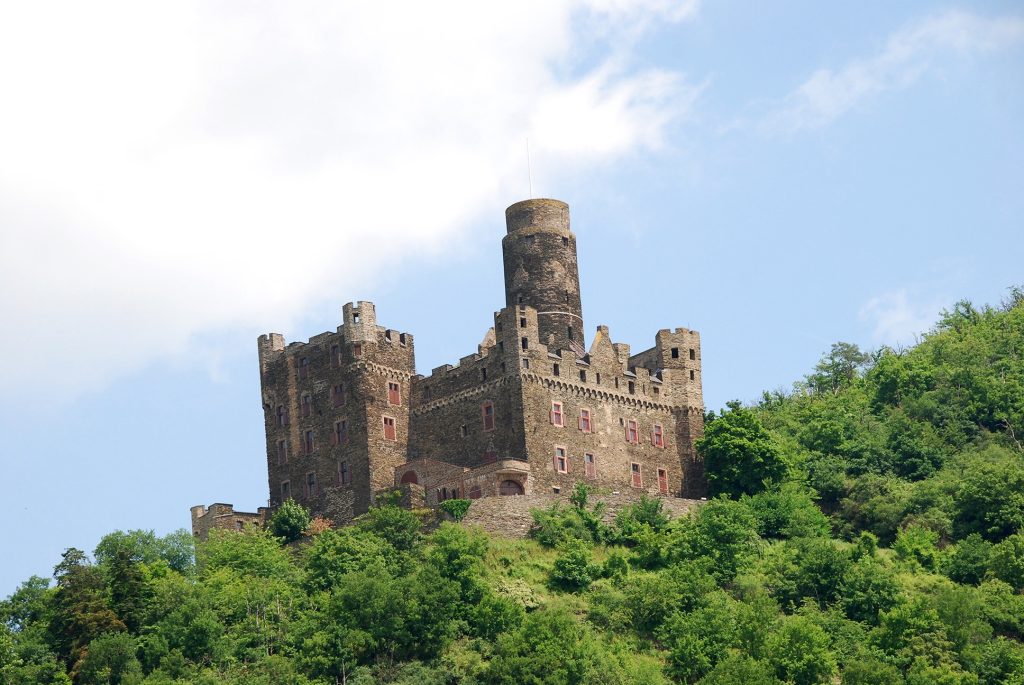
Centuries of Conflict
The rivalry did not remain symbolic for long.
During the Thirty Years’ War, both castles became part of one of the Rhine Valley’s most significant military campaigns. In 1626, Burg Katz and nearby Burg Rheinfels endured a devastating 33-day siege as rival branches of the House of Hesse fought for control of the region. Continuous artillery bombardment severely damaged Burg Katz, destroying parts of its great tower and buildings before the defenders finally withdrew with military honors.
More destruction followed in 1692, when French forces attacked the mighty Burg Rheinfels across the Rhine. Although Katz was not the primary target, French artillery also struck the castle. Another French assault in 1758 caused further damage, with the small garrison resisting for three days before running out of ammunition.
Unlike Burg Katz, Burg Maus escaped destruction. Although it gradually fell into disrepair during the following centuries, it remained largely intact and was never blown up like many other castles along the Rhine.
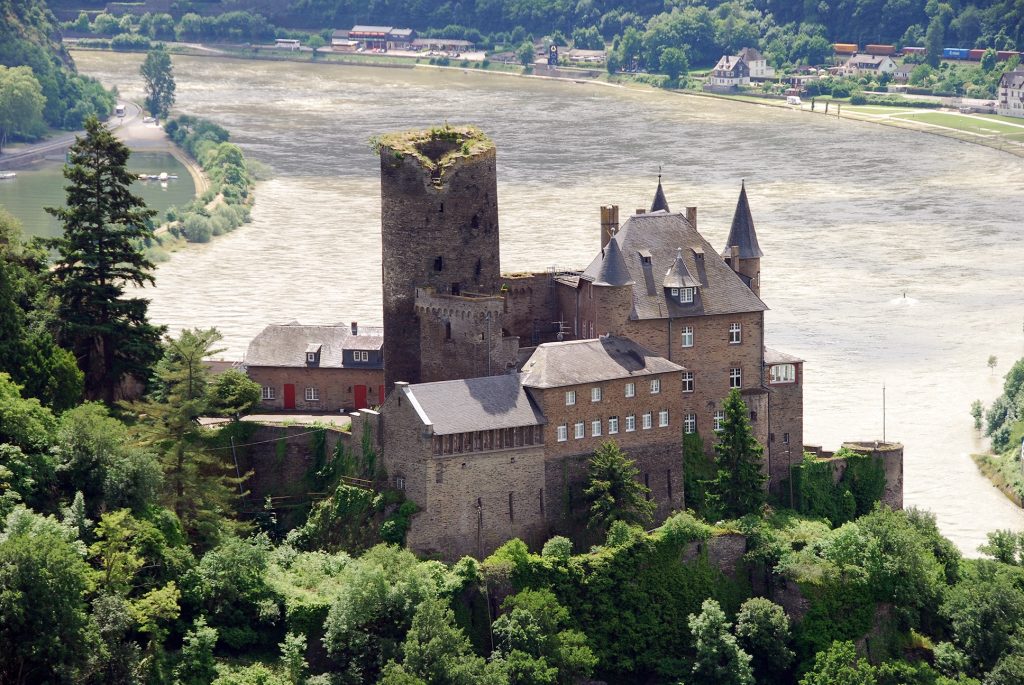
From Ruins to Landmarks
The Napoleonic Wars brought another dramatic chapter. In 1806, Burg Katz was reduced to ruins before later being restored during the late nineteenth century. Today it remains privately owned and is not open to visitors, but it continues to dominate the skyline above St. Goarshausen.
Burg Maus also faced an uncertain future. It was sold for demolition in the nineteenth century and partially dismantled before architect Wilhelm Gärtner purchased and carefully restored it between 1900 and 1906. Although damaged during World War II, it was repaired once again and still preserves much of its medieval appearance.
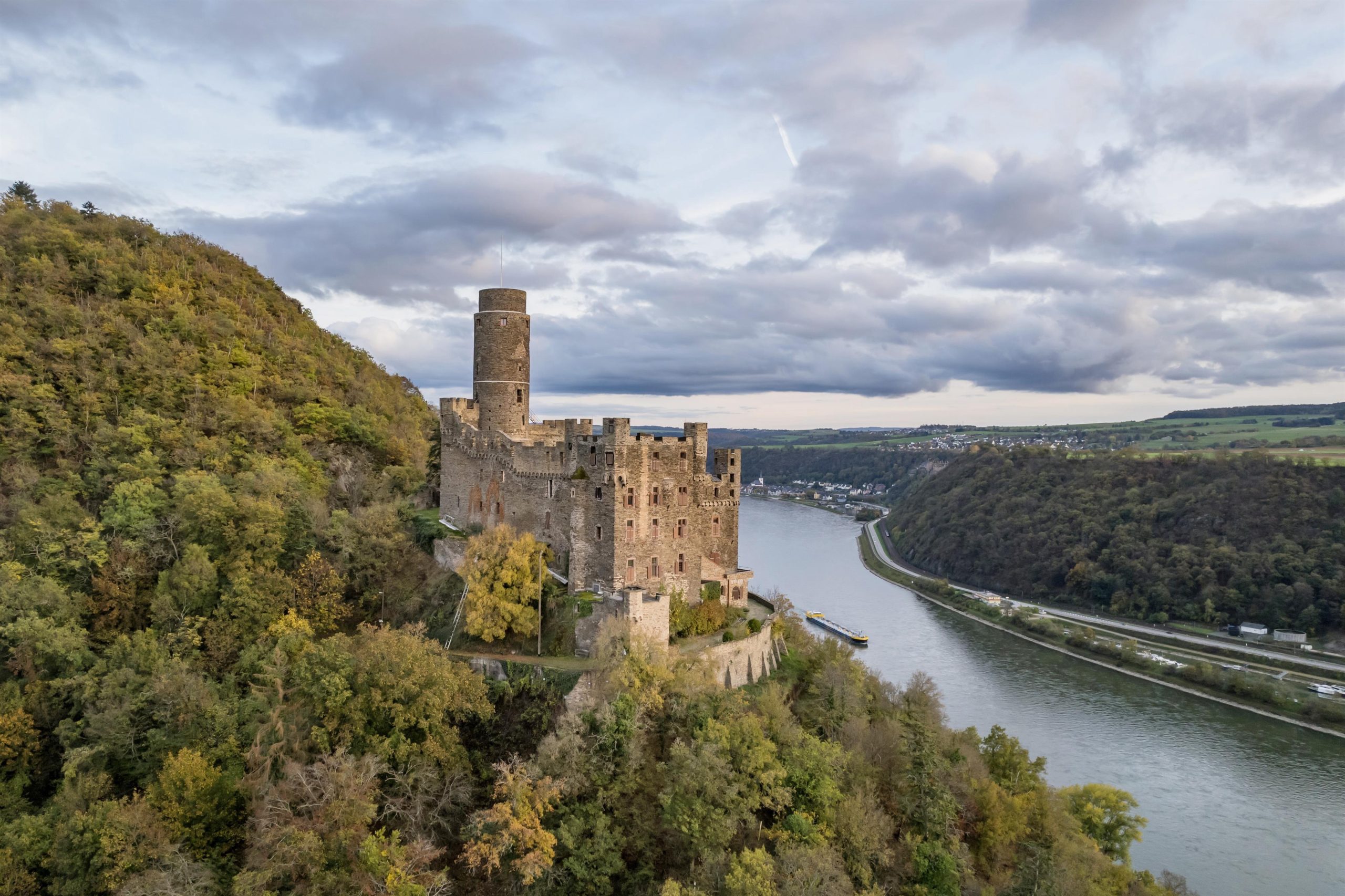
The Rhine’s Most Famous Rivals
Today, the two castles remain among the highlights of every Rhine River cruise. Standing above one of Germany’s most beautiful landscapes, Burg Katz and Burg Maus remind visitors of a time when castles were more than impressive landmarks—they were powerful symbols of ambition, rivalry, and control.
For centuries, the Cat and the Mouse have watched the Rhine together. While kingdoms disappeared and borders changed, their legendary rivalry became one of the river’s most enduring stories.
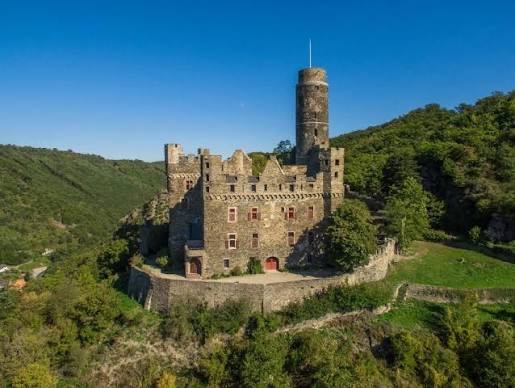
Next in the series: Rheinfels Castle – The Giant That Once Dominated the Rhine Valley.
- Открадната история: нюйоркски колекционер връща 180 артефакта от 11 държави на стойност 70 милиона долара

- Христо Кръстев: сред победителите във въздушния бой на 1 август 1943 г.

- Петър Бочев: последният полет на един български летец

- Стоян Стоянов: защитникът на София, който стана екскурзовод в Рилския манастир
- Чудомир Топлодолски: от защитник на българското небе до строител на стадион „Васил Левски“

Вашият коментар