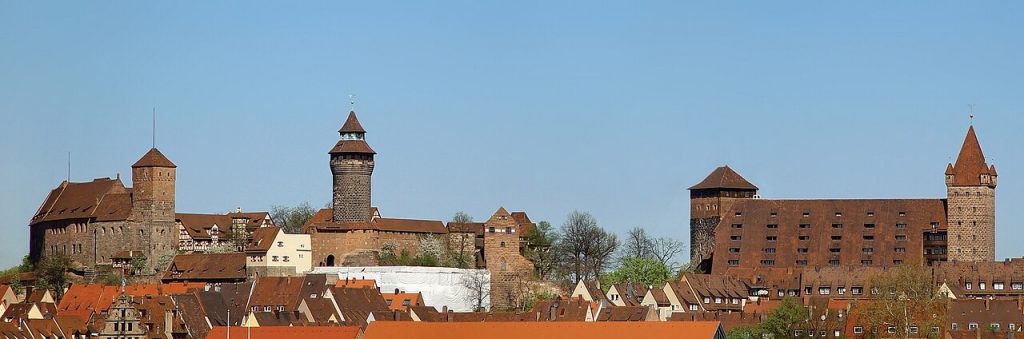
For centuries, the fate of Central Europe was decided in Nuremberg. Long before Germany became a unified nation, kings, emperors, princes, and diplomats gathered at the mighty Nuremberg Imperial Castle, making it one of the political hearts of the Holy Roman Empire. Rising above the medieval streets, the fortress was far more than a military stronghold—it was a place where rulers governed, alliances were forged, and the future of an empire was discussed.
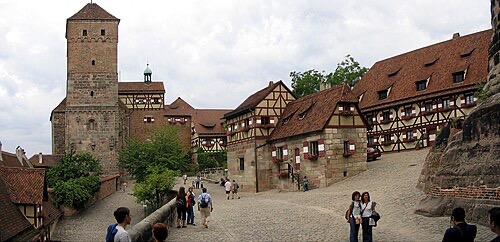
A Castle Built for Kings and Emperors
Nuremberg was first mentioned as a royal property in 1050, during the reign of the Salian dynasty. Because of its strategic position at the crossroads of major trade routes, it quickly became one of the favorite residences of German kings and emperors. To strengthen imperial authority, the Hohenstaufen dynasty transformed the rocky hill above the city into a magnificent castle complex, much of which still survives today.
The castle was far more than a military fortress. It was a place where rulers stayed during their journeys across the empire, where important political decisions were made, and where imperial assemblies shaped the future of medieval Europe.
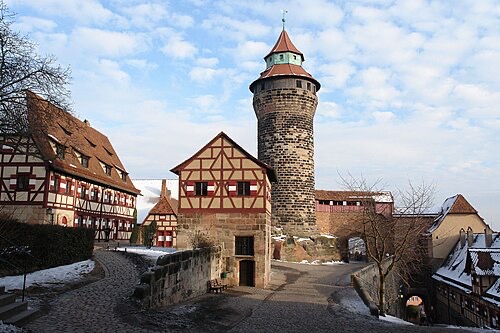
The Golden Bull That Changed Nuremberg Forever
In 1356, Emperor Charles IV issued the Golden Bull, one of the most important constitutional documents of the Holy Roman Empire.
It declared that every newly elected ruler had to hold his first Imperial Diet in Nuremberg. Together with Frankfurt, where kings were elected, and Aachen, where they were crowned, Nuremberg became one of the empire’s three great political centers.
The city’s importance is reflected in the number of imperial visits. Emperor Louis IV „the Bavarian“ stayed in Nuremberg 74 times, while Charles IV visited 52 times during his reign.
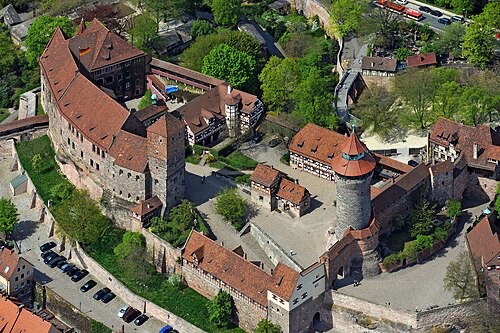
Guardian of the Imperial Crown
Nuremberg’s prestige reached another milestone in 1423, when Emperor Sigismund entrusted the city with the Imperial Regalia—the crown, orb, scepter, and other symbols of imperial authority.
For centuries, these priceless treasures remained in Nuremberg, a remarkable sign of the emperor’s trust and of the city’s exceptional status within the empire.
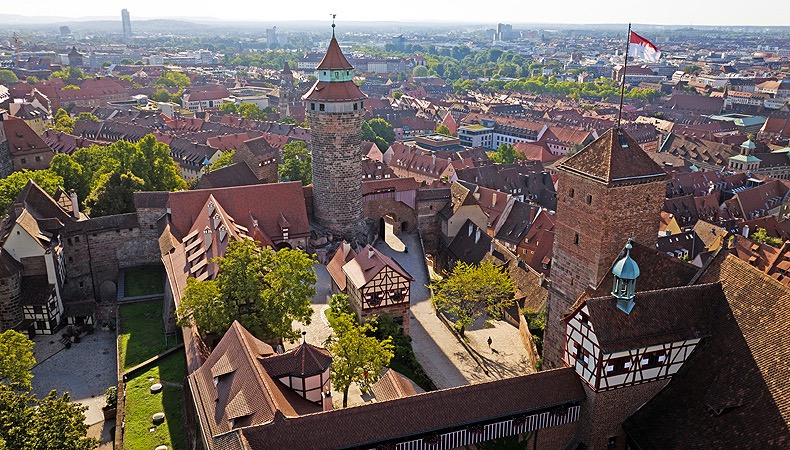
From Imperial Stronghold to Historic Landmark
After the dissolution of the Holy Roman Empire in 1806, the castle lost its political role but gained a new purpose. King Ludwig I of Bavaria ordered its restoration in the 19th century, recognizing its importance as one of Germany’s greatest historical monuments. Later, even Emperor Wilhelm II stayed at the castle and proudly referred to himself as the Burgrave of Nuremberg, emphasizing his connection to its imperial legacy.
The castle suffered severe damage during the Second World War, but its most important Romanesque and Gothic sections survived. Careful post-war restoration returned the complex to its former glory while preserving its authentic medieval character.
A Symbol of an Empire
Today, the Nuremberg Imperial Castle remains one of Germany’s most important medieval landmarks. Towering above the city’s historic center, it reminds visitors of a time when emperors, princes, and diplomats gathered within its walls to shape the destiny of the Holy Roman Empire.
More than a thousand years after its beginnings, the castle continues to stand as a powerful symbol of imperial authority and one of the finest surviving reminders of medieval Germany.
- Петър Бочев: последният полет на един български летец

- Стоян Стоянов: защитникът на София, който стана екскурзовод в Рилския манастир

- Чудомир Топлодолски: от защитник на българското небе до строител на стадион „Васил Левски“

- Жените до трона: Кераца Петрица – майката на Йоан Александър, до която писа папата
- Българските земи през 1437 година: разказът на един баварски бенедиктински монах
Вашият коментар