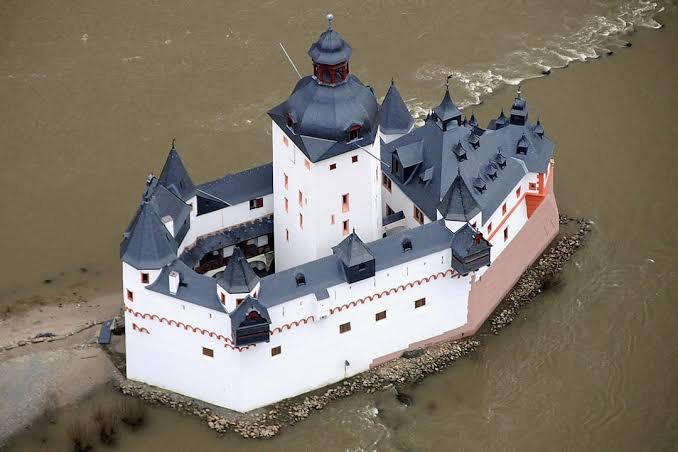
Imagine sailing along the Rhine in the Middle Ages when, suddenly, a stone fortress appears in the middle of the river. There is no hill beneath it, no surrounding village, and no way to sail around it. For medieval merchants, the sight of Pfalzgrafenstein Castle meant only one thing—prepare to pay the toll.
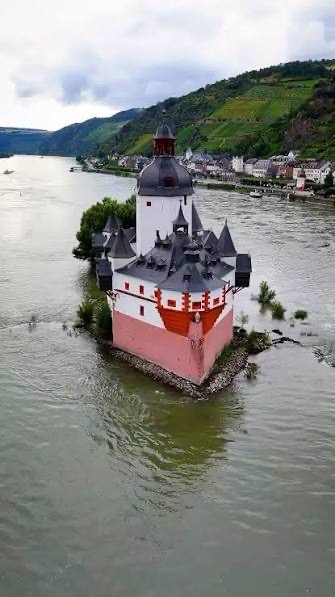
Few castles in Europe are as unusual as this remarkable fortress. Rising from a small rocky island near the town of Kaub, Pfalzgrafenstein resembles a massive stone ship anchored in the middle of the Rhine. For nearly seven centuries, it controlled one of Europe’s busiest waterways, collecting taxes from thousands of ships carrying wine, timber, grain, cloth, and other valuable goods.
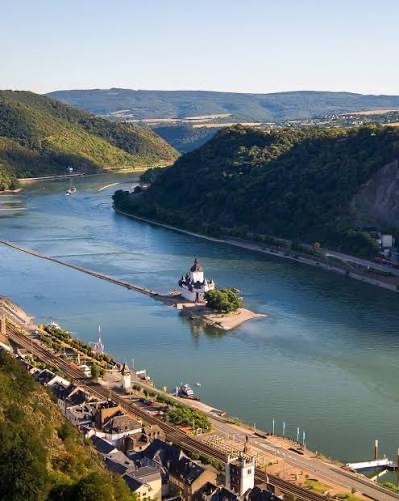
A Castle Built in the Middle of a River
Pfalzgrafenstein was constructed in 1327 by King Ludwig IV. Unlike most medieval castles, it was never intended to serve as a royal residence or a luxurious palace. Every stone of the fortress had a single purpose—to control river traffic and generate revenue.
Its location was carefully chosen. Built on the tiny island of Falkenau, the castle occupied one of the narrowest sections of the Rhine, where passing ships could be monitored with ease. From here, officials recorded cargo, collected customs duties, and ensured that merchants paid before continuing their journey.
No Ship Could Simply Sail Past
Avoiding the toll station was almost impossible.
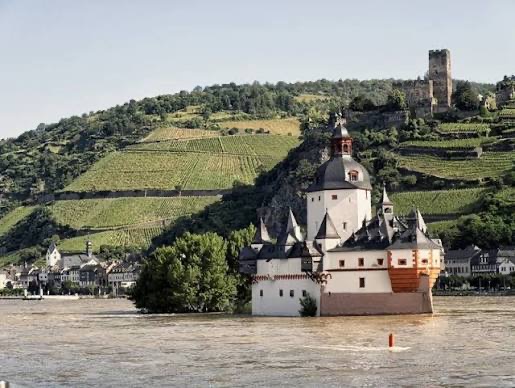
A heavy iron chain could be stretched across part of the river, forcing ships to slow down or stop completely. Guards watched every vessel approaching the island, while the nearby Gutenfels Castle, standing high on the hillside above Kaub, provided additional military protection.
Any captain attempting to evade payment risked losing both cargo and freedom. Goods could be confiscated, while merchants who refused to cooperate might find themselves imprisoned inside the fortress until their debts were settled.
For centuries, this small island castle generated enormous income simply by controlling one of Europe’s most important trade routes.
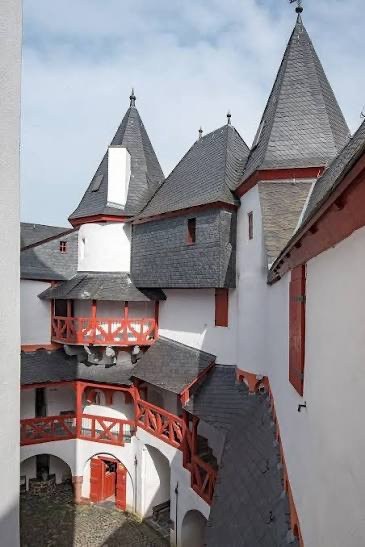
A Fortress That Defied Time
Unlike many castles in the Rhine Valley, Pfalzgrafenstein escaped the widespread destruction that swept across the region during later wars. While neighboring fortresses were damaged, abandoned, or blown up, the island fortress survived with surprisingly few changes.
Its isolated position in the middle of the river made large-scale attacks extremely difficult. Combined with the protection offered by Gutenfels Castle, Pfalzgrafenstein remained one of the safest and best-preserved fortifications along the Rhine.
Today, visitors see almost the same fortress that medieval merchants encountered hundreds of years ago.
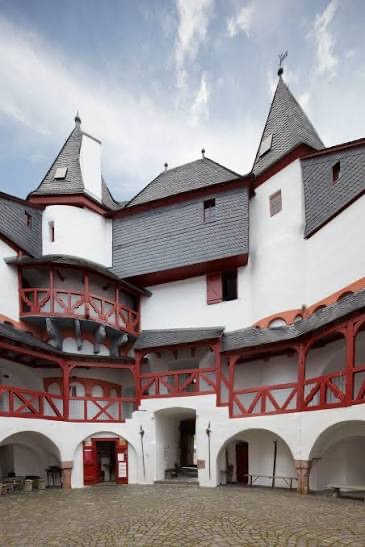
The Castle That Looks Like a Stone Ship
One of the reasons Pfalzgrafenstein has become so famous is its extraordinary appearance. Seen from a distance, the white walls surrounding its central tower resemble the hull of a ship floating on the river. It is one of the most photographed castles in Germany and one of the defining landmarks of the UNESCO-listed Upper Middle Rhine Valley.
Although small compared with giants such as Rheinfels, its unique location makes it unlike almost any other castle in Europe.
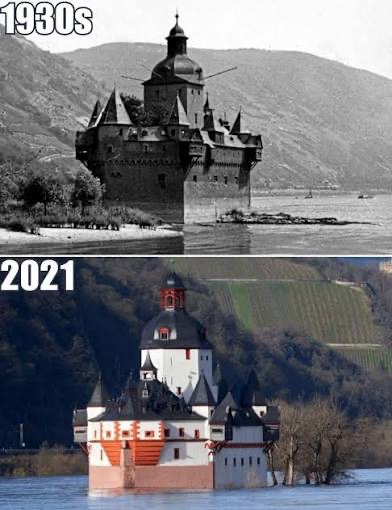
A Journey Back to the Middle Ages
Today, river cruises pass only a few meters from the island, giving visitors the same view that merchants would have seen centuries ago. Standing alone against the flowing Rhine, Pfalzgrafenstein is a reminder that medieval castles were not always built to house kings or fight great battles. Sometimes, they existed for a far simpler reason—to make sure that no one passed without paying.
Few places capture the spirit of the medieval Rhine more perfectly than this extraordinary fortress in the middle of the river.
Next in the series: Stolzenfels Castle – The Fairytale Palace Rebuilt by a King.
- Стоян Стоянов: защитникът на София, който стана екскурзовод в Рилския манастир

- Чудомир Топлодолски: от защитник на българското небе до строител на стадион „Васил Левски“

- Жените до трона: Кераца Петрица – майката на Йоан Александър, до която писа папата

- Българските земи през 1437 година: разказът на един баварски бенедиктински монах
- Съкровище от Мурано край Бургас? Загадката на стотици венециански стъклени съдове от Черно море

- Старозагорският лъв: загадката на средновековните релефи
Вашият коментар