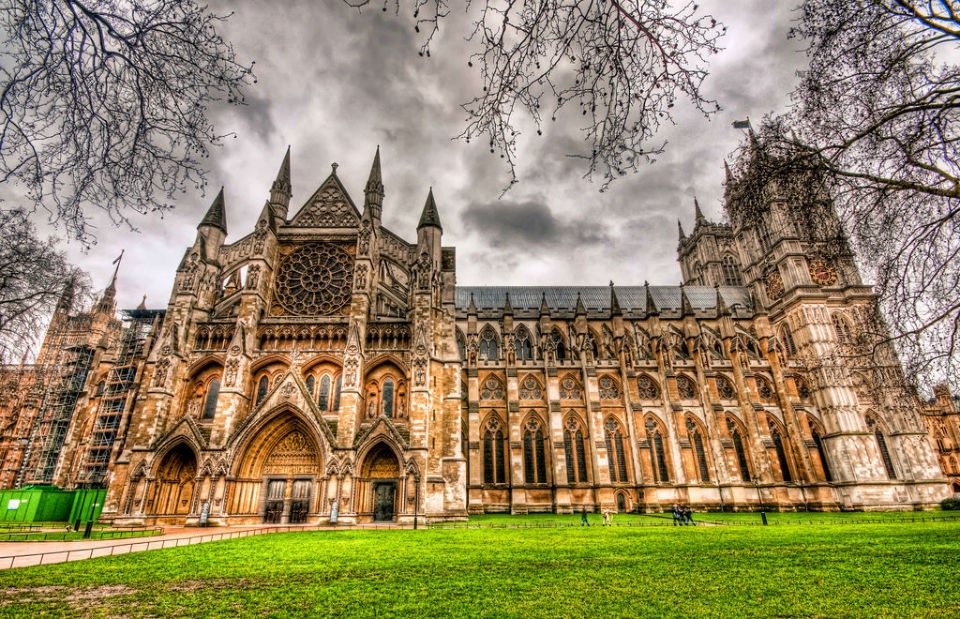
For more than a thousand years, Westminster Abbey has witnessed some of the most important moments in British history—coronations, royal burials, national ceremonies, and cultural commemorations. Yet alongside kings, prime ministers, and poets, the Abbey also preserves the stories of remarkable women whose influence shaped politics, literature, science, and social reform.
As we approach International Women’s Day, it is a fitting moment to remember some of these inspiring figures—women who changed the world around them and whose legacies remain embedded in the rich heritage of Westminster Abbey.
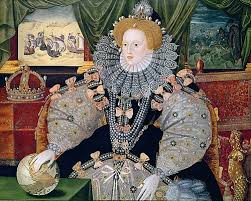
Queen Elizabeth I – A Symbol of Strength and Stability
One of the most iconic figures in English history is Elizabeth I. Her coronation took place at Westminster Abbey in 1559 after she succeeded her half-sister Mary I of England.
Elizabeth I ruled England for 45 years, a period often referred to as the “Elizabethan Age.” This era was marked by cultural flourishing, political stability, and major achievements in international affairs. During her reign, England established itself as a powerful maritime nation and a center of trade, while literature and theatre experienced a golden age.
After her death in 1603, Elizabeth I was buried in Westminster Abbey. Interestingly, she shares a tomb with her half-sister Mary I in the Abbey’s Lady Chapel—a magnificent space filled with royal monuments and sculptures. Their shared resting place symbolically reflects both the complex Tudor family history and the continuity of the English monarchy.
Elizabeth I remains one of the most influential women in European history—a ruler who demonstrated that a woman could lead a powerful nation with determination, intelligence, and political skill.
Margaret Douglas – A Noblewoman at the Heart of Royal Politics
Another remarkable woman connected with the Abbey is Margaret Douglas, Countess of Lennox, the niece of Henry VIII.
Margaret spent much of her life at the royal court and served as a lady-in-waiting to Anne Boleyn, the second wife of Henry VIII. This was a turbulent period in English history filled with political intrigue and dramatic changes in religion and governance, and Margaret witnessed many of these events firsthand.
She was buried in the Lady Chapel of Westminster Abbey, where her tomb stands out for its elaborate decoration. The monument features sculpted figures of her eight children shown praying around the tomb, while a magnificent lion rests at the feet of her effigy—a traditional symbol of nobility and strength.
Margaret Douglas’s life reflects the important roles noblewomen played in the political and social life of Tudor England.
Margaret Cavendish – A Bold Intellectual Voice
In the 17th century, very few women dared to publish their writings under their own names. One who did was Margaret Cavendish, Duchess of Newcastle.
Margaret Cavendish wrote poetry, philosophical works, scientific reflections, and plays. Her writings often explored ideas about science, society, and the role of women in intellectual life.
At a time when many female authors preferred anonymity, Cavendish boldly published under her own name. This act of independence made her one of the earliest recognized female authors in England.
When she died in 1673, she was buried in Westminster Abbey. The effigy on her tomb depicts her holding a book, pen case, and ink well—symbols of her literary and intellectual achievements.
The Brontë Sisters – Voices of Women in Literature
In Poets’ Corner at Westminster Abbey stands a memorial stone dedicated to three of the most celebrated writers in English literature: Charlotte Brontë, Emily Brontë, and Anne Brontë.
The sisters wrote some of the most influential novels of the 19th century, including Jane Eyre, Wuthering Heights, and Agnes Grey. At the beginning of their literary careers, they published under male pseudonyms because female authors were often not taken seriously by critics and publishers.
In 1947, Westminster Abbey unveiled a memorial stone in their honor. Interestingly, when the memorial was first installed, the diaereses—the two dots over the “e” in Brontë—were missing from their surname. Only recently was the memorial updated to correct the spelling and reflect the sisters’ name properly.
Their literary legacy continues to inspire readers worldwide and highlights the power of women’s voices in literature.
Elizabeth Gregory – The Craftswoman Behind the Abbey Model
The story of Westminster Abbey is not only about queens and writers; it also includes talented craftswomen such as Elizabeth Gregory.
Elizabeth ran the carpentry workshop that created an extraordinary scale model of Westminster Abbey in 1716. The model, standing about 2.4 meters high, was crafted from oak and pearwood and represents a remarkably detailed replica of the building.
It even includes a design for a spire proposed by the famous architect Christopher Wren, which was never actually built.
Elizabeth took over the workshop after the death of her husband John in 1704. At a time when women rarely held leadership roles in skilled trades, she successfully managed and continued the family business.
Today, the model remains one of the most fascinating exhibits in the Abbey’s museum.
Florence Nightingale – The Woman Who Transformed Nursing
One of the most famous women connected with Westminster Abbey is Florence Nightingale.
She became internationally known during the Crimean War, when she worked as a nurse and healthcare organizer for wounded soldiers. Her efforts significantly improved sanitary conditions in hospitals and dramatically reduced mortality rates.
However, Nightingale was far more than a nurse. She was also a social reformer, statistician, and writer. Her pioneering use of statistical analysis and visual data charts helped influence major reforms in public health.
Today, Florence Nightingale is remembered as a symbol of compassion, professionalism, and scientific innovation in healthcare.
Octavia Hill – A Champion of Green Spaces
Octavia Hill was one of the leading social reformers in Britain during the 19th century.
She believed that everyone should have access to fresh air, open spaces, and healthy living conditions. Her work in housing reform and environmental preservation eventually contributed to the founding of the National Trust in 1895.
The National Trust has since become one of the most important organizations dedicated to preserving historic buildings and natural landscapes across the United Kingdom.
Octavia Hill is commemorated with a stone in the nave of Westminster Abbey, recognizing her contribution to society and environmental conservation.
Dame Millicent Fawcett – The Fight for Women’s Rights
Another woman honored at Westminster Abbey is Millicent Fawcett, one of the most influential leaders of the women’s suffrage movement.
Fawcett led the constitutional wing of the suffrage campaign, advocating for women’s voting rights through peaceful and legal methods rather than militant protest.
After decades of activism, these efforts helped lead to historic legislative changes and the gradual introduction of voting rights for women in Britain.
Her memorial in Westminster Abbey bears the inscription:
“A wise, constant and courageous Englishwoman. She won citizenship for Women.”
She is also commemorated with a statue in Parliament Square, located just across the road from the Abbey—symbolically placing her legacy at the heart of British democracy.
A Legacy That Continues to Inspire
The stories of these women demonstrate the many different ways individuals can shape history. Some were queens, others writers, reformers, scholars, or artisans. Yet they all shared a common quality: the courage to challenge expectations and make a lasting difference.
Westminster Abbey is more than a historic building—it is a living record of Britain’s cultural and national story. Within its walls are the memories of people who helped shape society, culture, and political life.
As we mark International Women’s Day, these stories remind us that progress is often driven by the determination and vision of remarkable individuals. The women commemorated in Westminster Abbey represent an inspiring chapter in that ongoing journey.
Their achievements continue to inspire new generations—not only in Britain, but around the world.
Вашият коментар