A Break That Changed Europe
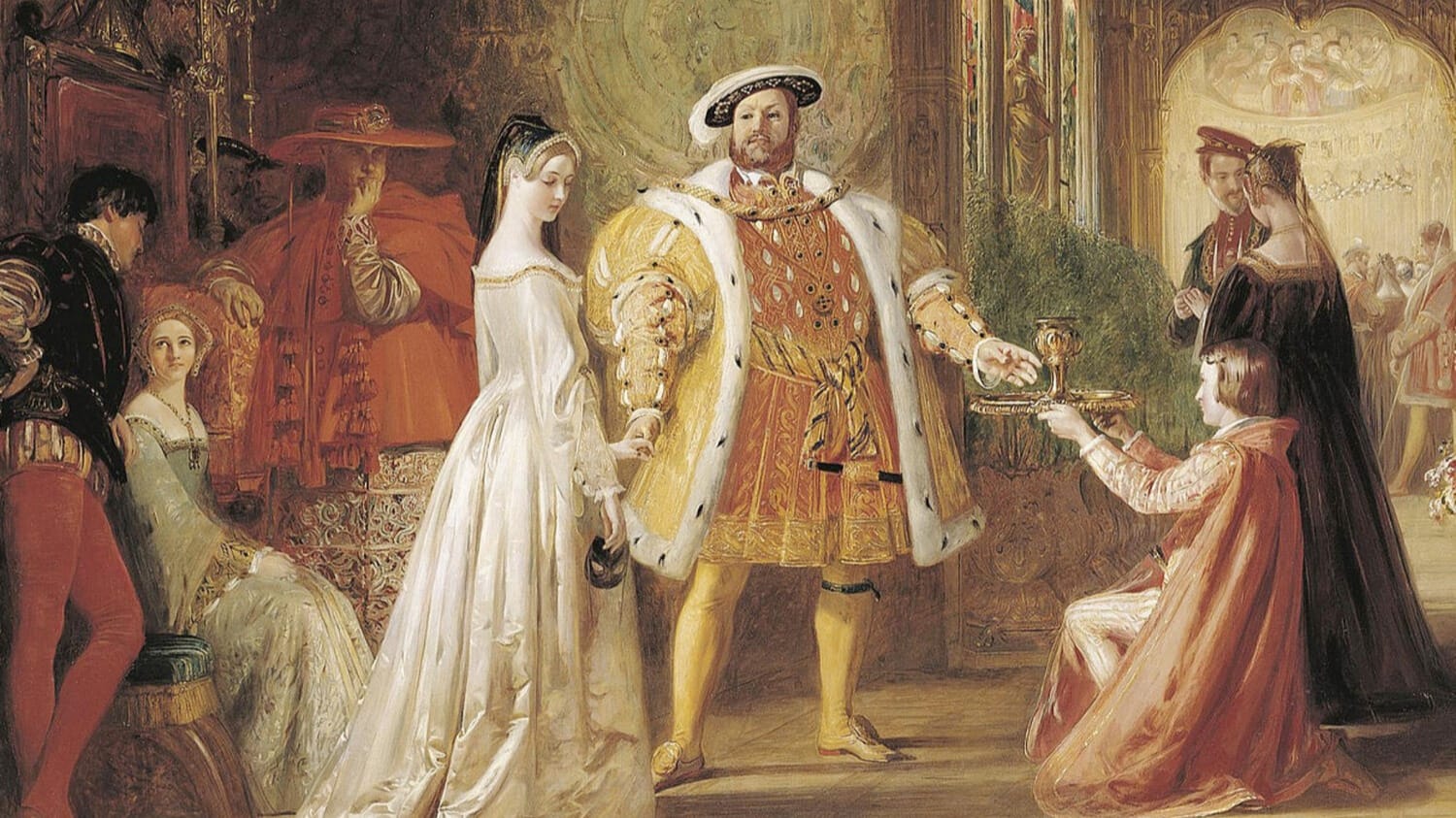
On December 17, 1538, in Rome, Pope Paul III signed a document that formally severed the relationship between the English monarchy and the Holy See. While this event is often remembered through the lens of Henry VIII personal life, his excommunication was in reality the culmination of a long political, religious, and geopolitical struggle, deeply shaped by Spanish imperial power and the influence of the Habsburg. It marked the definitive birth of Anglicanism and set England on a path toward isolation, maritime power, and a new national identity.
From Defender of the Faith to Enemy of Rome
At the start of his reign, Henry VIII was one of the papacy’s most loyal allies in Northern Europe. In 1521, he authored Assertio Septem Sacramentorum (“Defense of the Seven Sacraments”), a theological treatise written against the teachings of Martin Luther. For this work, Pope Leo X granted Henry the prestigious title Fidei Defensor (“Defender of the Faith”), a designation still carried by British monarchs today.
This loyalty, however, would soon unravel under the pressure of dynastic insecurity and international politics.
The King’s Great Matter and the Papal Dilemma
After nearly twenty years of marriage to Catherine of Aragon, Henry VIII still lacked a living male heir. Catherine was the aunt of Charles V, the most powerful ruler in Europe at the time. Henry’s request for an annulment—so that he could marry Anne Boleyn—placed Pope Clement VII in an impossible position.
Granting the annulment risked provoking Charles V, whose forces had brutally sacked Rome in 1527. Refusing it risked alienating England. The pope chose delay, and in doing so allowed the conflict to escalate beyond repair.
Parliament, Law, and the Birth of the Anglican Church
In 1533, Henry secretly married Anne Boleyn. Soon after, the newly appointed Archbishop of Canterbury, Thomas Cranmer, declared Henry’s marriage to Catherine invalid. Rome responded by preparing a bull of excommunication, but once again delayed its publication in the hope of compromise.
Henry’s response was revolutionary. In 1534, Parliament passed the Act of Supremacy, declaring the king “the only supreme head on earth of the Church of England.” This act legally severed papal authority in England and created the Anglican Church. Acknowledging the pope now constituted treason. Among the most prominent victims of this policy were Thomas More and John Fisher, both executed for their loyalty to Rome.
The Destruction of Thomas Becket’s Shrine: A Point of No Return
By 1538, Pope Paul III still hesitated to enforce excommunication, fearing that it would drive Henry into an alliance with Protestant powers in Germany. That hesitation ended with Henry’s actions against one of the most sacred symbols of medieval Christianity.
Under the direction of Thomas Cromwell, royal agents dismantled the shrine of Thomas Becket at Canterbury Cathedral. Becket, a twelfth-century martyr for church independence, was declared a traitor by royal decree. His relics were destroyed, and the immense wealth of the shrine—including the famous Regale of France jewel—was confiscated by the Crown.
For Rome, this was not merely reform but sacrilege.
The Papal Bull of 1538: Spiritual Sentence and Political Weapon
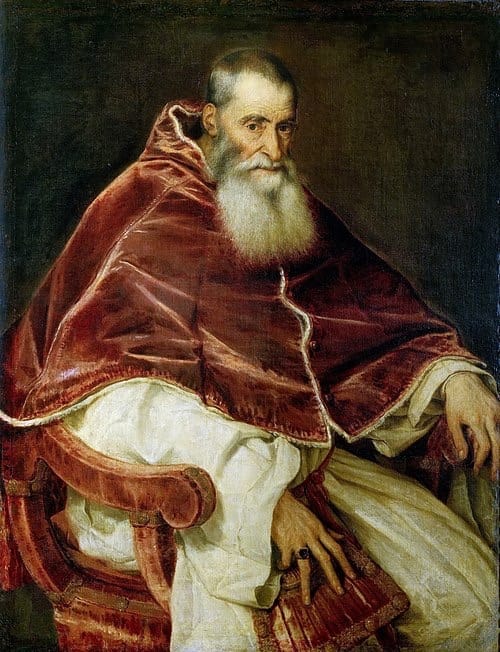
On December 17, 1538, Pope Paul III issued the long-delayed bull of excommunication. Its contents went far beyond religious condemnation. The document released Henry’s subjects from their oaths of loyalty, ordered Christian rulers to sever trade with England, and called upon Charles V and Francis I to wage a holy war against the English king.
Henry was declared an usurper and heretic, stripped of legitimacy in the eyes of Catholic Europe. Any Catholic ruler, in theory, could lawfully seize English lands.
Why No Catholic Invasion Ever Came
Despite the severity of the papal decree, England was never invaded. The reason lay in the brutal realities of European power politics. France and the Holy Roman Empire were locked in constant rivalry, and neither ruler was willing to risk strengthening the other by attacking England.
Henry exploited this deadlock masterfully. Using wealth seized from dissolved monasteries, he launched an ambitious coastal defense program, constructing a chain of fortresses along England’s southern coast—later known as the Device Forts. Ironically, excommunication accelerated England’s military modernization rather than weakening it.
Social and Religious Transformation Inside England
The break with Rome turned religion into a question of national survival. Loyalty to the pope increasingly came to be viewed as political treason.
The sale of former monastic lands created a new class of landowners—the gentry—whose economic interests depended on maintaining the separation from Rome. This group became a powerful pillar of the English Reformation. Although Henry himself remained doctrinally conservative, as shown by the Six Articles of 1539, political isolation forced him to permit the English translation of the Bible. The publication of the Great Bible marked a decisive step toward Protestant theology.
Long-Term Legacy: From Tudor Power to Constitutional Monarchy
The excommunication of Henry VIII made the English Reformation irreversible. What began as a dynastic dispute became an ideological rupture that reshaped Europe for centuries.
Modern historians, including Oxford scholars writing in studies published in 2025, argue that the papacy’s hesitation during the 1530s gave Henry the time he needed to consolidate power and eliminate any path back to Rome. Crucially, Henry’s claim to spiritual authority relied on parliamentary legislation. In asserting absolute control, he unintentionally strengthened Parliament’s role in governance.
The Birth of a New England
When Pope Paul III signed the bull in December 1538, he believed it would mark the end of Henry VIII’s authority. Instead, it marked the beginning of a new era. England emerged from the shadow of Rome to pursue its own path—first as a regional power and, later, as a global empire.
Henry VIII died in 1547, still excommunicated, yet firmly established as the head of a church that today counts more than 85 million followers worldwide. The Tudor Schism did not destroy England—it transformed it.
The religious and political order created by Henry VIII would ultimately be inherited by James VI and I, his great-nephew through Margaret Tudor. James’s accession in 1603 united the crowns of England and Scotland and confirmed that the break with Rome was no longer a temporary rupture, but a permanent foundation of the British state.


Вашият коментар