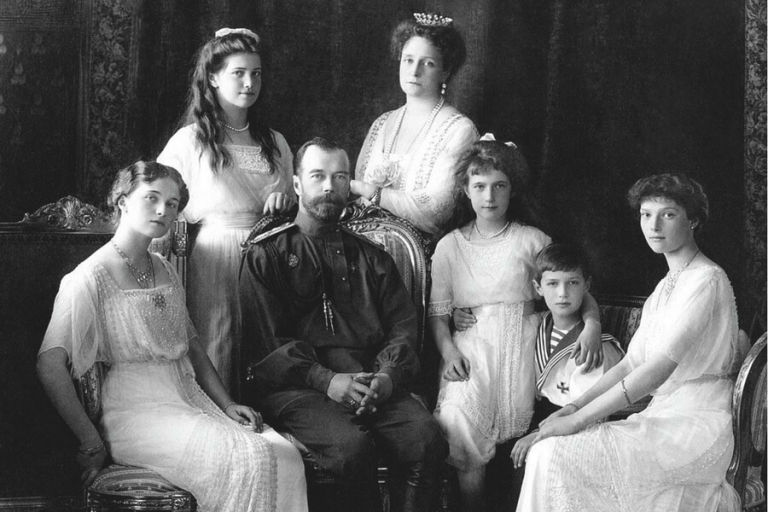
For decades after the fall of the Romanov dynasty, uncertainty surrounded the fate of the Romanovs, giving rise to one of the most persistent historical questions of the twentieth century: whether any member of the Romanov family had managed to survive the events of July 1918. The execution of Nicholas II was eventually acknowledged, yet the fate of his wife, Alexandra Feodorovna, and their children remained unclear for a considerable period of time, largely because the Bolshevik authorities controlled information carefully and released only partial and often misleading accounts. In the absence of confirmed details, speculation began to flourish, and as is often the case in moments of historical ambiguity, speculation gradually transformed into belief.
The Growth of Rumors and the Formation of a Legend
The circumstances surrounding the execution contributed significantly to the emergence of survival theories, as early reports suggested confusion during the event, including accounts that the shooting had been disorganized and that not all victims had died immediately. One particularly influential detail was the later-confirmed fact that the Romanov daughters had sewn jewels into their clothing, which in some cases deflected bullets, thereby fueling the belief that at least one member of the family might have survived long enough to escape. Within this environment of uncertainty, the figure of Anastasia Nikolaevna Romanova quickly became central to the emerging legend, as her youth and vivid personality made her the most compelling candidate for survival in the public imagination.
The Case of Anna Anderson
The survival narrative gained extraordinary momentum with the appearance of a woman in Berlin in the early 1920s who would later become known as Anna Anderson, a figure whose claim to be Anastasia Romanov would generate decades of controversy. Initially discovered after a suicide attempt and unwilling to reveal her identity, she gradually began to assert that she was the missing grand duchess, and her claim quickly attracted attention across Europe. What made her case particularly compelling was the division it created among those who encountered her, as some individuals, including people familiar with the imperial court, expressed belief in her identity, while others firmly rejected her claims, arguing that her knowledge of the Romanov family could have been acquired through other means. The resulting debates, legal proceedings, and public fascination ensured that the question of her identity remained unresolved for much of her life.
A Proliferation of Claimants and the Power of Belief
Anna Anderson was not the only individual to claim survival, as numerous others emerged over the years, presenting themselves as members of the Romanov family who had supposedly escaped execution. Among these were individuals claiming to be other daughters, such as Olga or Tatiana, as well as men asserting that they were the long-lost heir, Alexei Nikolaevich. While most of these claims lacked credible evidence and were ultimately dismissed, their sheer number illustrates the extent to which the survival narrative had taken hold in the public consciousness. This phenomenon cannot be understood solely through the lens of historical fact, as it reflects a deeper psychological need to reinterpret tragedy in a way that allows for the possibility of survival and continuity.
The Historical Context and Emotional Appeal
The persistence of these myths must be considered within the broader historical context of the early twentieth century, a period marked by immense upheaval, including the devastation of World War I and the collapse of long-standing political systems. In such a climate, the story of the Romanov family took on symbolic significance, particularly in relation to the fate of the children, who came to represent innocence lost in the midst of political violence. The idea that one of them might have survived offered a form of emotional relief, suggesting that the tragedy was not entirely absolute and that some fragment of the past had endured.
The Discovery of the Romanovs
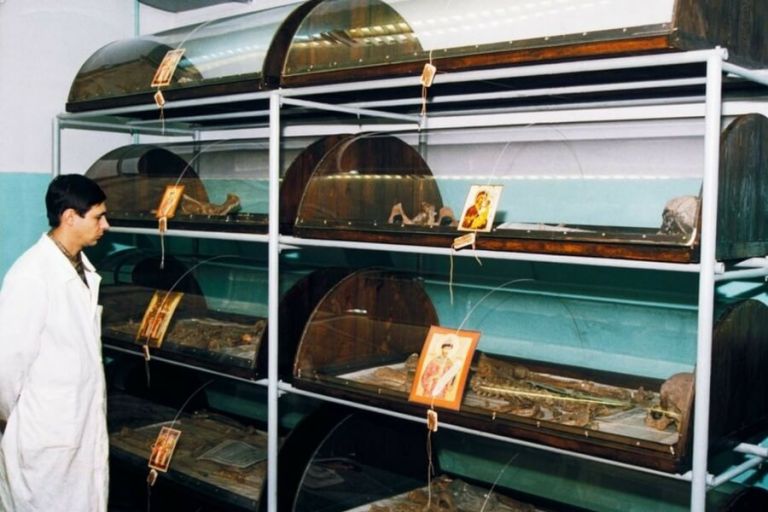
For many years, the lack of physical evidence allowed these theories to persist, but this began to change in the late twentieth century with the discovery of a burial site near Yekaterinburg. The remains found there were subjected to detailed forensic examination, including DNA analysis, which provided a level of scientific certainty that had previously been impossible. The results confirmed the identities of several members of the Romanov family, including Nicholas II and Alexandra Feodorovna, as well as three of their daughters. However, the absence of two individuals initially left room for continued speculation, briefly reviving the possibility that the survival stories might contain some truth.
The Final Resolution
This remaining uncertainty was ultimately resolved in 2007, when a second burial site was discovered and analyzed using the same scientific methods. The remains found there were identified as those of Alexei Nikolaevich and one of his sisters, thereby completing the identification of the entire family. In addition, DNA testing conducted on samples associated with Anna Anderson conclusively demonstrated that she was not related to the Romanovs, but was instead a Polish woman named Franziska Schanzkowska. These findings effectively brought an end to the historical mystery, providing definitive evidence that no member of the Romanov family had survived the execution.

Conclusion
Although the scientific evidence has settled the question, the enduring fascination with the possibility of survival reveals much about the human response to tragedy. The story of the Romanovs continues to resonate not only because of its historical significance, but also because of its emotional impact, particularly the fate of the children, whose lives were cut short under circumstances that continue to evoke sympathy and reflection. While history provides a clear answer to the question of survival, the persistence of the myth underscores the extent to which people seek meaning, hope, and alternative endings in the face of irreversible loss.
Вашият коментар