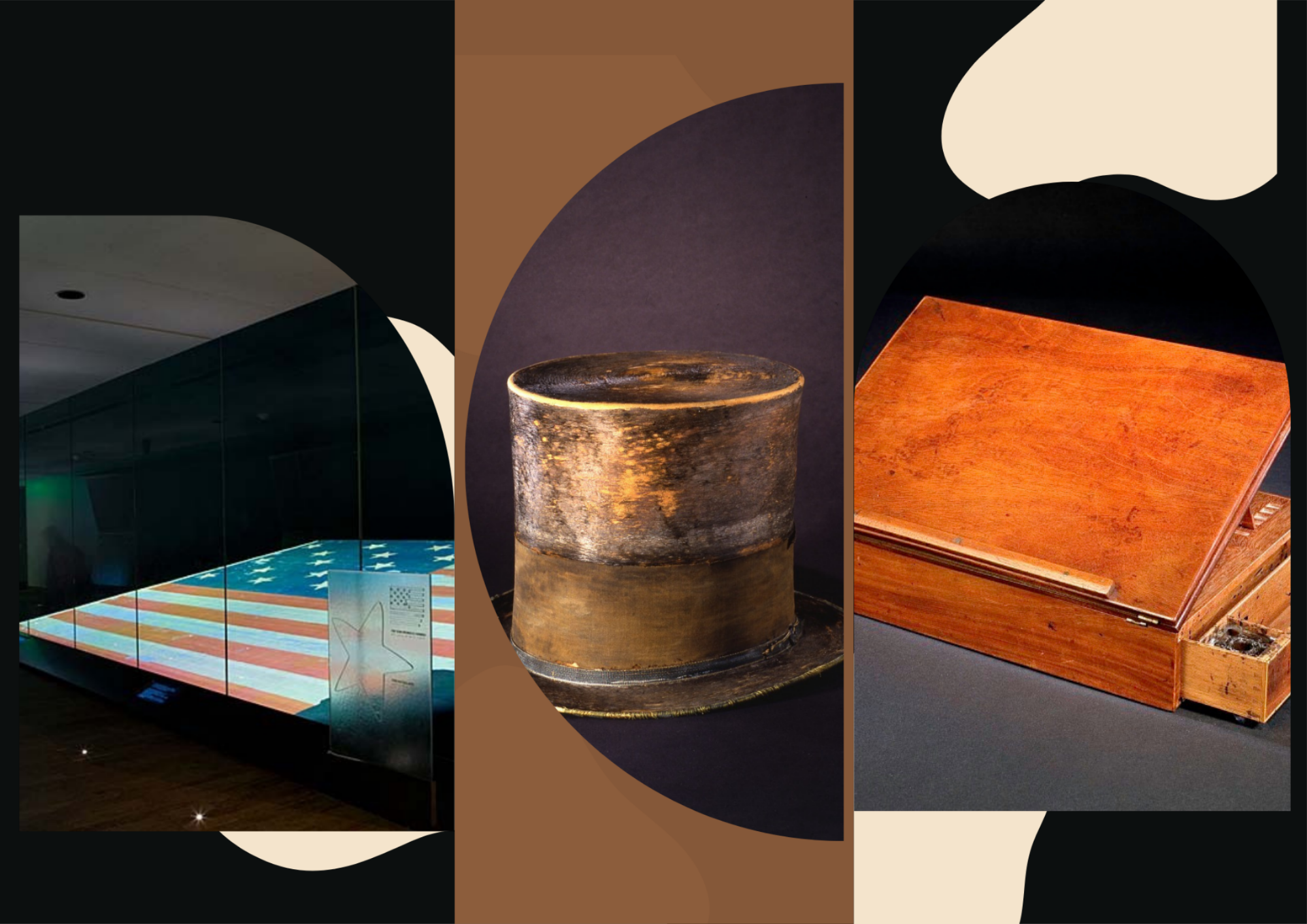
History rarely unfolds in grand ballrooms or during official receptions, where champagne flows and smiles are rehearsed in front of mirrors. Real history—the kind that changes the course of humanity—is usually born in the silence of small rooms, by the fading light of a candle, or amid the smoke of the battlefield. It leaves its mark not only in textbooks, but also on physical objects—things that today stand motionless behind thick glass cases at the Smithsonian Museum in Washington, yet still seem to echo with the heartbeat of a great, restless spirit.
As the United States prepares for its monumental 250th anniversary, our gaze inevitably turns to these artifacts. They are not merely exhibits. They are the DNA of an idea that two and a half centuries ago seemed utterly insane: the idea that people could govern themselves.
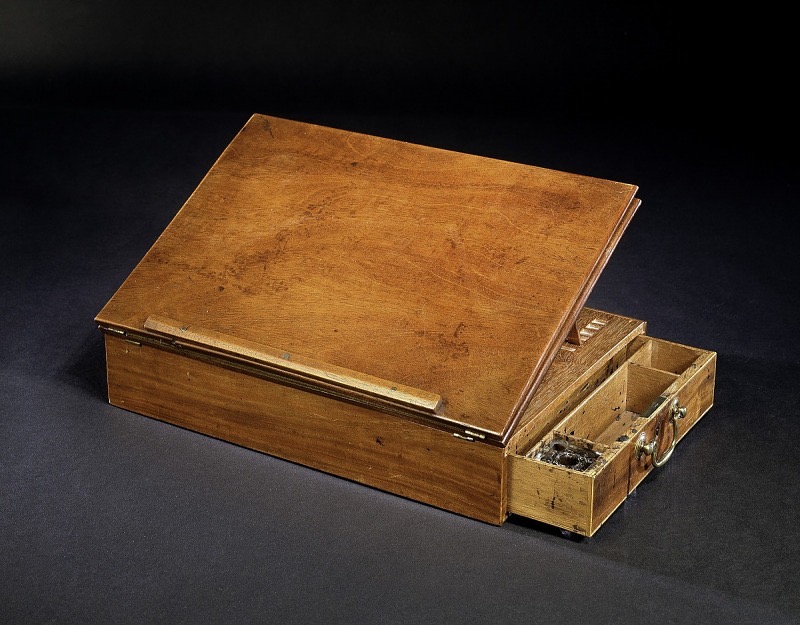
The Desk on Which a New World Was Born
During the sweltering summer of 1776 in Philadelphia, a young man with reddish hair and a restless mind rented a room in the house of a local bricklayer. Thomas Jefferson did not care for the noise of large hotels. He needed quiet—and his small portable writing desk, an object that today appears almost touchingly modest for the weight of the words that emerged from it.
Jefferson commissioned the desk from the local cabinetmaker Benjamin Randolph. Its design was brilliant in its simplicity: a folding writing surface that could rest on one’s lap or on an ordinary table, with a small drawer for quills and ink. On this very piece of mahogany, over the course of seventeen days, Jefferson transformed the anger of thirteen colonies into a poetry of freedom.
When you look at this desk today, you do not see a simple piece of craftsmanship. You see the moment when an empire began to crack under the pressure of an inked quill. Imagine Jefferson—only thirty-three years old, far from home, separated from his wife, suffering from severe headaches. And yet, on this small folding desk, he wrote: “All men are created equal.” These words were not merely a political slogan; they were a radical declaration that human dignity mattered more than the crown of any king. Jefferson’s desk proves that to change the world, you do not need an army—sometimes a drawer of ink and the courage to speak the truth are enough.
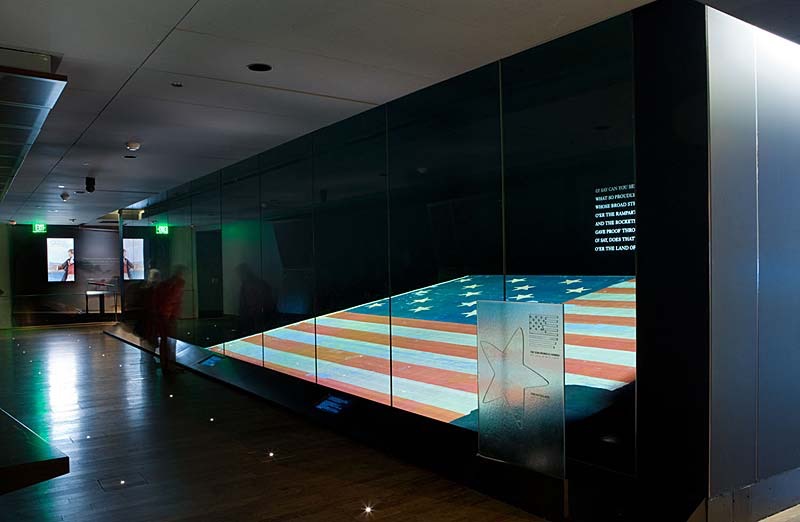
The Flag That Refused to Fall
Nearly four decades later, the American experiment faced its greatest trial. The year was 1814, and the young nation was once again at war with Great Britain. Washington had been burned, the White House lay in ruins. The last barrier standing before the British fleet was Baltimore—and the small fortress of Fort McHenry.
Aboard one of the British ships, the young lawyer Francis Scott Key watched the most terrifying night of his life. All night long the sky burned red with rockets, the ground trembling under the thunder of artillery fire. Key was certain that by morning the fortress would surrender. But when the first rays of sunlight pierced the smoke, he saw something that took his breath away. Above the fort, there was no white flag of capitulation—but a massive American flag, torn by shrapnel, still flying.
Today that flag—the Star-Spangled Banner—is the centerpiece of the National Museum of American History. It is immense, majestic, and at the same time fragile. Standing before it, you can see the bullet holes. You can see the missing threads. But you can also sense something else—the spirit of the people who made it. Mary Pickersgill, a professional flag maker, worked on it for seven weeks, kneeling on the floor of a brewery to sew together its enormous strips of fabric.
This flag does not tell the story of a victory. It tells the story of survival. It is a symbol of those moments when everything seems lost, yet you refuse to bow your head. Every thread in its fabric carries the fear of that night and the relief of the morning. Standing before it, we understand that freedom is not granted once and for all—it is something that must be defended in the darkest hours.
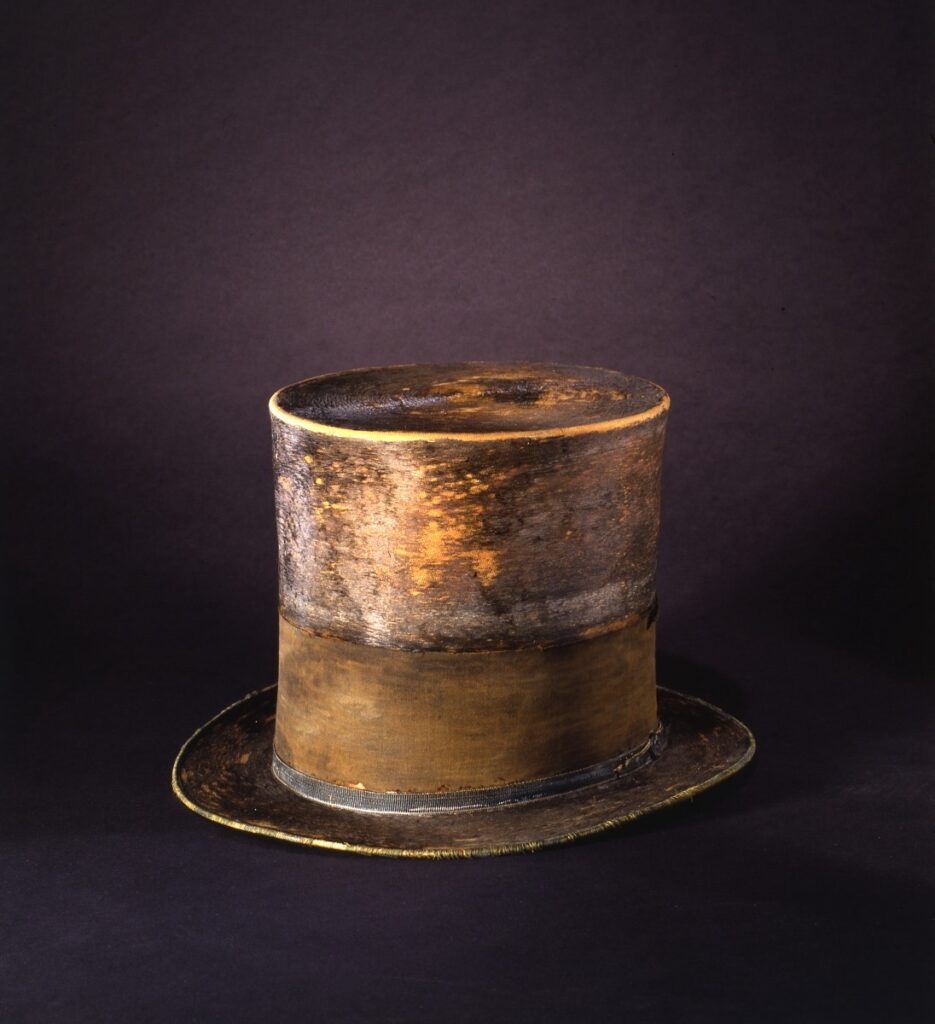
The Hat That Bore the Weight of a Nation
If Jefferson’s desk is the symbol of birth, and the flag the symbol of defense, then Abraham Lincoln’s black silk top hat is the symbol of sacrifice. Among the objects in the Smithsonian’s collection, some radiate a strange aura—but none is as electrifying as this hat.
Lincoln was a tall man, made even taller and more striking by the stovepipe hat he wore. But the hat was more than a fashion accessory. It was his “office.” Lincoln often tucked important documents, letters, and notes into its lining. Imagine this man walking the streets of Washington during the Civil War, carrying—both literally and metaphorically—the fate of millions upon his head.
The most moving detail of this hat is the thin black ribbon Lincoln himself added around it. He wore it in mourning for his son Willie, who died at just eleven years old in the White House. This small gesture of a grieving father transforms the historical figure into a living human being.
On the night of April 14, 1865, Lincoln left the hat beside his chair at Ford’s Theatre. When the assassin’s bullet shattered the silence, the hat remained there—the sole silent witness to the end of an era. Today, looking at it, we do not see only the president who ended slavery. We see the exhausted father, the man who struggled with depression, the leader whose heart was broken by a war between brothers. The hat reminds us that history is made by flesh-and-blood people who carry their personal tragedies alongside national ones.
Echoes of the Future in the Footprints of the Past
Why, today, in 2026, do we continue to return to these objects? Perhaps because in a world of digital information and artificial intelligence, we crave something real—something we can touch, or at least see up close, to reassure ourselves that great ideals are not just words floating in the cloud.
The desk, the flag, and the hat are not merely “old things.” They are anchors. They remind us that the path of democracy has always been difficult, strewn with mistakes and personal loss. They tell us that every generation must find its own “desk” on which to write its truth, its own “flag” to defend in the storm, and its own “hat” to wear with dignity—no matter how heavy it may be.
The next time you hear about political battles in Washington or new diplomatic initiatives, remember these three objects. They are proof that America is not merely a territory or an economy. It is the story of people who believed that small things—a quill, a piece of cloth, and a hat—can change the world, if behind them stands an unbreakable will for freedom. And as long as these objects remain in the museum, history is not finished. It is simply waiting for the next person to leave their mark.
Вашият коментар