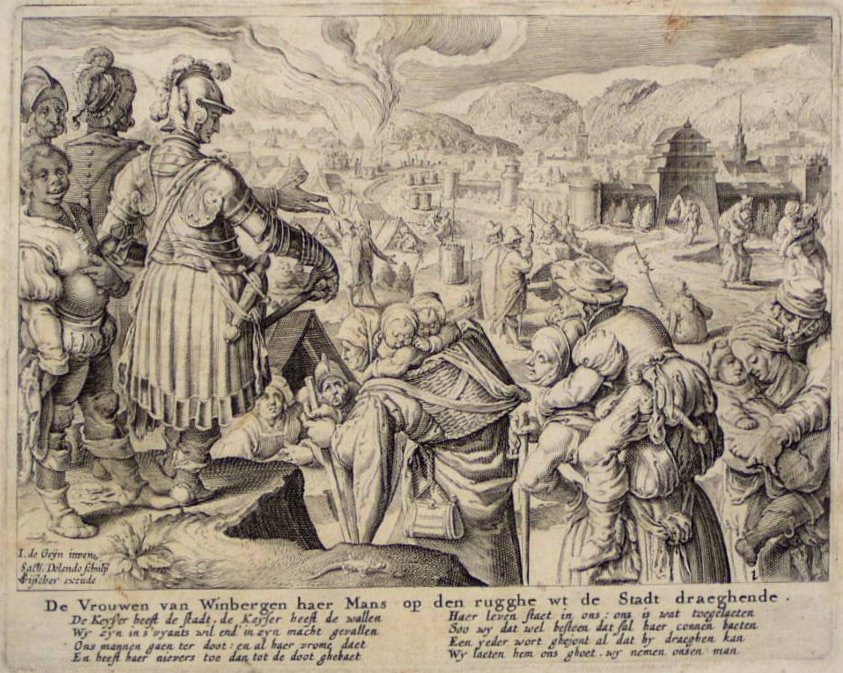
In 1140, during the struggle for power in the Holy Roman Empire, one of the most remarkable stories of the Middle Ages took place. It is connected to the siege of the town of Weinsberg in present-day Germany.
Historical Context
After the death of Emperor Lothair III, a conflict over the throne began. Конрад III became king, but his rule was challenged by the powerful Welf dynasty. The town of Weinsberg was under their control, so the king decided to lay siege to it.
After a difficult siege, the inhabitants were forced to surrender. In those times, this usually meant harsh punishment for the defeated.
The Unusual Condition
However, the king gave a surprising and merciful condition: he allowed the women to leave the town, taking with them “whatever they could carry on their shoulders.”
He likely expected them to take gold, jewelry, or other valuables.
The Cleverness of the Women
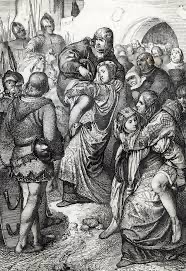
Instead, the women did something unexpected — they carried their husbands, fathers, or other male relatives on their shoulders, thus saving their lives.
When Duke Фридрих II Швабски protested, the king refused to break his word, believing that a promise must be honored.
Source and Reliability
The story was recorded in the chronicle Chronica regia Coloniensis around 1175. This is the only known source for the event.
Some historians believe it may contain legendary elements, but it is still often considered reliable.
Significance
The story became known as “The Faithful Wives of Weinsberg” and is seen as a symbol of:
- loyalty
- love
- cleverness
- honor
Conclusion
This event shows that even in the harsh times of the Middle Ages, intelligence and devotion could overcome brute force. The story remains an inspiring example of human wit and moral strength.
Вашият коментар