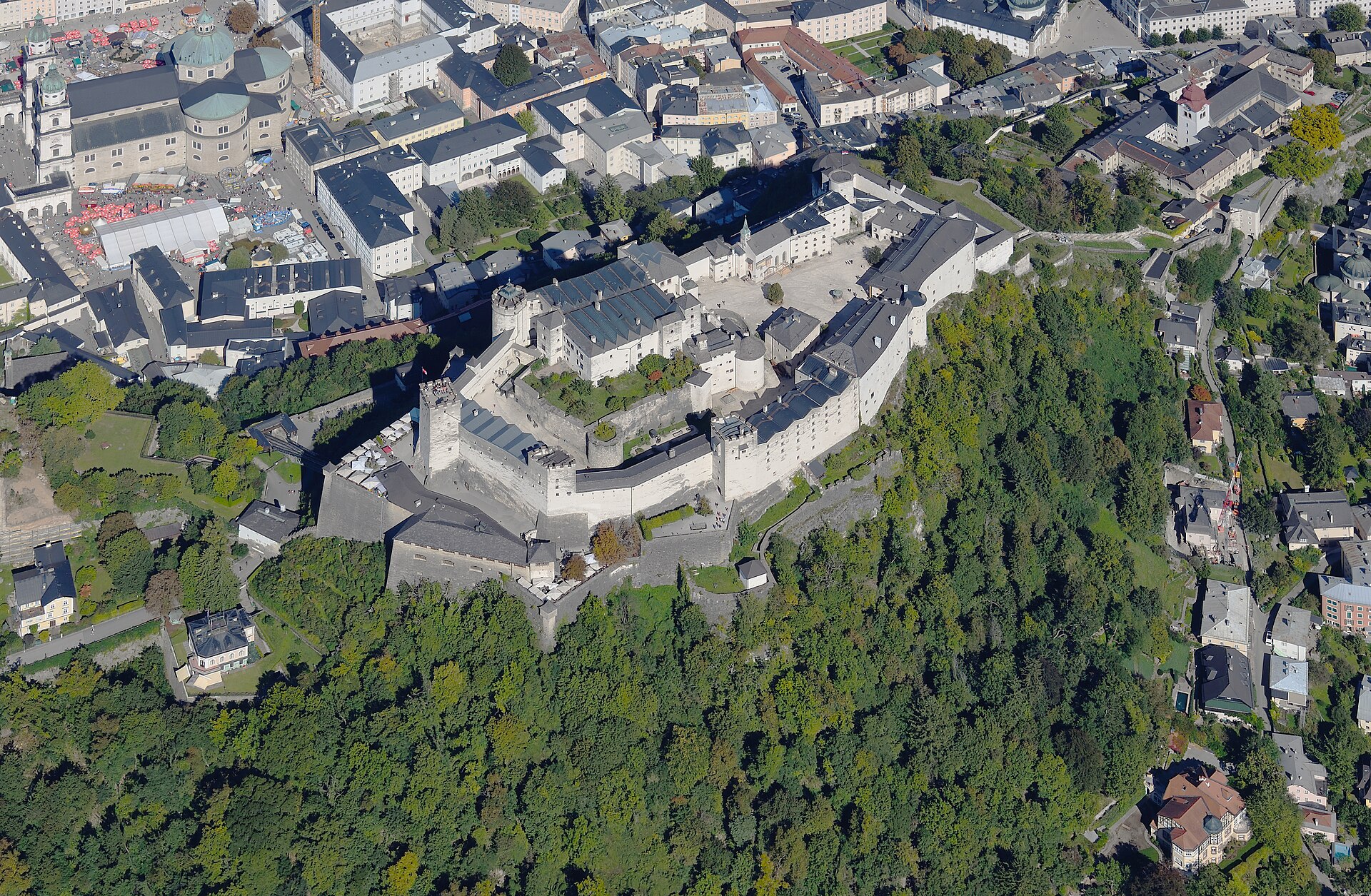
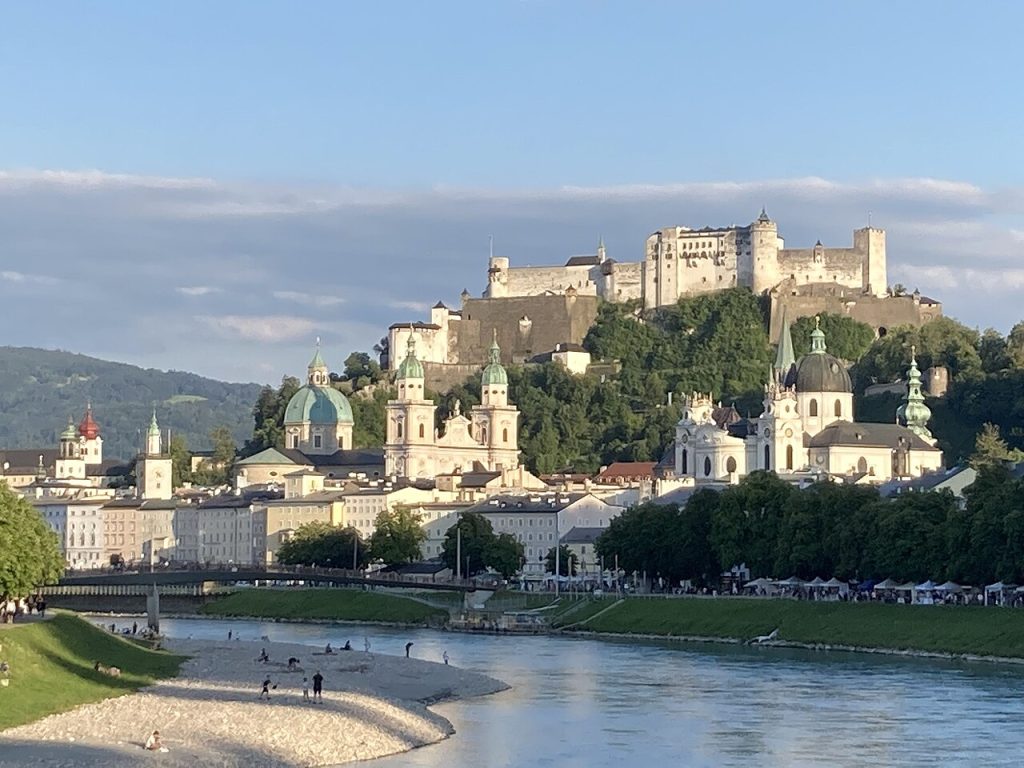
When people think of Salzburg, they usually think of Wolfgang Amadeus Mozart or the city’s beautiful Baroque streets. But long before the famous composer was born, another landmark had already become the symbol of Salzburg. Towering above the city on Festungsberg Hill, Hohensalzburg Fortress has dominated the skyline for almost 1,000 years. Built in 1077, it is one of the largest and best-preserved medieval fortresses in Europe. Throughout its long history, it witnessed emperors, religious conflicts, peasant revolts, and Napoleonic wars, yet it was never captured by force. More than just a castle, Hohensalzburg tells the story of how Salzburg’s powerful prince-archbishops ruled and protected their city for centuries.
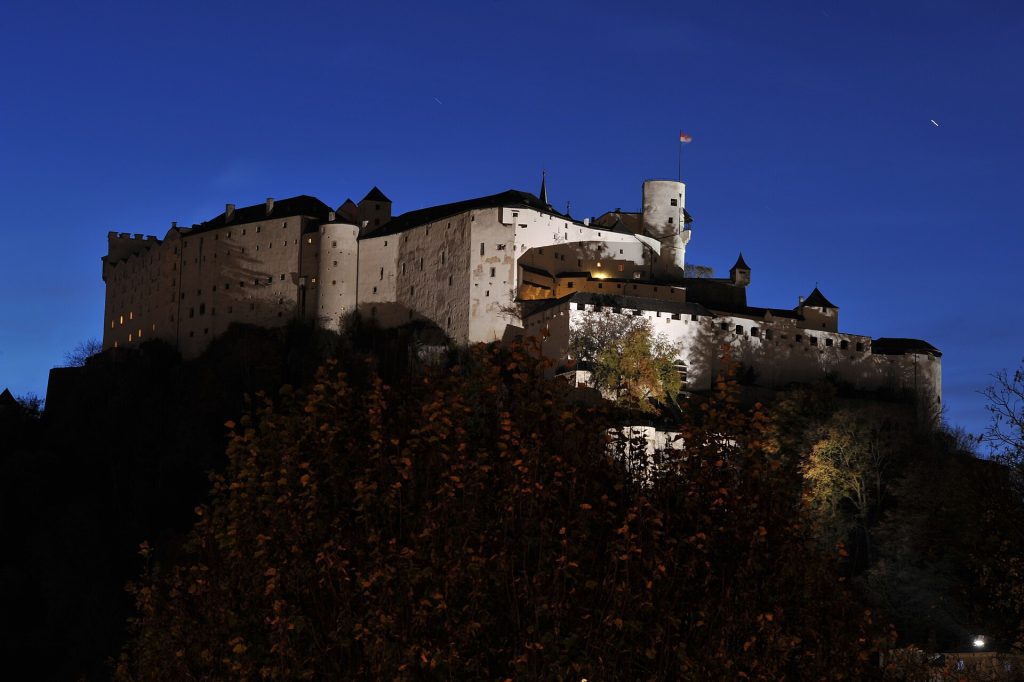
Built for Power
Construction began in 1077 during the Investiture Controversy, when Archbishop Gebhard von Helfenstein sided with Pope Gregory VII against Emperor Henry IV. Fearing conflict, he ordered a fortress to be built on the hill overlooking Salzburg. What started as a simple defensive stronghold gradually expanded into an enormous fortress as each prince-archbishop added stronger walls, higher towers, and new buildings. The greatest transformation came under Leonhard von Keutschach around 1500, giving Hohensalzburg much of the appearance it retains today.
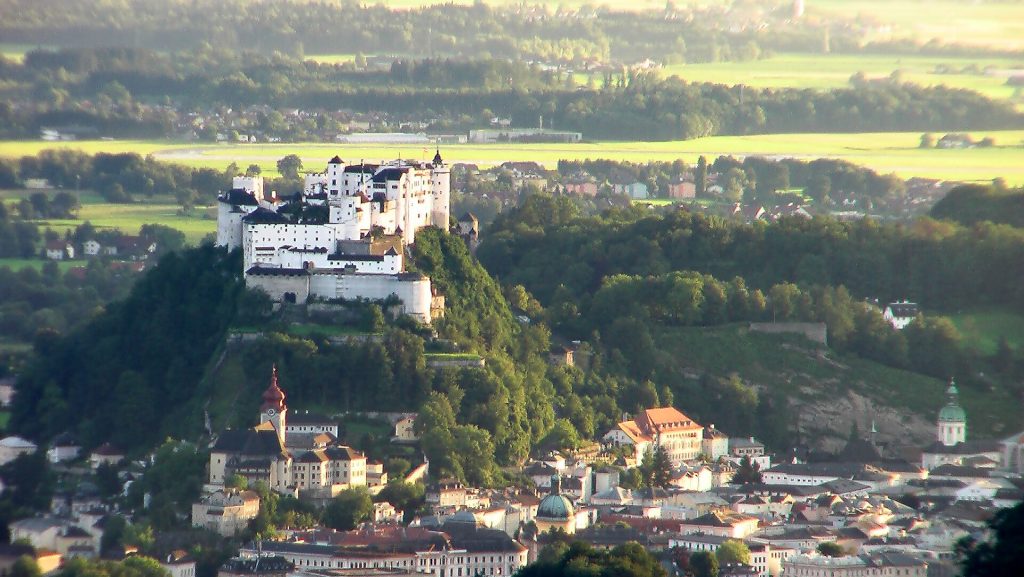
Hohensalzburg Fortress – The Fortress That Never Fell
Although built for war, Hohensalzburg was rarely tested. Its only major siege came during the German Peasants’ War in 1525, when miners and farmers tried to overthrow the prince-archbishop. Despite their efforts, they failed to capture the fortress. During the following centuries, additional bastions and defenses were added, preparing it for threats such as Ottoman invasions that never reached Salzburg. Its commanding position and powerful fortifications made it one of the strongest castles in Central Europe.
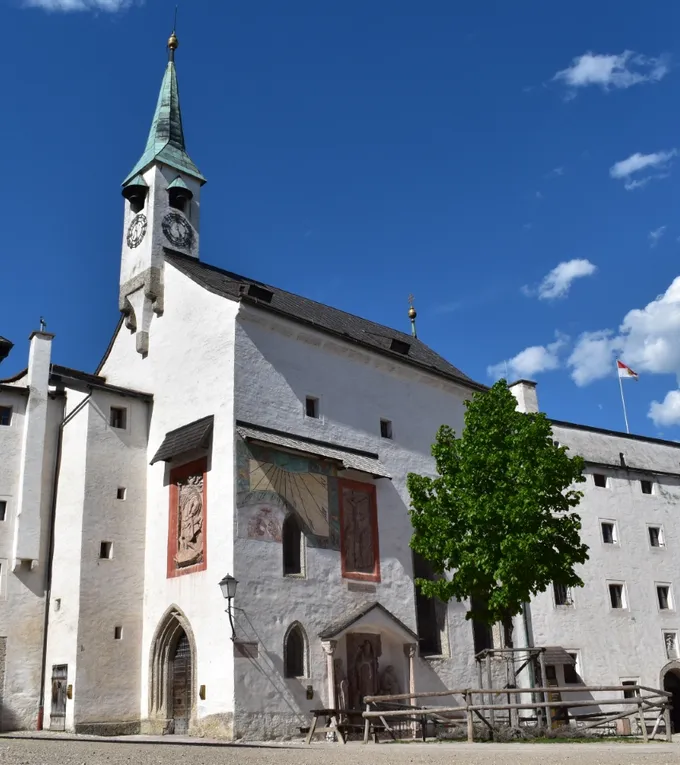
Inside the Hohensalzburg Fortress
Although Hohensalzburg was built for defense, it also became a residence for Salzburg’s prince-archbishops. Around 1500, Archbishop Leonhard von Keutschach transformed parts of the fortress into elegant state apartments designed for ceremonies and official receptions. The magnificent Golden Hall, with its richly decorated wooden ceiling and painted coats of arms, remains one of the finest examples of late Gothic secular architecture in Europe. Nearby, the Golden Chamber impressed visitors with carved wooden benches, gilded decorations, and luxurious furnishings that reflected the wealth of the archbishops.
The fortress also housed one of its most unusual attractions—the Salzburg Bull, a massive mechanical organ built in 1502. For more than five centuries, its powerful sound has echoed across the city three times a day, becoming one of Salzburg’s oldest living traditions.
A Symbol of Salzburg
Hohensalzburg’s military role gradually came to an end after the Napoleonic Wars. During the nineteenth century it served as barracks, a prison, and a storage depot before losing its strategic importance. Rather than falling into ruin, however, the fortress was carefully restored and opened to visitors. The opening of the Festungsbahn funicular in 1892 made reaching the hilltop easier, helping transform Hohensalzburg into one of Austria’s most popular attractions.
Today, the fortress welcomes more than a million visitors each year. From its towers, breathtaking views stretch across Salzburg’s Old Town and the surrounding Alps, while its halls preserve nearly a thousand years of history. For many travelers, Mozart may be the reason to visit Salzburg—but standing above the city, Hohensalzburg reminds them that the story of Salzburg began centuries before its most famous composer was born.
Вашият коментар