How a Global Conspiracy Left a Deep Scar on Bulgaria
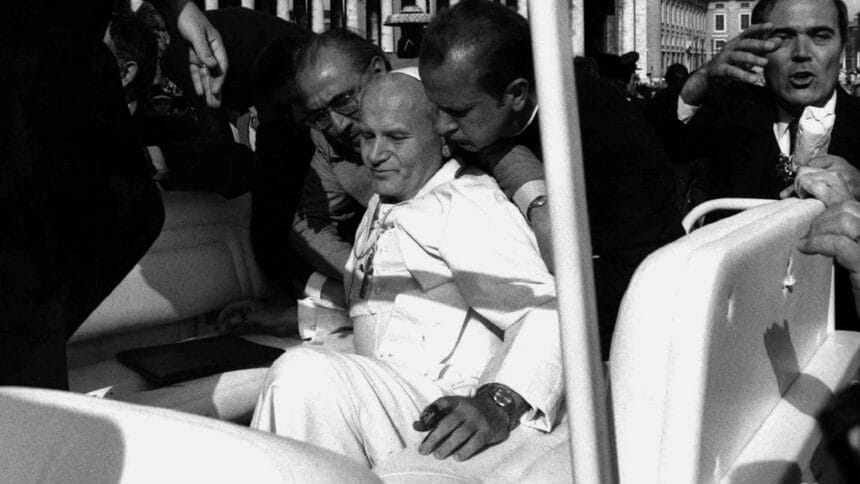
On November 25, 1982, the Italian news agency ANSA released a report that quickly became an international sensation: Bulgarian citizen Sergey Ivanov Antonov, deputy director of the “Balkan” airline office in Rome, had been arrested. The accusation – complicity in the assassination attempt on Pope John Paul II, carried out a year and a half earlier by Turkish terrorist Mehmet Ali Ağca.
From that moment, one of the most controversial and politically charged investigations of the Cold War era began – an investigation that, over the course of three years, changed the fate of one man and placed Bulgaria at the center of a geopolitical propaganda clash.
The Arrest That Shocked the World
Antonov was detained in his office at “Balkan.” Shortly afterward, the Italian broadcaster RAI aired footage of him handcuffed and escorted by police. He was publicly presented as an “active participant” in Ağca’s conspiracy – a claim that neither at that time nor later would be supported by concrete evidence.
The Italian press in the following days was dominated by headlines and commentary:
- “Devastating Evidence Against Antonov” – Corriere della Sera
- “The Bulgarian Trail in the Plot Against the Pope” – La Stampa
- “A Photograph Exposes the Bulgarian” – Tempo
All of this took place while Italian investigative authorities refused to disclose the alleged “evidence.”
The “Bulgarian Connection”: A Political Hypothesis Turned Global Narrative
The phrase “Bulgarian connection” appeared in Western media as early as 1981 after an article by American journalist Claire Sterling. Her claim – that the assassination attempt was planned by the KGB and executed through Bulgarian agents – spread quickly through the Western press and Cold War analysis.
Later, former CIA officials admitted that the narrative had been actively supported and used as an informational weapon at the height of the Cold War. The goal – to compromise the Soviet Union and its allies in the socialist bloc.
In this context, Antonov’s arrest appeared to be the result of political design rather than judicial logic.
Three Years of Imprisonment, Isolation, and Silence
Antonov remained imprisoned for nearly three years – first in strict detention, followed by house arrest. His refusal to confess or comment on the accusations was interpreted by some observers as passivity, but later analyses describe it as his only viable defense strategy.
Harsh prison conditions and continuous interrogations led to severe psychological and physical deterioration. During the trial, he was visibly confused, spoke with difficulty, and showed almost no connection with his surroundings. The only phrases he repeated were:
“I am innocent.”
“This is fiction.”
The Trial – A Verdict Without Victory
The trial began on May 27, 1985, and lasted ten months. On March 29, 1986, the Rome Criminal Court issued its decision:
The defendants are acquitted due to lack of evidence.
This wording did not rehabilitate Bulgaria nor acknowledge wrongdoing, but protected the Italian judicial system from an international scandal.
Shortly after returning to Bulgaria, Antonov was already psychologically devastated. He lived in isolation, undergoing treatment for years, and died in 2007 without ever receiving legal or moral compensation for what he endured.
The Long-Delayed Truth
After the political changes in Eastern Europe, the truth began slowly to emerge:
| Year | Declarations / Admissions |
|---|---|
| 1993 | Italian Prime Minister Giulio Andreotti: “The Bulgarians were not involved. The theory was manufactured by American intelligence services.” |
| 1995 | Ali Ağca publicly admits that Bulgarians did not participate in the assassination attempt. |
| 2002 | Pope John Paul II in Sofia: “I do not believe in the Bulgarian trail.” |
| 2003–2006 | Former CIA officials confirm that the narrative of the “Bulgarian connection” was used as a propaganda campaign against the USSR. |
Conclusion
The case of Sergey Antonov is not merely a courtroom drama or a media sensation. It is an example of how one man and one small country can be swallowed by a global ideological conflict, where facts become weapons and justice becomes a geopolitical battleground.
For Bulgaria, the consequences were profound:
- an international reputation damaged for years
- mistrust difficult to overcome
- the fate of a man destroyed not by proven guilt, but by accusations that were never substantiated
The story of Sergey Antonov reminds us how fragile truth can be when the world is divided — and how painful it is when it arrives too late.
And, tragically, Bulgaria lived through a similar ordeal years later in the case of the Bulgarian medics in Libya, when accusations were pronounced before evidence, and innocent lives became instruments of political interests.
Вашият коментар