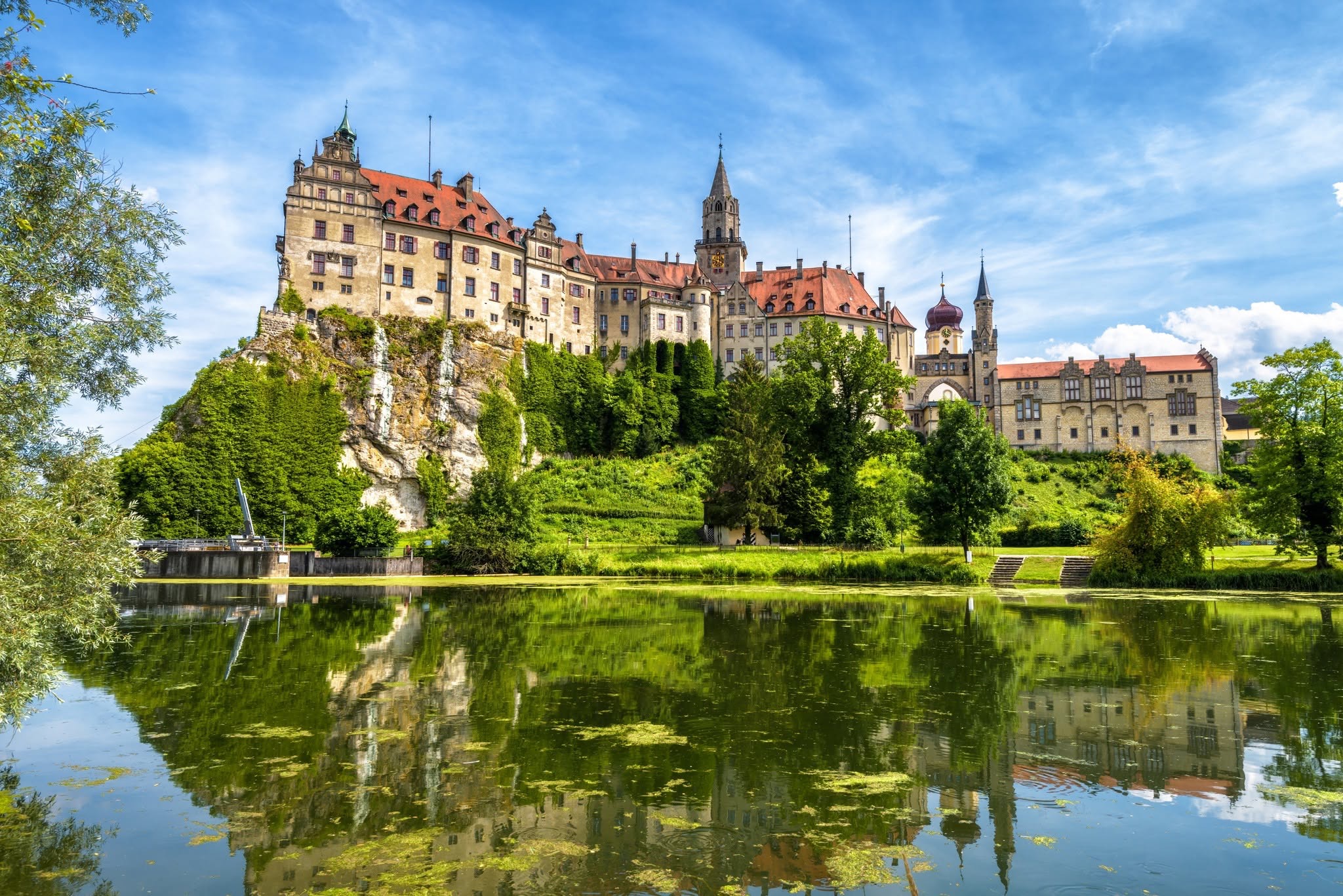
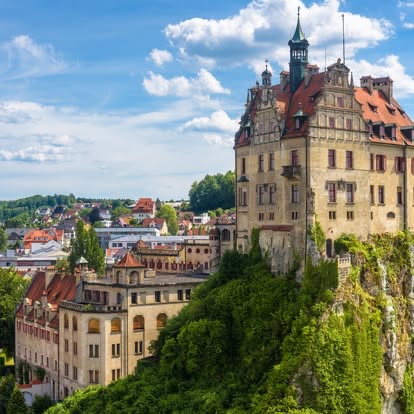
Across Europe, the scars of history are impossible to ignore. Majestic castles that once guarded kingdoms now stand abandoned, their towers broken by war or worn away by centuries of neglect. Some were destroyed by invading armies, others by devastating fires, and many simply disappeared as local communities dismantled their walls to reuse the stone for homes, churches, and bridges. While Europe is home to thousands of medieval fortresses, remarkably few have survived the passage of nearly a thousand years without being reduced to ruins. High above the Danube River in southern Germany, however, one castle tells a very different story. Perched atop a dramatic limestone cliff, Sigmaringen Castle has watched Europe transform for almost a millennium.
It has witnessed the rise and fall of empires, survived civil wars, religious conflicts, foreign invasions, catastrophic fires, and two world wars. It has belonged to emperors, counts, princes, and one of Europe’s most influential royal dynasties. Time and again, events that erased countless other fortresses threatened its existence. Yet every time disaster struck, Sigmaringen emerged not as a ruin but as a stronger and more impressive castle than before.
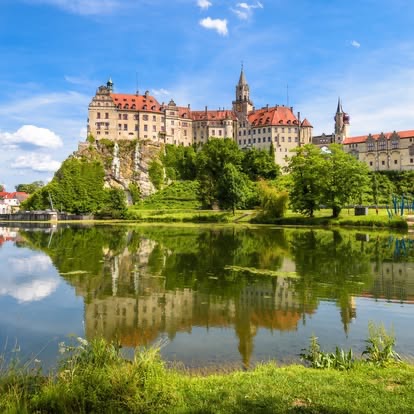
What makes Sigmaringen remarkable is not simply its age or its commanding position above the Danube. Europe is filled with castles that are equally old and equally picturesque. Its true distinction lies in something far rarer: its extraordinary ability to adapt. Rather than becoming frozen in one historical period, the castle evolved alongside Europe itself. Medieval battlements gave way to elegant Renaissance halls. Defensive towers became princely residences. Modern innovations such as steam heating and electricity were introduced without sacrificing the fortress’s historic character. Each generation inherited the castle not as a finished monument but as a living structure that could evolve while preserving its past.
For nearly one thousand years, Sigmaringen has done what few castles ever managed to do—it survived.
Born Above the Danube
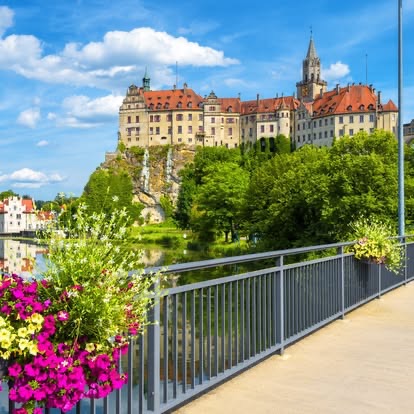
The story of Sigmaringen begins long before Germany existed as a nation. During the eleventh century, the lands surrounding the Danube formed part of the vast Holy Roman Empire, a patchwork of duchies, bishoprics, and principalities whose rulers constantly competed for influence. In such an unpredictable world, geography often determined survival, and few locations offered better natural protection than the narrow limestone ridge rising high above the river.
The fortress built on this rocky outcrop was never intended to impress visitors with luxury. Its original purpose was simple: control the valley below and withstand attack. The cliffs protected much of the castle naturally, forcing any enemy to approach through a handful of narrow routes that defenders could easily monitor. Even before additional walls and towers were constructed, the landscape itself served as one of the fortress’s greatest weapons.
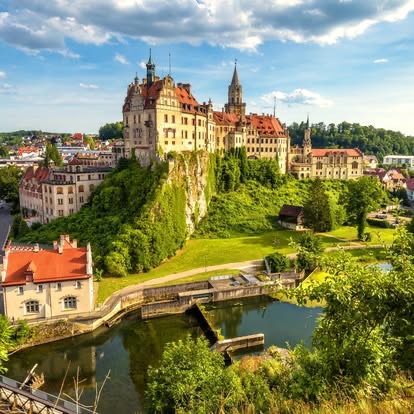
The castle first entered recorded history in 1077, when Rudolf of Swabia attempted to seize it during his struggle against Emperor Henry IV for the imperial crown. The attack failed. While medieval chronicles reveal few details about the siege itself, its outcome demonstrated an important fact that would define the castle’s future. Sigmaringen was extraordinarily difficult to conquer. Its builders had chosen one of the strongest defensive positions in southern Germany, and generations of attackers would discover just how formidable it could be.
Instead of fading into obscurity after this early conflict, the fortress steadily gained importance. Control of the castle meant control of a strategic section of the Danube valley, making it valuable to every noble family that inherited it. Over the following centuries, ownership passed through several powerful dynasties, yet almost every new ruler reached the same conclusion: the fortress was worth preserving.
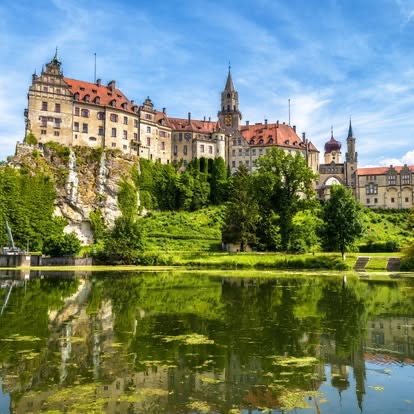
From Medieval Fortress to Royal Residence
Many medieval castles that survive today appear much as they did hundreds of years ago because they were abandoned before architectural fashions changed. Sigmaringen followed a completely different path.
Rather than replacing the old fortress with an entirely new palace, successive rulers chose to expand what already existed. The Counts of Helfenstein strengthened the medieval defenses with massive stone construction, leaving behind walls whose durability is still evident today. Later, the Habsburgs controlled the fortress before it passed to the Counts of Württemberg. Each dynasty contributed new buildings, stronger fortifications, or improved living quarters without erasing the work of earlier generations.
One of the most significant transformations began during the fifteenth century under the Counts of Werdenberg. Europe itself was changing. Gunpowder was altering warfare, Renaissance ideas were spreading north from Italy, and noble families increasingly wanted residences that reflected both their military strength and their political status. Sigmaringen therefore began to evolve from a purely defensive fortress into an elegant princely residence.
New residential wings replaced cramped medieval quarters. Large windows filled once-dark halls with natural light. Comfortable apartments, ceremonial rooms, and richly decorated interiors appeared alongside ancient defensive walls. Yet unlike many castles that abandoned their military character completely, Sigmaringen never forgot why it had been built. Its towers still dominated the valley, its walls remained formidable, and its commanding position continued to make it one of the strongest fortresses in the region.
The result was something remarkably unusual. Instead of representing a single architectural style, Sigmaringen became a physical timeline of European history. Romanesque foundations supported Gothic towers. Renaissance halls blended seamlessly with medieval walls. Every century added another layer without destroying the one beneath it.
This continuous evolution would prove to be one of the castle’s greatest strengths. Unlike buildings trapped in the past, Sigmaringen learned to change whenever history demanded it.
The castle entered a new chapter in 1535, when King Ferdinand I granted Sigmaringen to Charles I of Hohenzollern. The decision established the Hohenzollern-Sigmaringen branch of one of Europe’s most influential royal families, beginning a relationship that would define the fortress for centuries.
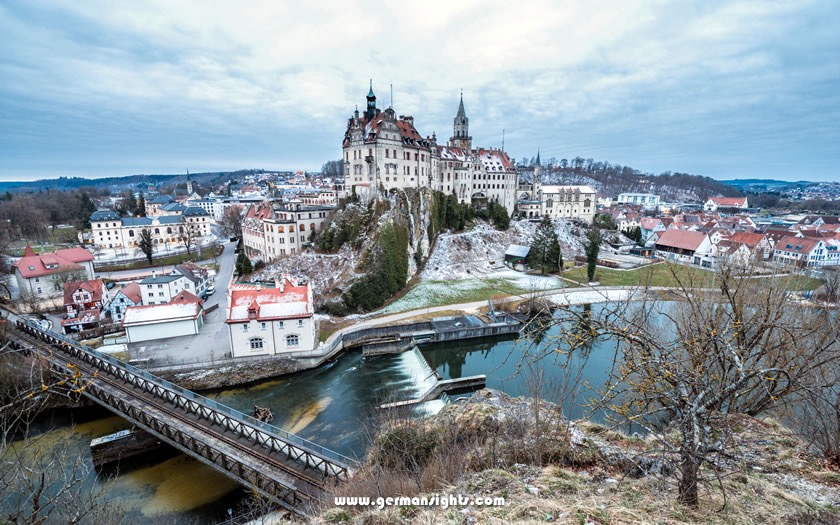
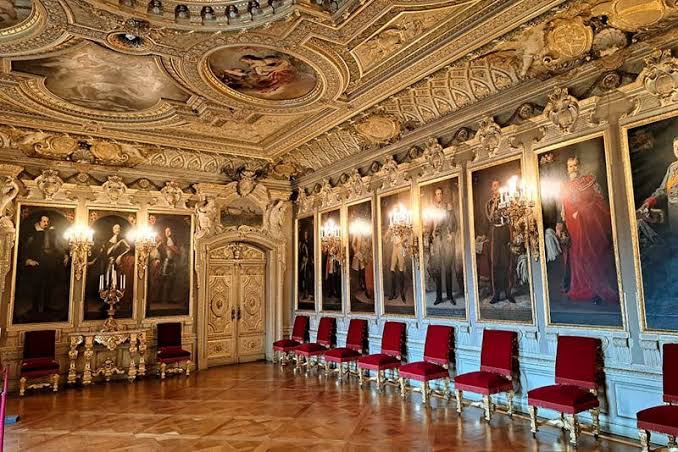
Under the Hohenzollerns, Sigmaringen became far more than a military stronghold. It developed into a princely residence that reflected both political ambition and cultural sophistication. Grand reception halls welcomed distinguished guests, elegant dining rooms hosted formal banquets, and extensive collections of paintings, weapons, and historical treasures gradually filled its interiors. The family invested heavily in expanding the castle while carefully preserving its medieval identity, creating a residence that looked both ancient and remarkably modern for its time.
A Castle That Refused to Die
Yet prosperity never guaranteed security. Europe entered one of its bloodiest periods during the seventeenth century, and once again Sigmaringen found itself standing directly in the path of history.
The Thirty Years’ War devastated much of Central Europe between 1618 and 1648. Cities were burned, villages disappeared, and countless castles that had stood for centuries were abandoned forever after suffering heavy damage. Swedish forces eventually occupied Sigmaringen, leaving significant destruction behind. For many fortresses, such devastation marked the beginning of a slow decline into ruin.
Sigmaringen, however, refused to follow that path. Rather than abandoning the damaged residence, Prince Meinrad I ordered extensive reconstruction once peace returned. Walls were repaired, damaged buildings rebuilt, and new sections added to strengthen the castle for future generations. It was a decision that reflected a pattern repeated throughout the fortress’s history: whenever disaster threatened to erase Sigmaringen, its owners chose renewal instead.
That determination would be tested again in ways no one could have imagined. A devastating fire, technological revolution, and even the final chapter of World War II still lay ahead.
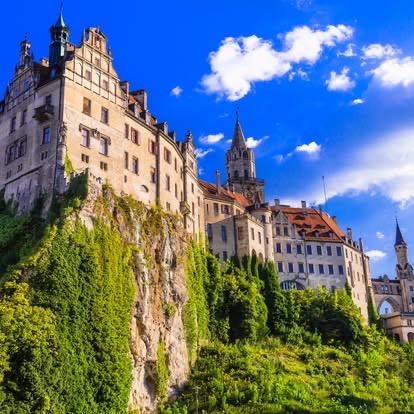
Bringing the Modern World Inside
The restoration following the Thirty Years’ War ensured that Sigmaringen Castle remained one of the Hohenzollern family’s principal residences, but the fortress’s greatest transformation was still to come. By the nineteenth century, Europe was changing at an unprecedented pace. Railways connected distant cities, factories fueled the Industrial Revolution, and technological innovation began reshaping everyday life. Many medieval castles struggled to adapt to this new era, becoming outdated relics that noble families could no longer maintain comfortably. Sigmaringen, however, once again proved different. Rather than abandoning their ancestral home for a modern palace elsewhere, the Hohenzollerns chose to bring the modern world inside the ancient fortress.
One of the earliest improvements arrived in 1842, when the castle received a central steam-heating system—an extraordinary luxury at a time when most European homes still relied on fireplaces to keep warm. Several decades later, electricity was installed, making Sigmaringen one of the earliest historic castles in Germany to embrace this revolutionary technology. These upgrades dramatically improved life inside the fortress while leaving its medieval appearance almost untouched. Visitors walking through the castle today still see stone walls, towers, and Gothic halls, yet behind that timeless exterior lay comforts that many nineteenth-century mansions had not yet acquired. The castle had once again adapted without losing its identity.
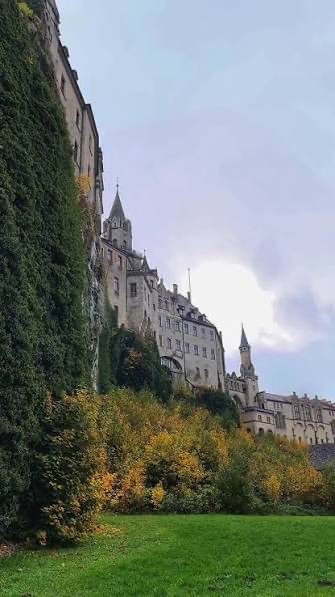
Then, in 1893, disaster struck once more.
A devastating fire broke out inside the castle, spreading rapidly through sections of the historic residence. Flames consumed roofs, destroyed richly decorated interiors, and threatened to erase centuries of architectural history in a single night. Across Europe, countless castles that suffered similar fires were never fully restored. Owners often lacked the resources—or the motivation—to rebuild structures that had become expensive symbols of a fading aristocratic world. Sigmaringen seemed destined to join that long list of historic monuments lost forever.
Instead, history repeated itself.
Rather than accepting the destruction, the Hohenzollern family launched another ambitious reconstruction project. Architects carefully rebuilt damaged sections while preserving the castle’s historical character, replacing what had been lost without erasing the evidence of earlier centuries. It was not the first time Sigmaringen had risen from disaster, and it would not be the last. By the end of the restoration, the fortress once again overlooked the Danube much as it had before the fire, stronger and more magnificent than many believed possible.
When World War II Reached Sigmaringen
Few could have imagined that within half a century the castle would become associated with one of the most dramatic episodes of the Second World War.
By the autumn of 1944, Allied forces had liberated much of France, forcing the collaborationist Vichy government to flee the country. Rather than disappearing immediately, its leaders—including Marshal Philippe Pétain and several senior officials—were relocated by Nazi Germany to Sigmaringen Castle. For several months, the medieval fortress became the bizarre final headquarters of a government that no longer controlled its own nation. Protected by German troops yet isolated from the events unfolding across Europe, the castle became a strange political island where ministers held meetings, issued declarations, and tried to maintain the illusion that their regime still existed.
The contrast could hardly have been more striking. A fortress built nearly nine centuries earlier to defend the Holy Roman Empire had become the temporary refuge of a collapsing twentieth-century government. The castle itself had no influence over the outcome of the war, but it found itself standing at the center of one of its most unusual chapters. When Germany surrendered in 1945, the Vichy regime disappeared forever, yet Sigmaringen remained exactly where it had stood for centuries before the conflict began. Once again, the people occupying the castle had changed, but the fortress endured.
A Thousand Years Later
That ability to outlast political upheaval may be Sigmaringen’s greatest achievement. Throughout its history, rulers came and went, borders shifted, empires collapsed, and governments disappeared. The castle witnessed them all without sharing their fate. It survived because its owners repeatedly viewed it not as a monument to preserve unchanged, but as a place capable of evolving whenever circumstances demanded. Medieval walls became Renaissance residences. Defensive structures became royal apartments. Modern technology entered ancient halls. After wars and fires, restoration always replaced abandonment.
Today, Sigmaringen Castle remains one of Germany’s best-preserved princely residences and continues to belong to the House of Hohenzollern. Visitors walking through its halls encounter nearly a thousand years of European history gathered within a single complex. They can explore medieval fortifications, Renaissance architecture, richly furnished state rooms, impressive collections of weapons and art, and panoramic views over the Danube Valley—all within the same castle. Far from being a frozen museum, Sigmaringen is a place where each century is still visible alongside the next.
Its survival is remarkable not because it escaped history, but because it never did. History reached Sigmaringen again and again—through sieges, dynastic struggles, religious wars, industrial change, catastrophic fire, and global conflict. Every one of those events could have ended the castle’s story. Instead, each became another chapter.
Perhaps that is why Sigmaringen feels different from so many other medieval fortresses. It is not admired because it remained unchanged for a thousand years. It is admired because it changed just enough to survive them.
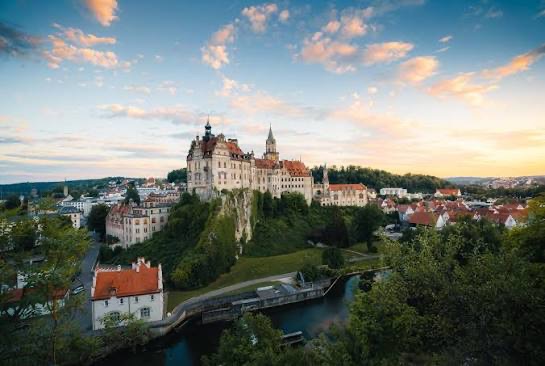
Nearly a millennium after the first fortress rose above the Danube, Sigmaringen Castle still dominates the same limestone cliff, watching the river flow beneath its walls. Kingdoms have vanished, empires have fallen, and governments have come and gone, yet the castle remains—a powerful reminder that sometimes the greatest strength is not resisting change, but enduring it.
Вашият коментар