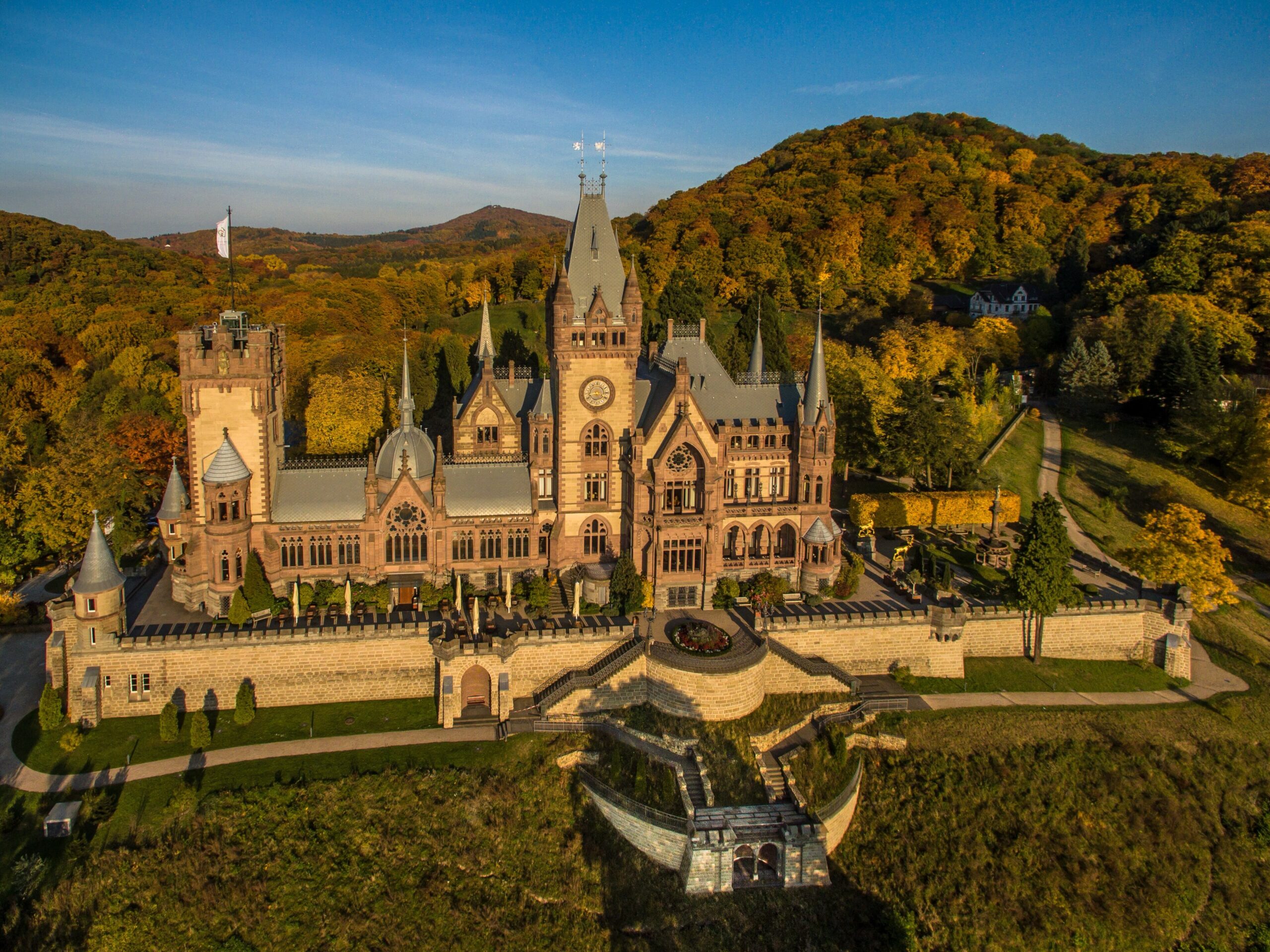
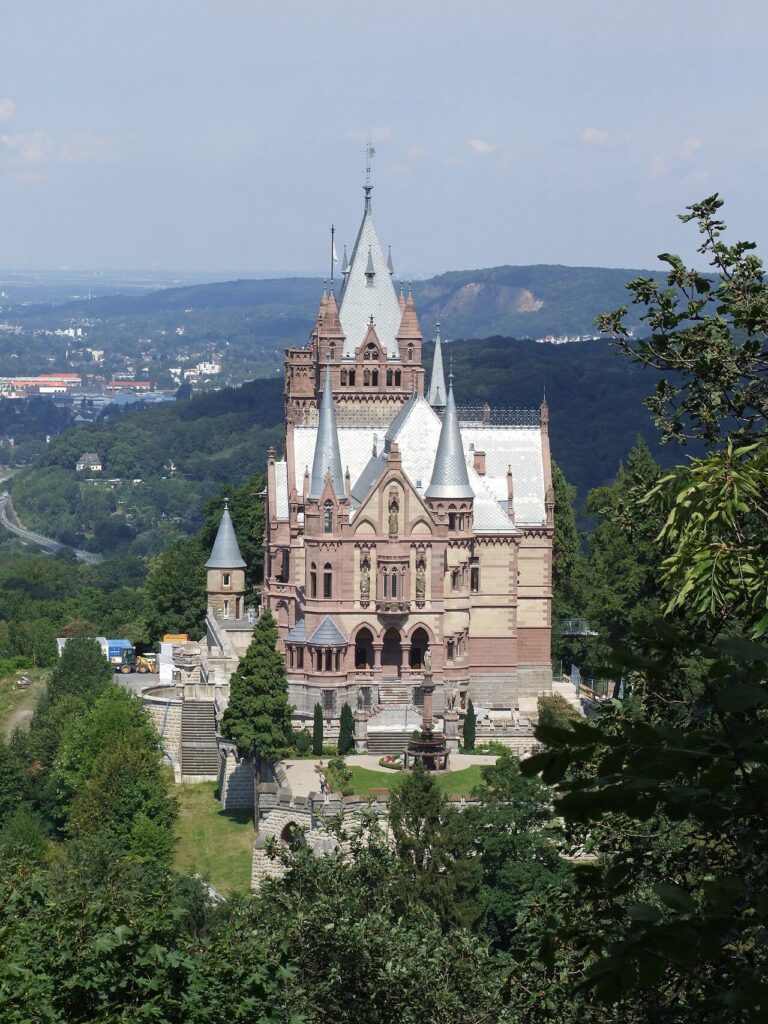
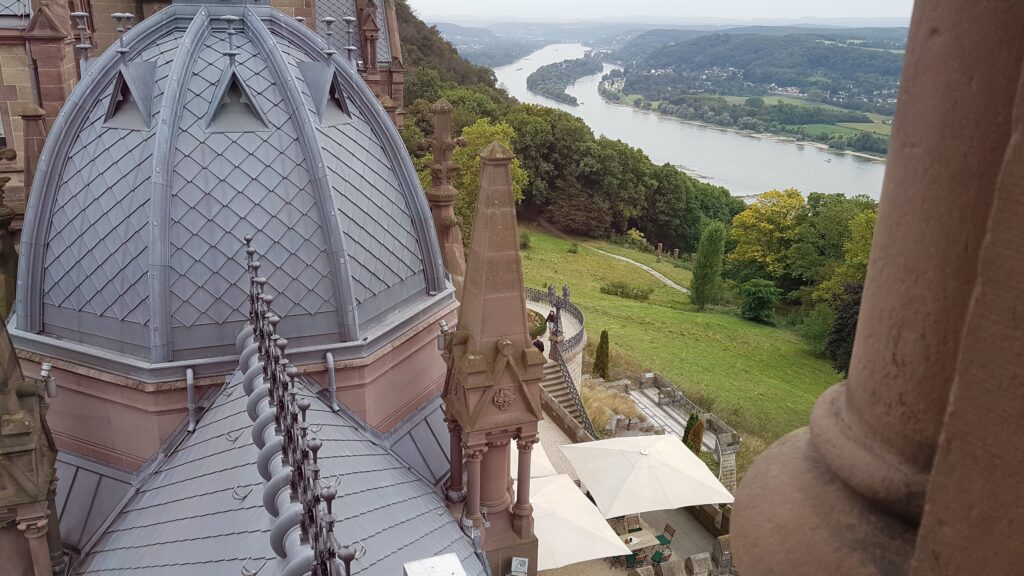
At first glance, Schloss Drachenburg looks like a castle that has stood above the Rhine Valley since the Middle Ages. Its soaring towers, Gothic spires, battlements, and breathtaking hilltop setting make it seem like the home of medieval kings and knights. Yet appearances can be deceiving. This spectacular landmark is not a medieval fortress at all. It was built between 1882 and 1884 for a wealthy financier who spent a fortune creating one of Germany’s most extraordinary castles—but almost never lived inside it.
A Poor Boy Who Became One of Europe’s Wealthiest Men
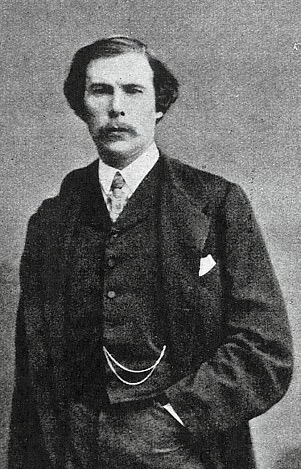
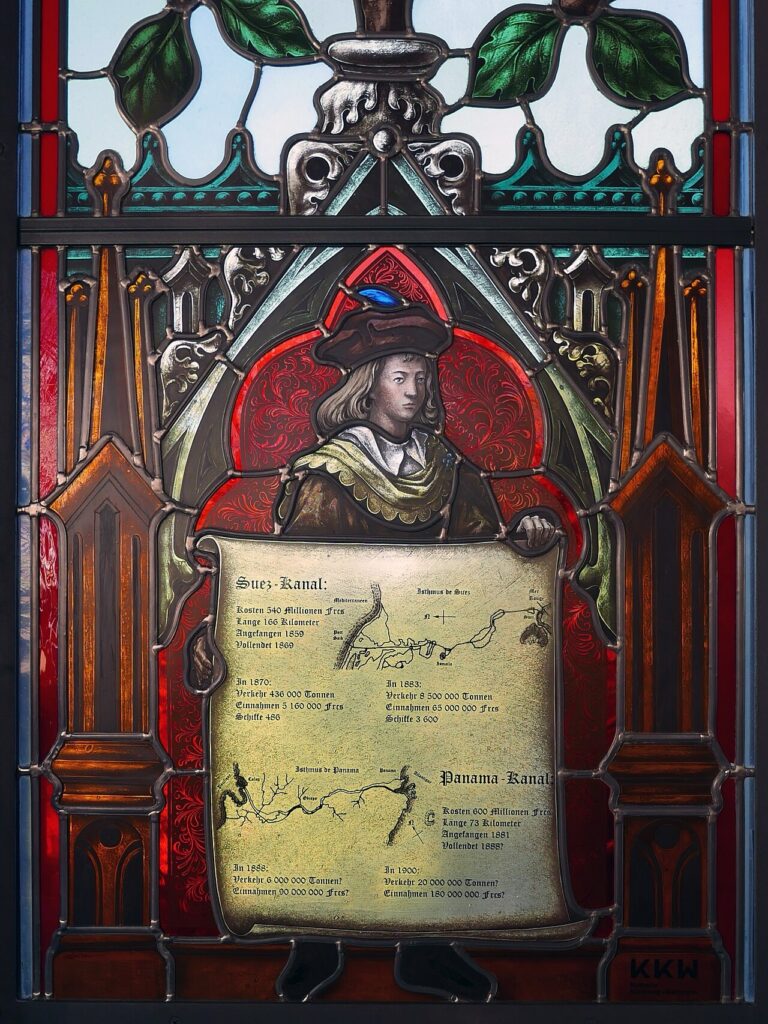
The story of Schloss Drachenburg begins not with kings or princes, but with Stephan von Sarter, a man born into a modest family near Bonn in 1833. As a young man he left Germany for Paris, where he built an astonishing career in finance. Through successful investments, including shares connected with the Suez Canal and later the Panama Canal, he accumulated enormous wealth. His rise was so remarkable that in 1881 he was granted the title of Baron, allowing him to enter the highest circles of European society.
Instead of building a grand residence in Paris, where he lived and worked, Sarter chose the legendary Drachenfels overlooking the Rhine, within sight of his birthplace. He wanted to create a residence that reflected both his success and the growing confidence of the newly unified German Empire.
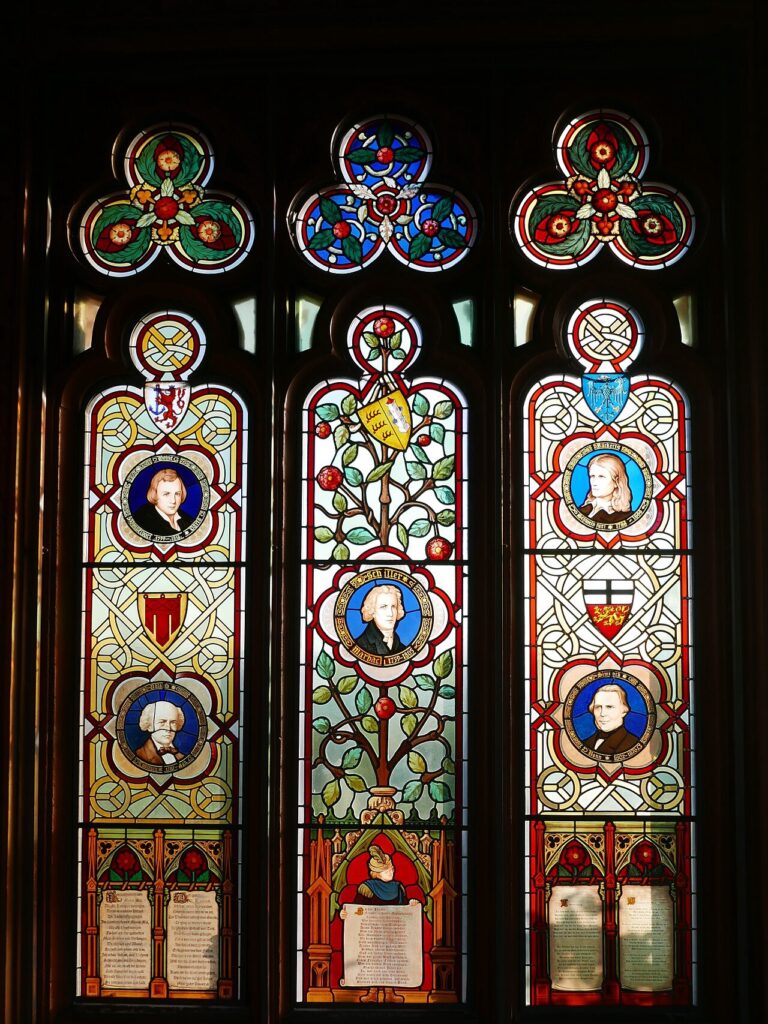
Even the castle’s decoration celebrated the source of his fortune. The stained-glass windows in the Art Gallery feature allegorical depictions of the Suez and Panama Canals—the engineering projects whose investments helped make him one of Europe’s wealthiest financiers. Rather than hiding the origins of his wealth, Sarter chose to weave his own remarkable life story into the castle itself.
A Castle That Blended Fantasy with Modern Technology
Construction began in 1882 and, despite the building’s extraordinary complexity, was completed in just three years. More than twenty specialist companies, artists, and architects worked simultaneously on the project, while wagons and even caravans of donkeys carried thousands of tons of building materials up the mountainside.
Although the castle was designed to resemble a medieval fortress, it was in fact one of the most modern residences of its time. Behind its Neo-Gothic towers and Neo-Renaissance decoration were features rarely associated with a castle: gas lighting, central heating, steel roof structures, and cast-iron staircases were carefully hidden beneath an exterior inspired by Germany’s romantic vision of the Middle Ages. It was a perfect example of the nineteenth century’s fascination with recreating an idealized medieval world while embracing the latest engineering innovations.
The Castle Without Its Owner
Ironically, Stephan von Sarter barely enjoyed the magnificent residence he had created. Although he spent the equivalent of a fortune on its construction, he continued to live mainly in Paris and visited the castle only occasionally. When he died in 1902, Schloss Drachenburg had never truly become the home it had been intended to be.
During the decades that followed, the castle experienced a remarkable series of transformations. It served as a private residence, a boarding school, a military facility during the Second World War, and later fell into serious neglect. By the late twentieth century, one of Germany’s most spectacular castles was in danger of disappearing altogether.
A Remarkable Rescue
Recognizing its historical and architectural importance, Germany placed Schloss Drachenburg under monument protection in 1986. An ambitious restoration project followed, lasting from 1995 to 2010, during which experts carefully reconstructed its richly decorated interiors, stained-glass windows, wall paintings, terraces, and surrounding park. The goal was not merely to repair the building, but to return it as closely as possible to the appearance it had when Stephan von Sarter first saw his dream become reality.
Today, visitors walking through its halls experience one of the finest surviving examples of nineteenth-century Historicism, a period when architects looked to the past for inspiration while quietly incorporating the most advanced technology of their own age.
More Than a Fairy-Tale Castle
Unlike Germany’s genuine medieval fortresses, Schloss Drachenburg tells a very different story. It is the story of ambition, extraordinary wealth, romantic imagination, and a dream that outlived the man who created it. Rising above the Rhine Valley beneath the legendary Drachenfels, the castle remains one of Germany’s most fascinating landmarks—not because kings once ruled there, but because one determined man transformed his success into one of Europe’s most unforgettable architectural fantasies.
Вашият коментар