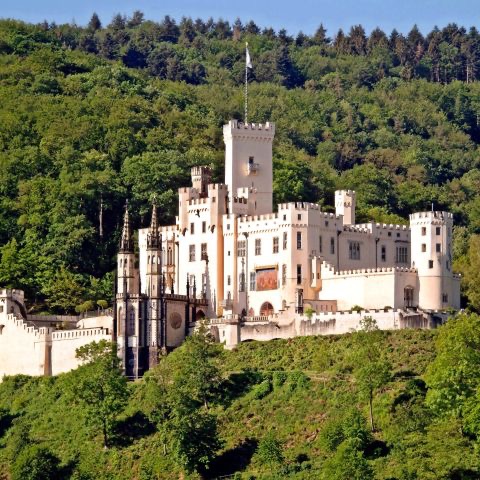
As your Rhine River cruise approaches the city of Koblenz, a magnificent white castle appears high above the river, surrounded by forests and terraced gardens. With its elegant towers and dramatic hilltop setting, Stolzenfels Castle looks like something straight out of a fairy tale. Yet behind its beauty lies a remarkable story of destruction, neglect, and one of the greatest castle restorations in Europe.
Unlike many medieval castles that survived through centuries of continuous use, Stolzenfels was given a second life. After lying in ruins for more than 150 years, it became a symbol of Germany’s fascination with the Middle Ages and remains one of the Rhine Valley’s most spectacular landmarks.
A Fortress Built to Guard the Rhine
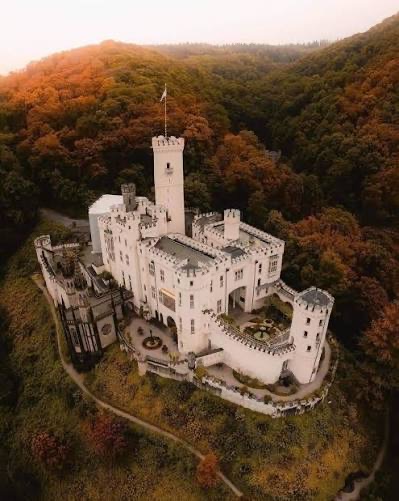
The story of Stolzenfels began in 1259, when Arnold II of Isenburg, Archbishop-Elector of Trier, ordered the construction of a fortress overlooking the Rhine. Its purpose was both military and economic. Together with nearby fortifications, it helped protect the Archbishop’s territory while controlling trade along one of Europe’s busiest rivers.
For centuries, merchants traveling the Rhine passed beneath its walls, while soldiers watched over the river from the castle’s towers. Its commanding position made it an important part of the region’s defensive network.
War Brings the Castle Down
Like many castles in the Rhine Valley, Stolzenfels could not escape the wars that swept across Europe during the late seventeenth century.
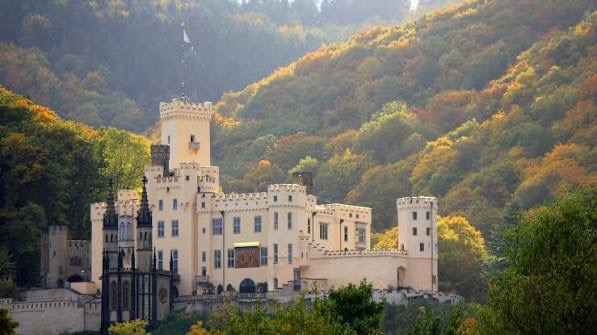
In 1689, during the Nine Years’ War, French troops destroyed much of the fortress as they advanced through the Rhineland. Once a proud military stronghold, Stolzenfels was left abandoned and gradually fell into ruin. Nature slowly reclaimed the hilltop as trees and vegetation grew among the broken walls.
For more than a century, the castle remained little more than a picturesque ruin overlooking the Rhine.
A King’s Dream
Everything changed in 1823, when the ruins were presented as a gift to Crown Prince Frederick William of Prussia, who would later become King Frederick William IV.
Inspired by the Romantic movement and Germany’s medieval heritage, the future king ordered an ambitious reconstruction of the castle. Rather than rebuilding it exactly as it had been, architects created an idealized medieval residence, combining authentic defensive features with elegant Gothic Revival architecture.
The result was not simply a restored fortress but one of the finest examples of Rhine Romanticism, a style that celebrated the legends, landscapes, and castles of the Rhine Valley.
One of Germany’s Most Beautiful Castles
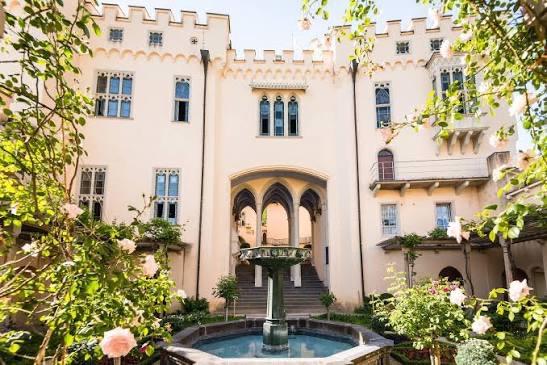
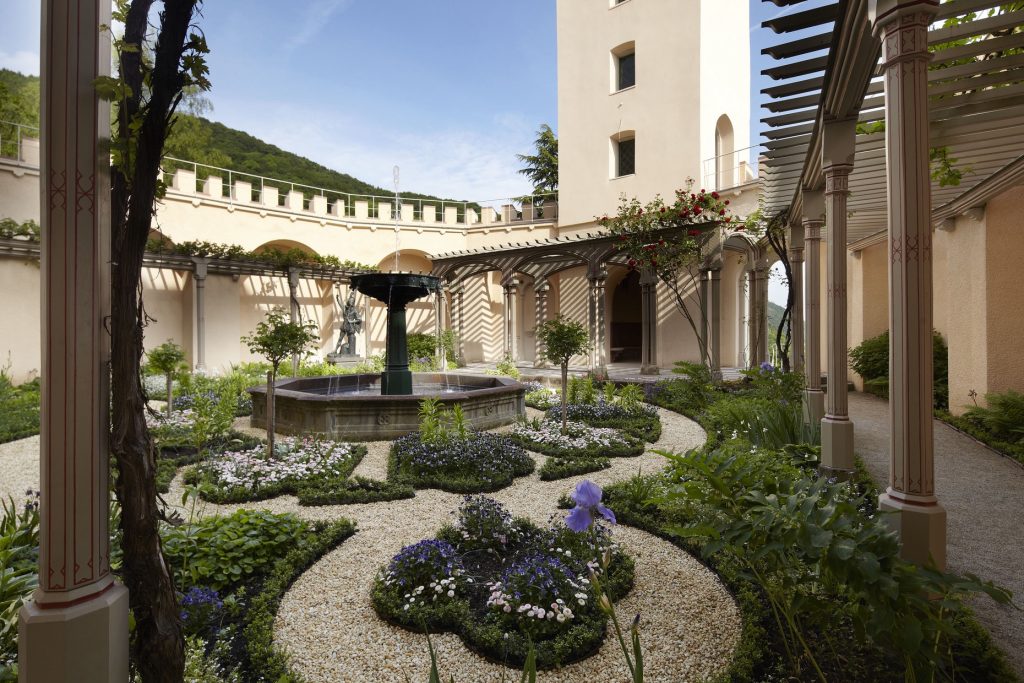
Today, Stolzenfels Castle welcomes visitors from around the world. Its richly decorated rooms, impressive Great Hall, landscaped gardens, and panoramic terraces offer a glimpse into both medieval history and nineteenth-century royal life.
Recognized as part of the UNESCO Upper Middle Rhine Valley, the castle remains one of the highlights of every Rhine River cruise. Its white walls rising above the river have become one of the region’s most recognizable sights.
Stolzenfels reminds us that history is not only about preserving the past. Sometimes, it is also about bringing forgotten places back to life.
Next in the series: Reichenstein Castle – From Robber Barons to a Fairytale Castle.
Вашият коментар