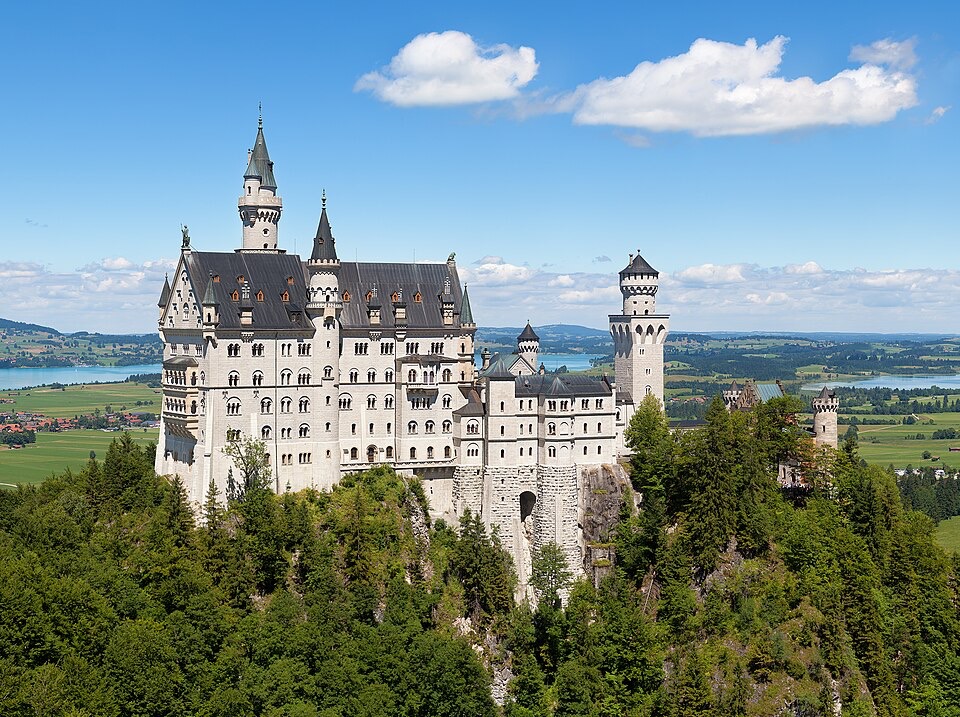
More Than a Fairy Tale Castle
For millions of people around the world, Neuschwanstein Castle is instantly recognizable. Its soaring white towers, dramatic Alpine setting, and romantic appearance inspired Disney’s Sleeping Beauty Castle and have appeared in countless films, books, and travel brochures. Every year, more than a million visitors travel to southern Germany expecting to see the perfect medieval fortress.
But there is one surprising fact that many visitors never learn.
Neuschwanstein is not a medieval castle at all. It is a nineteenth-century dream—one that was never fully completed. Behind its fairy-tale appearance lies a story of obsession, imagination, engineering, and tragedy. It is the story of a king who wanted to escape the modern world by creating his own vision of the Middle Ages, only to die before his masterpiece was finished.
Today, Neuschwanstein is celebrated as one of Germany’s greatest landmarks and has been recognized as part of a UNESCO World Heritage Site. Yet its greatest mystery is not how beautiful it is—but how different it is from what its creator originally imagined.
A King’s Impossible Dream
The story begins with King Ludwig II of Bavaria, one of the most fascinating and misunderstood monarchs in European history.
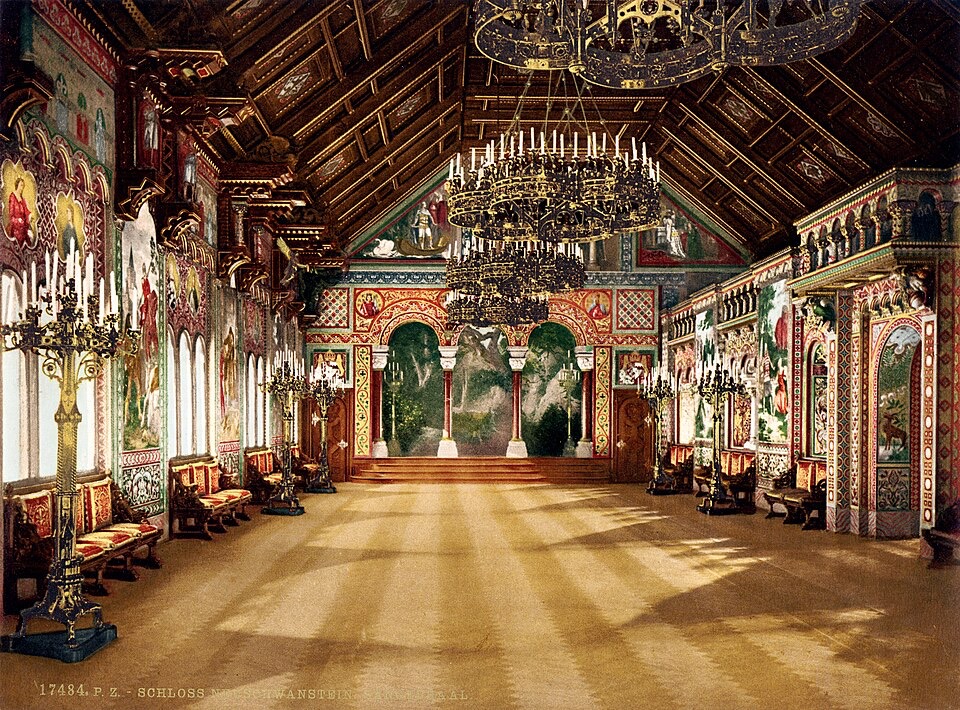
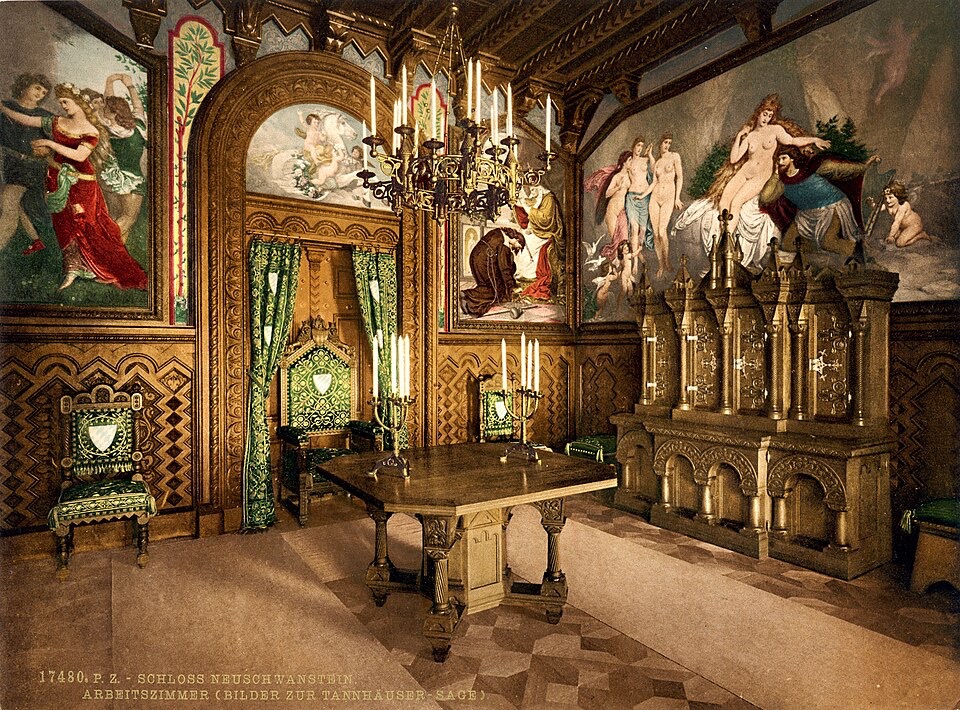
Unlike many nineteenth-century rulers, Ludwig cared little for politics or military power. Instead, he was captivated by medieval legends, heroic knights, and the operas of composer Richard Wagner. Wagner’s stories of swan knights, holy grails, and legendary kingdoms deeply influenced the young king, who dreamed of creating a place where those stories could come to life.
His inspiration also came from childhood.
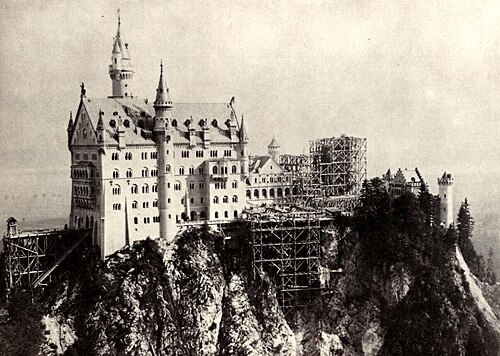
Near the future construction site stood Hohenschwangau Castle, where Ludwig had spent much of his youth. Above it were the ruins of two forgotten medieval fortresses. While most people saw little more than crumbling stone walls, Ludwig imagined something extraordinary. As crown prince, he even sketched the ruins in his diary years before becoming king.
After ascending the throne in 1864, Ludwig finally had the opportunity to turn that dream into reality.
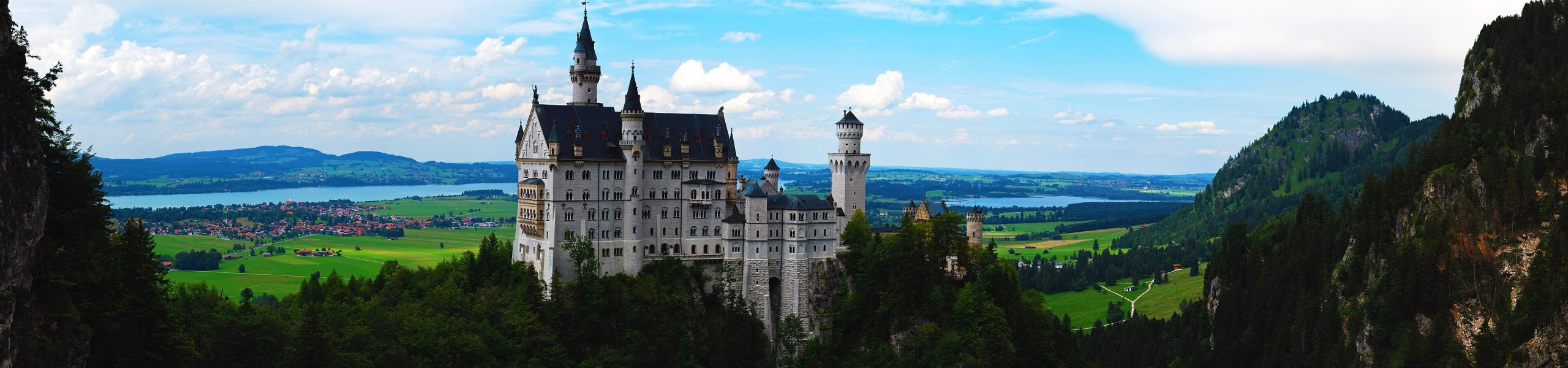
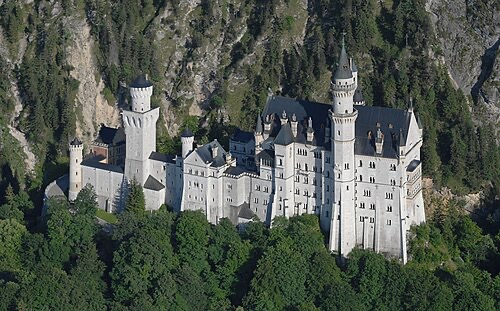
Construction officially began on September 5, 1869, after the medieval ruins were demolished. Rather than restoring the original castles, Ludwig envisioned something far grander—a romantic interpretation of the Middle Ages rather than an accurate reconstruction. The project drew inspiration from castles such as Wartburg and Pierrefonds while blending Romanesque, Gothic, and Byzantine architectural styles into a completely original creation.
Unlike genuine medieval castles built for defense, Neuschwanstein was designed as a private retreat. It would not house a royal court or military garrison. Instead, it would become a sanctuary where Ludwig could escape politics and immerse himself in the world of legends and music.
Every major design required the king’s personal approval. Historians often note that Ludwig influenced the project so heavily that Neuschwanstein became almost as much his own artistic creation as that of its architects.
Ironically, while the castle appears ancient, it represented some of the boldest architectural imagination of the nineteenth century.
The Castle That Was Never Finished
Today, millions admire Neuschwanstein’s magnificent towers and elegant halls, assuming they are seeing the castle exactly as Ludwig intended.
They are not.
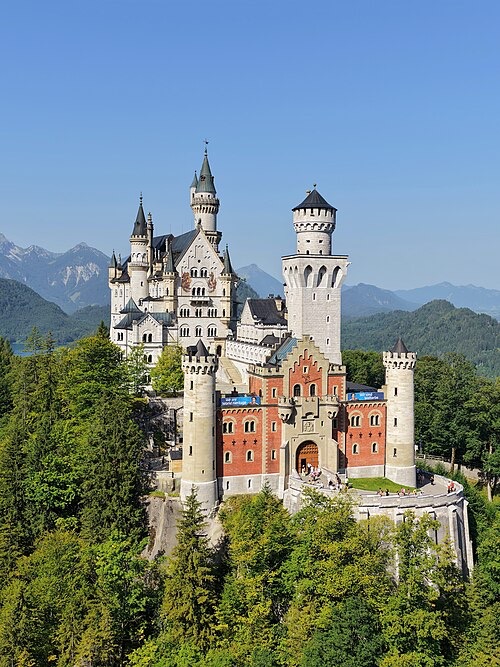
Perhaps the greatest secret of Neuschwanstein is that visitors are looking at an unfinished dream.
When Ludwig died in 1886, construction was still far from complete. Although the exterior looked impressive, much of the ambitious project existed only on architectural drawings.
One of the most striking missing features was a 300-foot (90-meter) keep, planned to dominate the upper courtyard. Beneath it would have stood a grand chapel, creating the symbolic heart of the entire complex. Neither was ever built. Even today, the outline of the planned structure can still be seen in the courtyard.
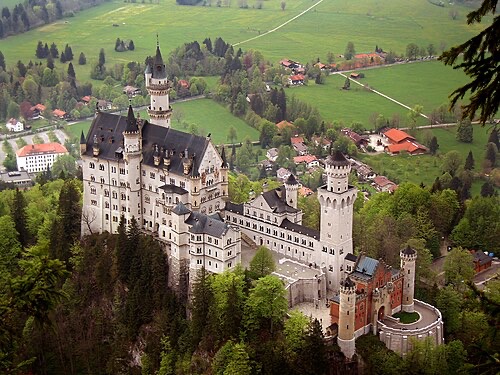
Other dreams disappeared as well.
Ludwig planned an elaborate Moorish Hall, inspired by Islamic architecture, beneath the Throne Room. A magnificent Knights’ Bath, modeled after medieval bathing halls, was also abandoned. Guest apartments, ceremonial halls, castle gardens, terraces, fountains, and decorative galleries remained unfinished forever.
Even buildings that were completed often had to be simplified after Ludwig’s death. Decorative sculptures were removed from the plans, architectural details became less elaborate, and several planned wings of the palace were never constructed. The result was a castle that looked complete from a distance but lacked many of the elements its creator had imagined.
Inside, the situation was even more dramatic.
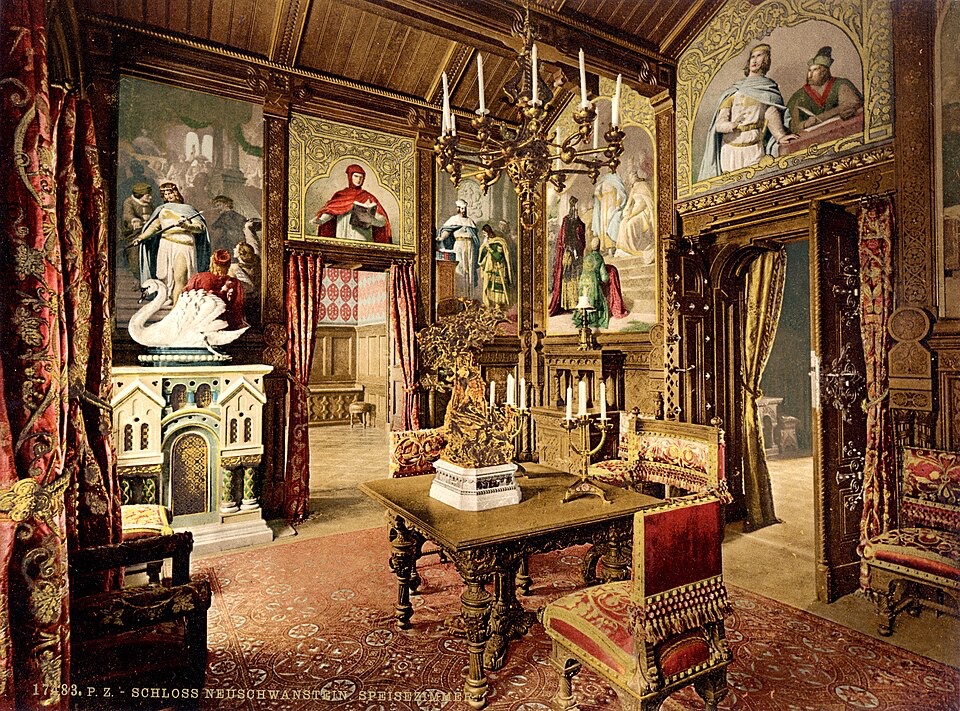
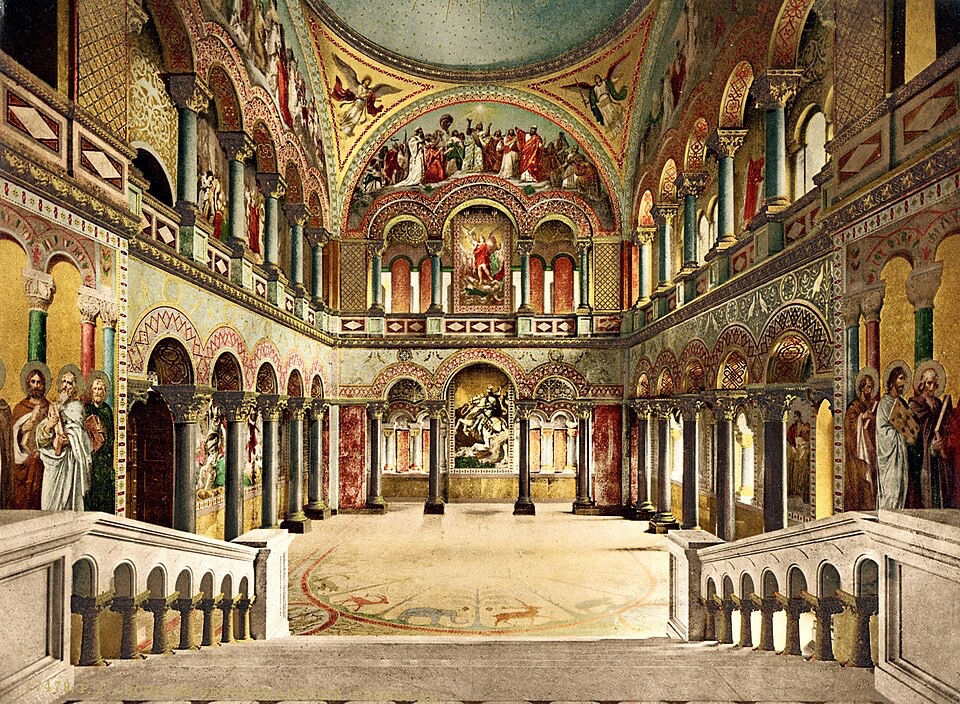
The palace was originally intended to contain more than 200 rooms, including spaces for guests, servants, ceremonies, and royal life. In reality, only about 15 rooms and halls were fully completed before Ludwig’s death.
This unfinished state gives Neuschwanstein a unique place in architectural history. Unlike medieval castles that evolved over centuries, every part of Neuschwanstein was designed according to a single artistic vision. Yet that vision remained forever incomplete.
In many ways, the castle itself became a monument to its creator’s impossible dream.
A Medieval Castle Filled with Modern Technology
While King Ludwig II wanted Neuschwanstein to look as if it belonged in the Middle Ages, he had no intention of living like a medieval king.
Behind the castle’s Romanesque towers and knightly murals was one of the most technologically advanced royal residences of the late nineteenth century. Visitors admired stained-glass windows, carved oak furniture, and grand halls inspired by medieval legends, but hidden inside the walls were innovations that many European homes would not have for decades.
The castle contained telephone lines, allowing servants to communicate quickly throughout the building. A battery-powered bell system enabled Ludwig to summon staff from different rooms with remarkable efficiency. Instead of carrying food up several flights of stairs, meals arrived through a service elevator that connected the royal dining room directly with the kitchen below.
The conveniences did not stop there.
Neuschwanstein had running hot and cold water, an extraordinary luxury in the 1880s. Its bathrooms featured automatic flushing toilets, while a central hot-air heating system helped keep the palace comfortable during Bavaria’s harsh winters. Even the kitchen reflected modern engineering. It was equipped with a Rumford stove that automatically adjusted the rotation of roasting spits using heat, reducing the amount of manual work required by servants.
These innovations created a fascinating contradiction.
From the outside, Neuschwanstein looked like a fortress built by medieval knights. Inside, it functioned more like a luxurious nineteenth-century residence equipped with cutting-edge technology. This blend of romantic imagination and modern engineering perfectly reflected Ludwig II himself—a king who dreamed of the past while embracing the future whenever it made his private world more comfortable.
The King Who Barely Lived in His Dream
Despite spending nearly two decades planning and constructing Neuschwanstein, Ludwig II enjoyed his masterpiece for only a brief moment.
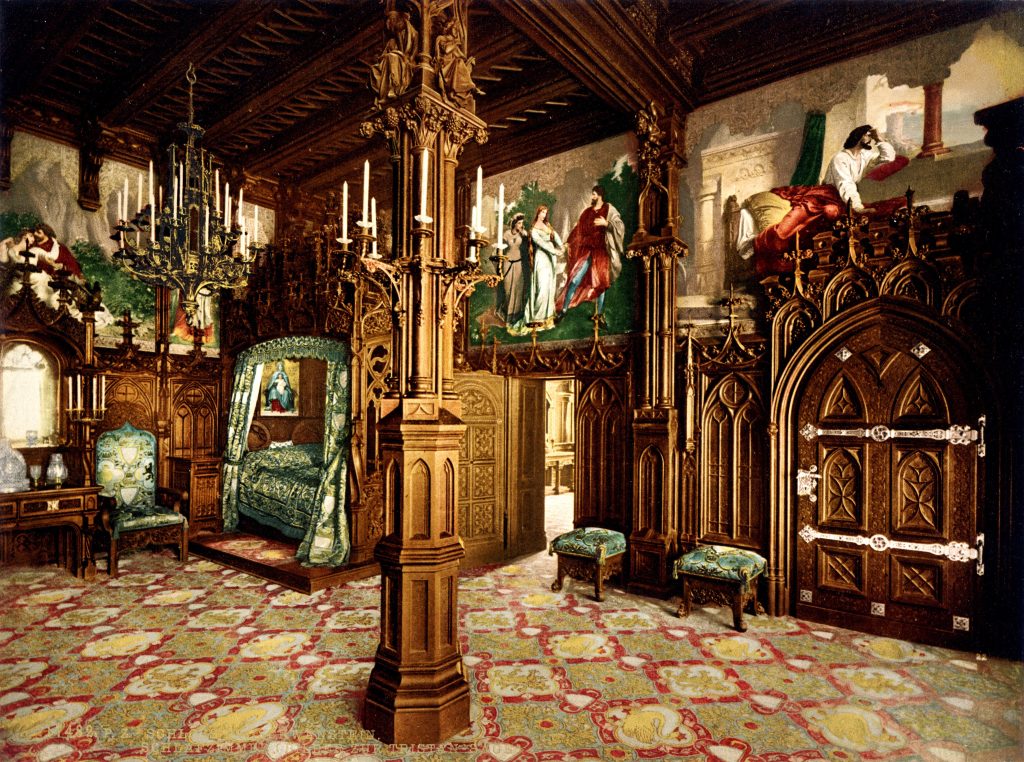
He moved into the unfinished palace in 1884, even though construction continued around him. Workers were still completing sections of the castle while the king occupied only a handful of finished rooms. In total, Ludwig lived at Neuschwanstein for just 172 days.
The reason was simple: money.
Neuschwanstein was only one of several extravagant palace projects financed almost entirely from Ludwig’s personal fortune and loans. As construction continued, costs rose dramatically, eventually reaching nearly twice the original estimate. The king accumulated enormous debts but refused to abandon his dream, insisting that work continue despite repeated warnings from his advisers.
By 1886, Bavaria’s government had lost patience.
Officials declared Ludwig mentally unfit to rule and sent a commission to remove him from the castle. The first attempt failed when the king ordered local authorities to protect him. A second commission succeeded the following day, and Ludwig was forced to leave Neuschwanstein forever. Only two days later, on June 13, 1886, he and his physician, Dr. Bernhard von Gudden, were found dead under mysterious circumstances in the shallow waters of Lake Starnberg. The exact events of that evening remain one of Germany’s greatest historical mysteries.
Ironically, Ludwig’s greatest dream immediately became something he had never intended.
Just six weeks after his death, the palace was opened to paying visitors. The money earned from tourism helped repay the debts that had nearly destroyed him. Within a few years, thousands of people were walking through rooms that had been designed as the king’s private refuge.
From Private Fantasy to a Global Icon
Few buildings have undergone such a remarkable transformation.
Neuschwanstein was created as a deeply personal retreat for one reclusive king. Today, it is one of the world’s most recognizable castles and welcomes well over a million visitors every year.
Its influence extends far beyond Germany.
The castle’s dramatic silhouette inspired Disney’s famous fairy-tale castles, helping shape how generations of people imagine princes, princesses, and enchanted kingdoms. It has appeared in films, television, video games, books, and even postage stamps, becoming one of the defining symbols of Romantic architecture.
Recognition of its historical importance continues to grow. In 2025, Neuschwanstein became part of the UNESCO World Heritage Site known as The Palaces of King Ludwig II of Bavaria, acknowledging not only its beauty but also its unique place in European architectural history.
Legacy
Neuschwanstein is often described as the world’s ultimate fairy-tale castle, yet its true story is far more compelling than the legends it resembles.
It was never completed. Its creator barely lived within its walls. It combined medieval fantasy with some of the most advanced technology of its age. And a palace built as one man’s private escape ultimately became one of the world’s most visited landmarks.
Perhaps that is what makes Neuschwanstein so unforgettable. It is not simply a castle—it is a monument to imagination. More than a century after King Ludwig II’s death, his unfinished dream continues to inspire millions of people, proving that even an incomplete vision can leave a lasting mark on history.
Вашият коментар