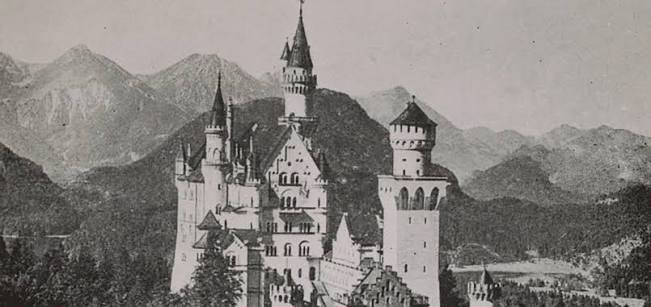
Few castles in the world are as instantly recognizable as Neuschwanstein. Rising dramatically above the Bavarian Alps, with white towers and soaring turrets seemingly pulled from a medieval legend, it was created by King Ludwig II of Bavaria as an escape into a romantic world of knights, kings, and German mythology.
But in the final weeks of World War II, this fairy-tale castle revealed a much darker secret.
When American forces reached Bavaria in the spring of 1945, they discovered that Neuschwanstein had been transformed into a major storage site for cultural treasures looted by the Nazis across occupied Europe. Behind the romantic façade built for an eccentric nineteenth-century king were paintings, furniture, silver, jewelry, documents, and records connected to one of the greatest organized campaigns of cultural theft in modern history.
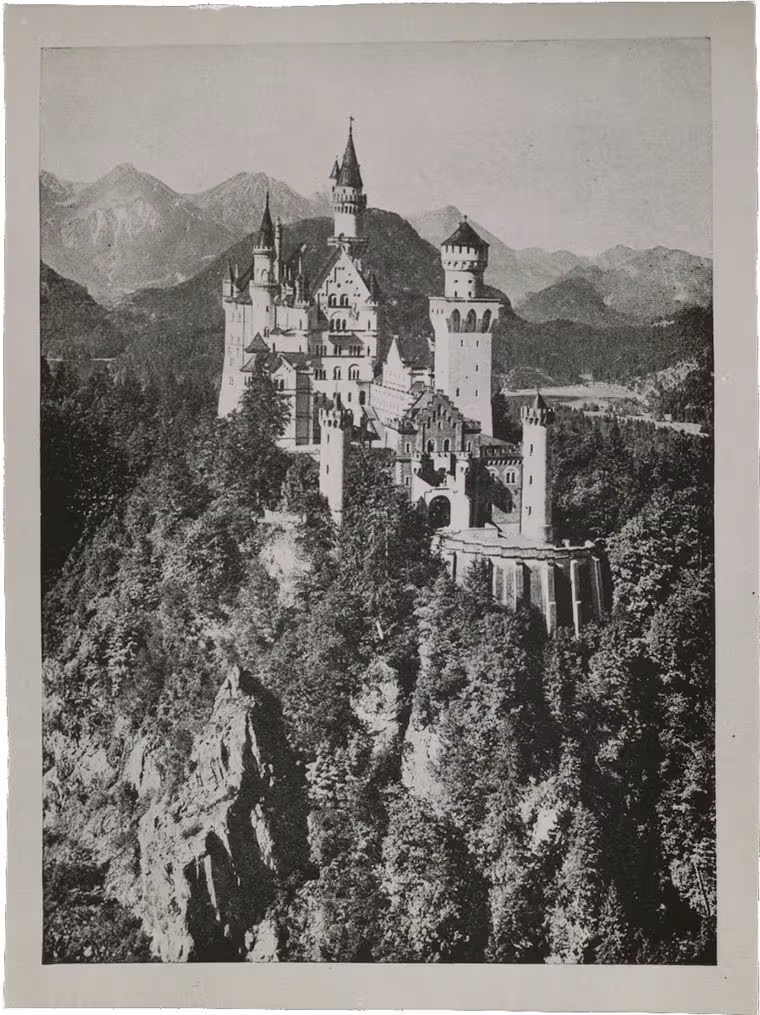
From a King’s Fantasy to a Nazi Storehouse
Neuschwanstein had never been intended as a fortress. King Ludwig II of Bavaria began the project in the nineteenth century as his idealized vision of a medieval castle—a private refuge inspired by German legends, medieval kingship, and the operas of Richard Wagner.
The foundation stone was laid on September 5, 1869, and Ludwig eventually began occupying completed rooms in 1884. Yet the king would never see his enormous project fully finished. He died under mysterious circumstances in 1886, and only seven weeks later the castle was opened to the public.
Decades later, its remote location in southern Bavaria gave Neuschwanstein an entirely different purpose.
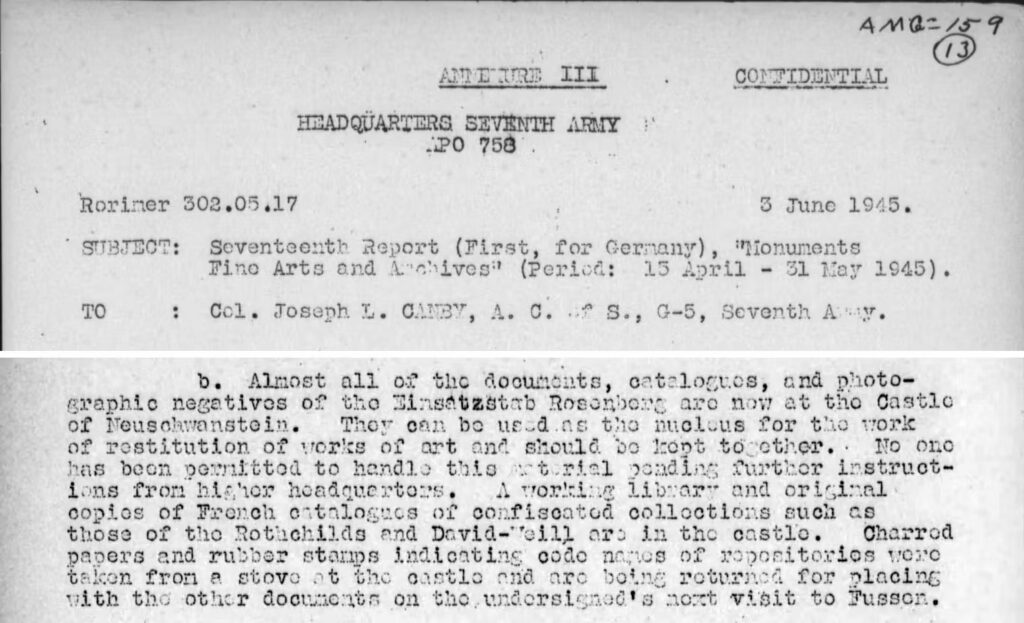
During World War II, the Einsatzstab Reichsleiter Rosenberg (ERR)—the Nazi organization responsible for systematic cultural plunder in occupied territories—used the castle as a repository for confiscated property. Much of it had been taken from collections in France, particularly those belonging to Jewish families.
The same secluded location that had once attracted Ludwig II now offered the Nazis a seemingly secure place to hide the evidence and products of their enormous looting operation.
The Americans Arrive at Neuschwanstein
By the spring of 1945, Nazi Germany was collapsing and Allied forces were advancing deep into the country.
When American forces reached the region, Neuschwanstein was found to contain a substantial collection of looted cultural property. Although some of the most important objects had already been transferred elsewhere, large quantities remained.
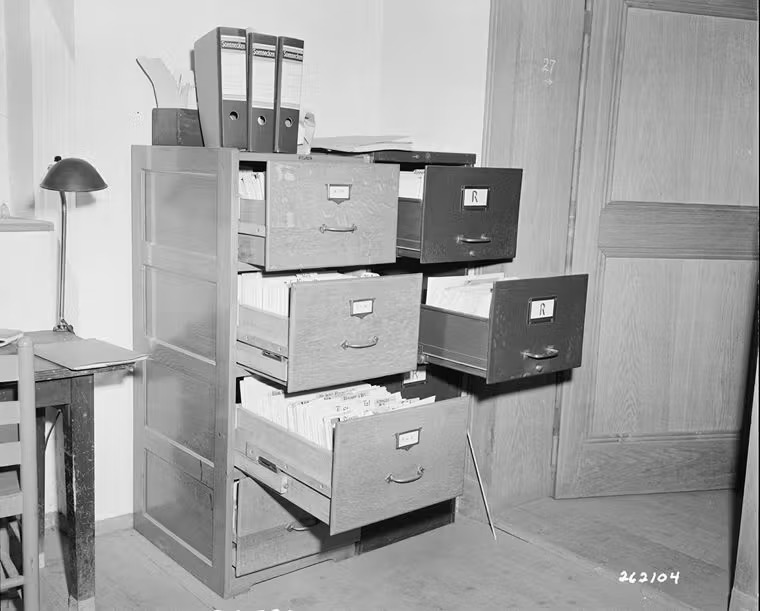
According to records preserved by the U.S. National Archives, the castle contained paintings, furniture, silver, jewelry, and extensive documentation belonging to the ERR. American photographs from May 1945 show rooms inside Neuschwanstein filled with the files of the organization responsible for the thefts.
The discovery presented the Allies with a challenge very different from defeating an enemy army.
Thousands of objects had to be identified, catalogued, protected, and eventually returned to the countries and people from whom they had been stolen.
That responsibility fell in large part to the specialists of the Monuments, Fine Arts, and Archives program, remembered today as the Monuments Men.
The 39 Albums That Documented a Crime
Among the most historically important discoveries at Neuschwanstein were 39 leather-bound photograph albumscreated by the ERR.
These were not ordinary photo albums.
As Nazi agents confiscated collections, they photographed and catalogued stolen works of art. The resulting albums became a visual record of the enormous cultural plunder carried out across occupied Europe. Each photograph represented an object that had passed through the Nazi system of confiscation and redistribution.
In May 1945, the Monuments Men discovered 39 of these original albums at Neuschwanstein, together with records documenting Nazi confiscations and thousands of looted objects.
Their importance extended far beyond the castle.
The albums were transferred to the Munich Central Collecting Point, where they helped Allied specialists identify stolen works and return them to their rightful owners.
Then, later in 1945, the same albums served another extraordinary purpose.
They were introduced as evidence during the Nuremberg trials, helping demonstrate the enormous scale and systematic nature of Nazi art looting. Today, the U.S. National Archives still holds the original group of 39 albums discovered at Neuschwanstein.
The Monuments Men and the Battle to Return Europe’s Art
The story did not end when the objects were removed from Neuschwanstein.
Across Germany and Austria, Allied forces were discovering repositories filled with cultural treasures. The task facing the Monuments Men was enormous: determine where objects had come from, establish ownership, preserve damaged works, and begin returning millions of displaced cultural objects.
Neuschwanstein became one piece of this much larger effort.
The records discovered there were especially valuable because Nazi officials themselves had carefully documented many of their confiscations. Paperwork created to administer systematic theft could now be used to help reverse it.
The castle therefore became not merely the site of an extraordinary discovery, but an important link in the postwar effort to reconstruct the journeys of stolen artworks and restore them to their owners.
Two Completely Different Histories Behind the Same Walls
The contrast is difficult to imagine.
Neuschwanstein was conceived by Ludwig II as an escape from reality—a romantic interpretation of a medieval world that existed largely in his imagination. Its halls celebrated legends, knights, kings, and the operatic world that fascinated him.
Less than sixty years after Ludwig’s death, those same walls were being used to conceal property stolen from families and collections across occupied Europe.
Then American soldiers and art specialists arrived, and the castle entered yet another chapter of its history.
Today, millions of visitors come to Neuschwanstein for its towers, mountain scenery, and extraordinary story of King Ludwig II. Few realize that during the final days of World War II, the famous fairy-tale castle also became the scene of one of the remarkable episodes in the recovery of Nazi-looted art.
The photographs taken there in May 1945 capture a Neuschwanstein very different from the one seen on postcards today: American soldiers and specialists surrounded not by medieval fantasy, but by physical evidence of an enormous cultural crime.
And hidden among those objects were 39 albums that would travel from a Bavarian castle to the Munich collecting center and finally into the courtroom at Nuremberg—where the Nazis’ own meticulous records helped document the scale of what they had stolen.
Вашият коментар