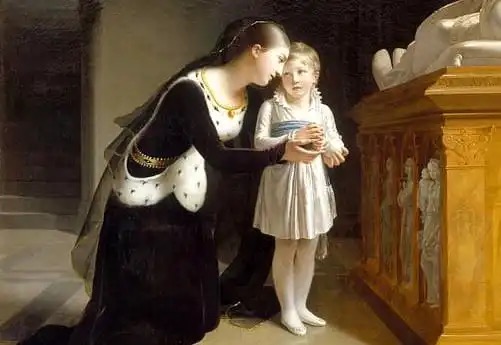
The life of Joan of Navarre is one of those late medieval stories that cannot be reduced to the simple label of “queen consort.” She was the daughter of a king, a political hostage in a foreign court, Duchess of Brittany, regent, Queen of England, and finally a wealthy widow imprisoned on charges of witchcraft. Hers is not merely a biography, but a story of power, diplomacy, personal choice, and the dangers faced by influential women at the close of the Middle Ages.
A Child of Two Dynasties and a Hostage of France
Joan of Navarre was born around 1368, the daughter of King Charles II of Navarre and Joan of France, a princess of the French royal house. From birth, she stood at the intersection of powerful dynasties, and from an early age her life was shaped by high politics.
During her childhood, Joan and two of her siblings suddenly found themselves held in France as hostages. Officially they were treated as honoured guests, but in reality they were political guarantees. The French regents—who were also Joan’s maternal uncles—kept the children as leverage over the Navarrese court. They received a proper education and lived in comfort, yet their freedom was restricted.
Their release did not come through French goodwill, but through the intervention of the King of Castile—an early indication of the complex diplomatic web surrounding Joan’s life.
A Marriage of Necessity: Duchess of Brittany
Upon her return to Navarre, her father immediately entered negotiations for a politically advantageous marriage. The chosen groom was John IV, Duke of Brittany—a man thirty years her senior, twice widowed, and without surviving heirs. For him, remarriage was a matter of dynastic survival; for Joan, it was a destiny dictated by politics.
In June 1384, Breton envoys arrived to escort her. The marriage by proxy took place on 2 September, and shortly afterward Joan sailed for Brittany. On 11 September, the marriage was solemnized in person.
Although the union began as a political arrangement, it elevated Joan to one of the most powerful female positions in western France. She soon became pregnant. A daughter born in 1388 lived only briefly, but in 1389 Joan gave birth to a son, securing the succession. Six more children followed, firmly establishing her status within the duchy.
A Woman’s Voice in Diplomacy
From this period survives a remarkable letter written by Joan to King Richard II of England. Ostensibly concerned with lands held by the English crown, the letter reveals far more than a simple legal dispute.
Joan’s tone is warm, respectful, and politically astute. She does not merely petition; she persuades, cultivating trust and presenting her husband’s interests as part of a broader alliance. The letter stands as rare evidence of a woman actively shaping diplomatic relations at the highest level of medieval politics.
Widowhood and the Regency of Brittany
On 1 November 1399, John IV of Brittany died. Joan was left a widow—but not without authority. She became regent of Brittany for her underage son, placing her in an exceptionally delicate position. Brittany was a strategic territory contested between French and English influence, and Joan now stood at its helm.
By this time, she had already met the man who would become her second husband.
Meeting Henry of Bolingbroke
Joan likely first encountered Henry of Bolingbroke in 1396 at Calais, during the wedding of Richard II to Isabella of Valois. At the time, Henry was not yet king but already a major political figure—the son of John of Gaunt and Blanche of Lancaster.
After Richard II’s deposition, Henry ascended the English throne as Henry IV. In 1400, Joan wrote to him in a tone that went beyond formal diplomacy. Her words express warmth, emotional closeness, and personal concern—suggesting that this relationship may have been founded on genuine affection rather than pure political calculation.
Queen of England—At a High Cost
On 2 April 1402, Joan and Henry were married by proxy. The price of the marriage, however, was steep: Joan was forced to relinquish the regency of Brittany and the custody of her sons. Her political power on the Continent was exchanged for her position as Queen of England.
Joan travelled to England with two of her daughters and began a new life. Henry had six children from his first marriage to Mary de Bohun. Rather than rivalry, Joan succeeded in forming positive relationships with her stepchildren—no small achievement in a medieval royal household.
Illness, Seclusion, and a Second Widowhood
In 1408, Henry IV developed a serious skin disease that increasingly isolated him from public life. He withdrew into seclusion, taking Joan with him. She remained at his side until his death in 1413.
The throne passed to his son, Henry V. Initially, Joan maintained good relations with her stepson. Yet this fragile harmony would not last.
Accused of Witchcraft: The Fall of a Queen
On 27 September 1419, Joan was stripped of all her revenues and possessions. Four days later, she was arrested on charges of witchcraft, accused of plotting against the king’s life through magical means.
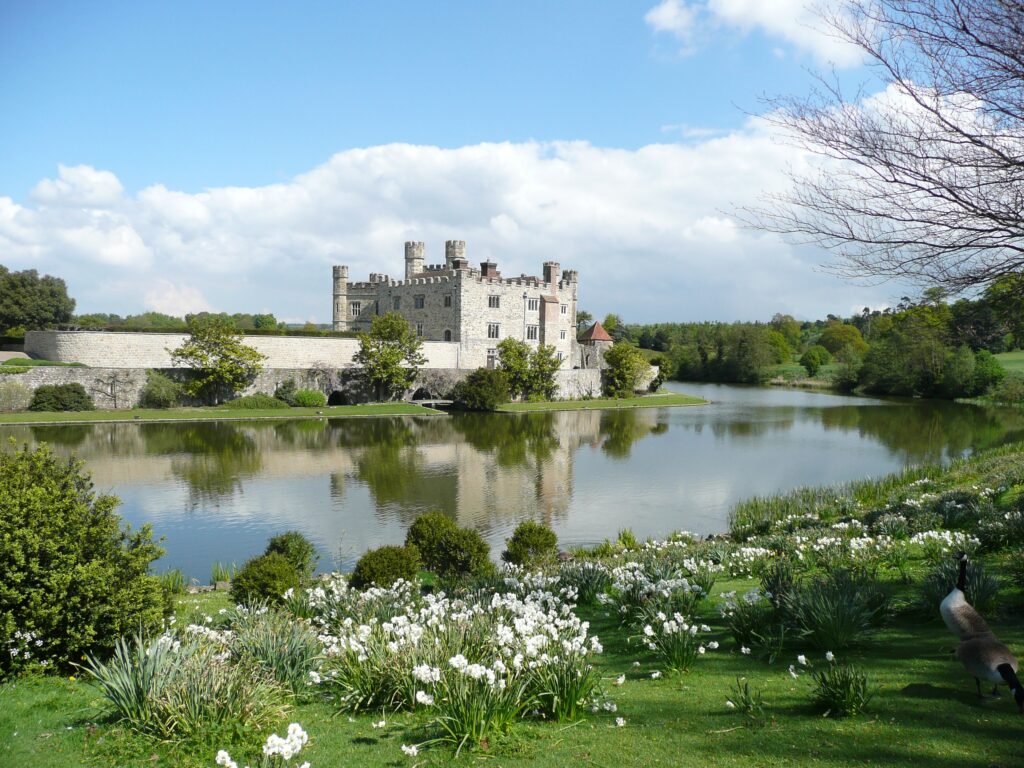
No evidence supported the accusations. They were almost certainly politically motivated—an attempt to seize her wealth and neutralize an influential dowager queen. Joan was imprisoned at Leeds Castle, though she continued to live in relative comfort, suggesting that her status was never fully erased.

Rehabilitation and Quiet Old Age
As Henry V lay dying in 1422, he ordered Joan’s release and the restoration of her property. This act amounted to a tacit admission of injustice.
Freed, Joan resumed life as a wealthy widow. In 1427, she is recorded as making a pilgrimage to Walsingham, one of England’s most important shrines. After this, she largely disappears from the historical record.
Death and Memory
Joan of Navarre died in July 1437 and was buried in Canterbury Cathedral beside her second husband, Henry IV. Her final resting place symbolically unites the divided paths of her life—between France and England, power and vulnerability, authority and persecution.
The Legacy of Joan of Navarre
Joan of Navarre’s life is more than a sequence of royal marriages. It reveals how deeply intertwined personal fate and high politics were in the Middle Ages. It also illustrates the risks faced by women who were wealthy, intelligent, and politically active in a world quick to turn independence into suspicion.
From hostage to queen, from regent to accused witch, Joan remains one of the most complex and profoundly human figures of late medieval Europe—a reminder that power always comes at a price, and memory carries responsibility.
Вашият коментар