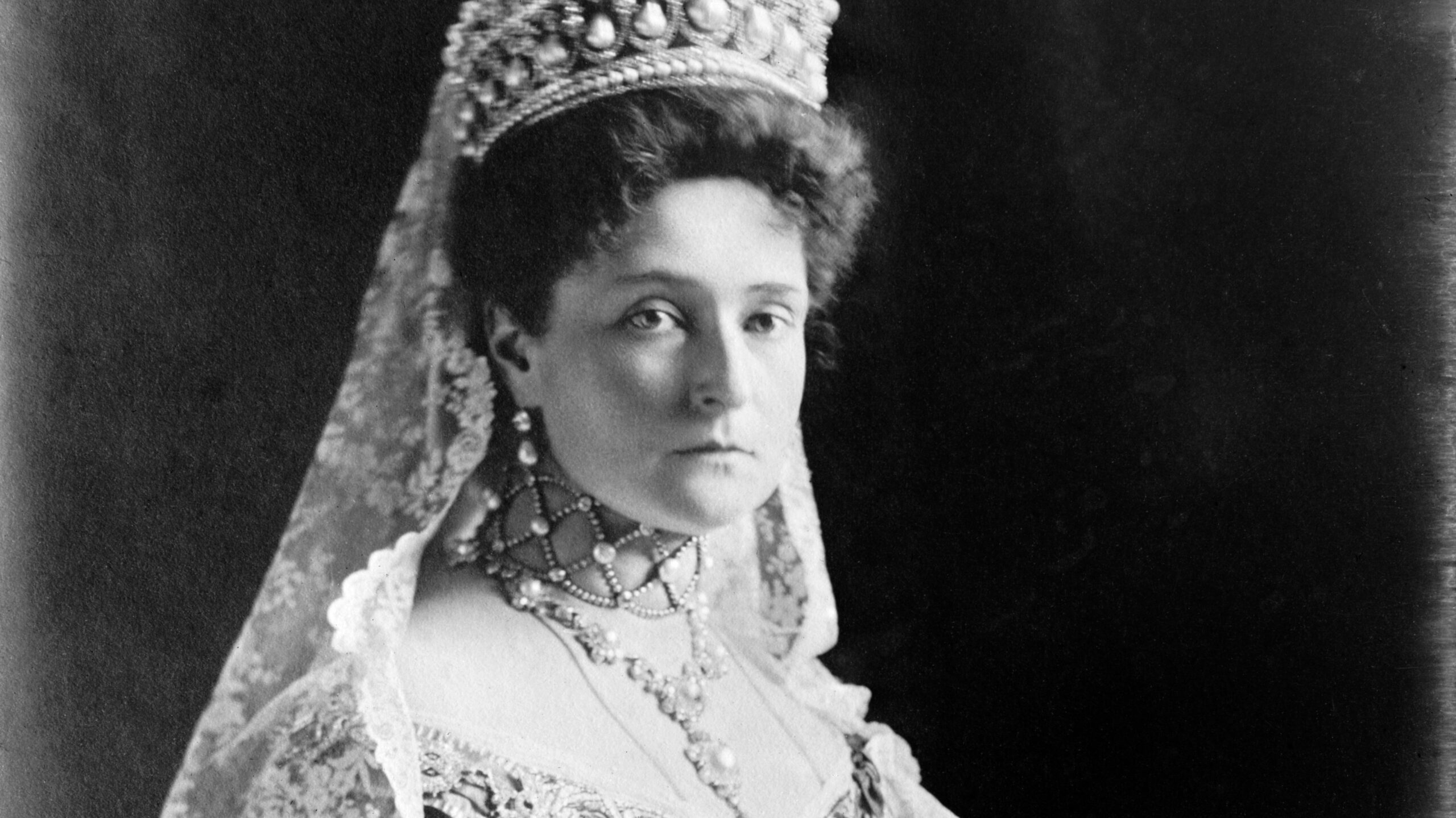
The story of Empress Alexandra Feodorovna is one of the most dramatic and controversial in European monarchical history. Born a German princess, granddaughter of Queen Victoria, and wife of the last Russian emperor, she found herself at the center of events that would change the course of history. To some, she is a symbol of devotion, maternal love, and deep faith; to others, of political naivety, isolation, and fatal misjudgments.
Her life was marked by constant loss, fear, and inner conflict. She did not simply become an empress—she became a woman forced to bear the weight of a collapsing empire, without possessing the tools or temperament to save it.
Origins and Childhood
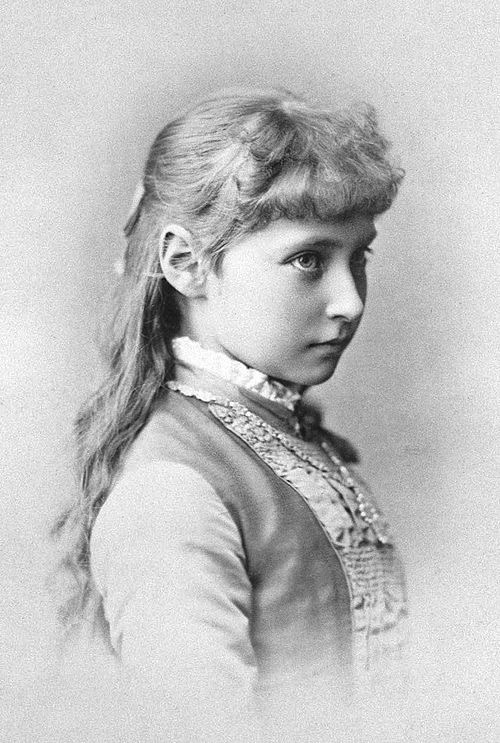
Alexandra was born on June 6, 1872, as Princess Alix of Hesse and by Rhine. She grew up in a German princely family, but her life was marked early by tragedy. As a child, she lost both her mother and one of her sisters to diphtheria—an event that left a deep emotional scar.
After this loss, Alix became more withdrawn, sensitive, and deeply religious. She found comfort in faith and family, shaping her character for the rest of her life. Even then, she developed a tendency toward an inward, private world, removed from public life.
Meeting Nicholas II
The love between Alexandra and Nicholas II was one of the rare genuinely romantic relationships among royal marriages, which were usually political arrangements. They met when they were young and quickly became attached to one another.
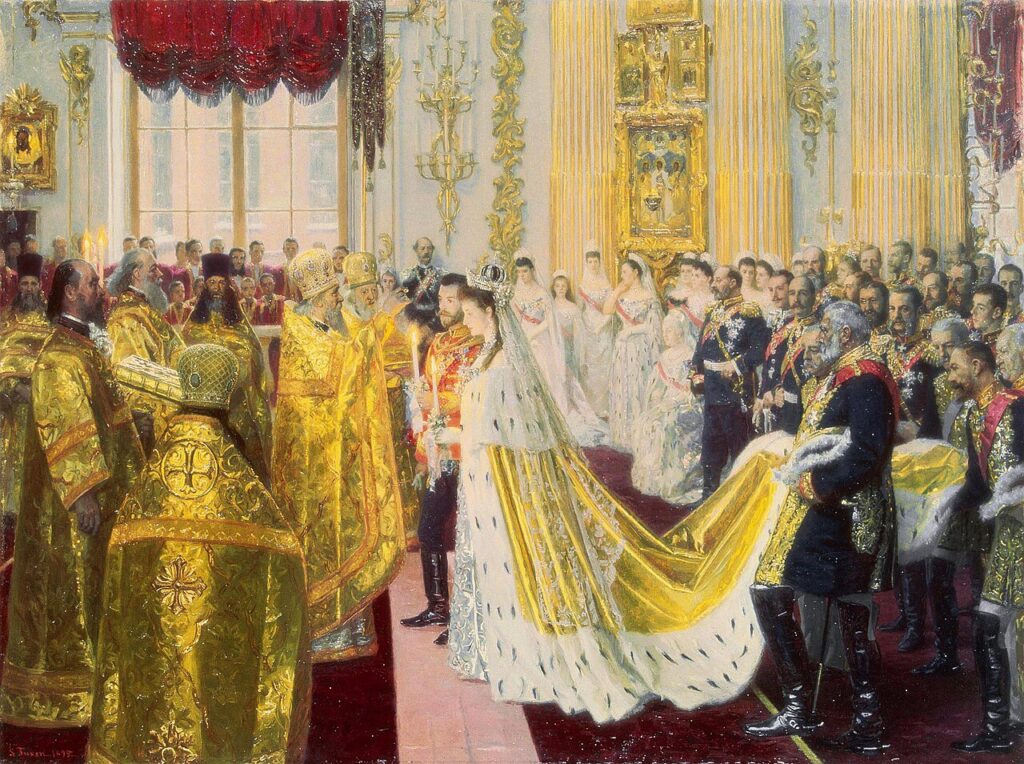
However, their marriage faced serious opposition. Russian society and the imperial court were skeptical of a German princess, and religious differences posed another obstacle. To marry Nicholas, Alix converted to Orthodoxy and took the name Alexandra Feodorovna—an act of personal sacrifice and devotion.
Their wedding in 1894 took place under somber circumstances—shortly after the death of Nicholas’s father, Emperor Alexander III. This cast a shadow over the beginning of their marriage, almost foreshadowing future tragedy.
A Difficult Role as Empress
From the very beginning, Alexandra struggled to win the affection of the Russian people. Her reserved personality, lack of public charm, and foreign origins made her a subject of suspicion.
Rather than adapting to her public role, she withdrew further. Alexandra disliked social life, balls, and political intrigue. She preferred solitude and the company of her family, which only deepened her isolation from society.
This distance was often interpreted as coldness, arrogance, or even disdain for the Russian people—something that seriously damaged her public image.
Motherhood and the Curse of Hemophilia
After giving birth to four daughters, Alexandra finally provided the empire with a male heir—Alexei. However, joy quickly turned to despair when it became clear that the boy suffered from hemophilia.
This condition turned the family’s life into a constant state of fear. Every fall, every bruise could be fatal. Alexandra lived in continuous anxiety, watching her son suffer.
This is key to understanding many of her later decisions. She became a desperate mother, willing to seek help anywhere—even where reason gave way to faith.
Rasputin: Savior or Destroyer
At this critical moment, Grigori Rasputin entered their lives—a mystic who seemed able to ease Alexei’s suffering. To Alexandra, this appeared miraculous.
She came to believe Rasputin had been sent by God. Her trust in him became absolute. He gained access to the highest levels of power, and his influence over the empress became unmistakable.
Public reaction was fierce. Rumors, scandals, and accusations spread rapidly. Rasputin became a symbol of moral decay and political corruption. In the eyes of many, Alexandra herself was responsible for his rise.
This significantly contributed to the discrediting of the monarchy.
World War I and Political Crisis
When World War I began, the situation worsened dramatically. Nicholas II left for the front, leaving Alexandra in charge of domestic affairs.
This decision proved disastrous. Her lack of political experience, combined with Rasputin’s influence, led to instability. Frequent ministerial changes and poor decisions deepened the crisis.
Her German origin further fueled suspicion. In a war against Germany, she was often—though unfairly—accused of sympathizing with the enemy.
The Fall of the Monarchy
In 1917, unrest erupted into open revolution. The empire collapsed, and Nicholas II was forced to abdicate. Alexandra lost not only her power, but the entire world she had known.
The family was placed under arrest. For her, this was the end of everything—not just politically, but personally.
The Final Months
In captivity, Alexandra remained devoted to her faith. She continued to pray, support her children, and maintain order and calm within the family.
Despite harsh conditions, she did not lose her sense of duty. Until the very end, she believed everything was part of God’s plan.
The End
On the night of July 17, 1918, Alexandra stood beside her husband and children. According to accounts, she made the sign of the cross in her final moments.
It was an ending both brutal and symbolic—the end of a dynasty, but also the conclusion of a deeply personal tragedy.
Conclusion
Empress Alexandra Feodorovna remains one of the most complex figures in history. She was neither simply “guilty” nor “innocent”—but a human being placed in extraordinary circumstances that demanded qualities she did not possess.
Her story is a lesson in how personal weaknesses, when combined with historical upheaval, can lead to irreversible consequences.
But above all, it is the story of a woman—a wife, a mother, and a believer—who remained devoted to her family until the very end.
Вашият коментар