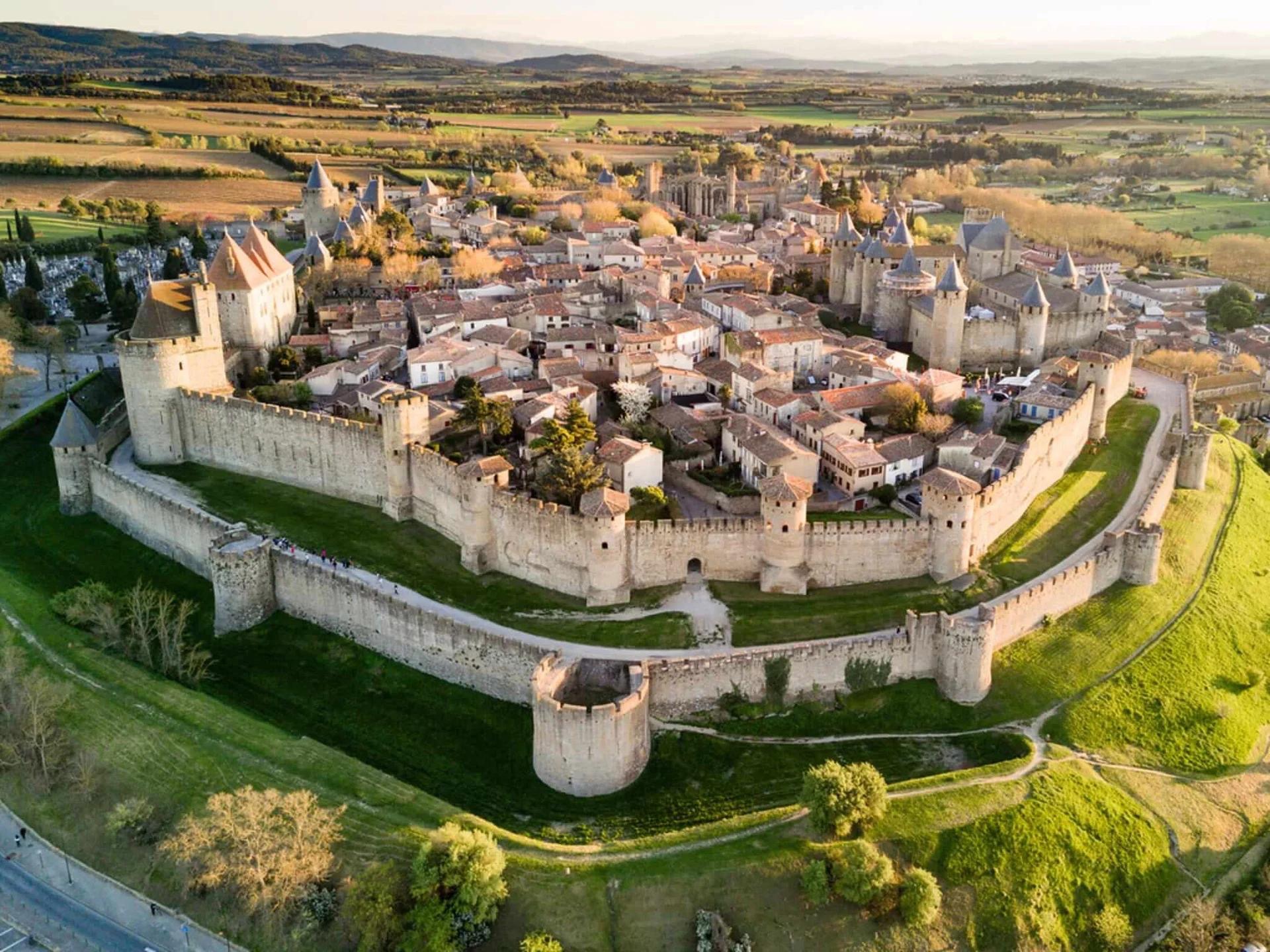
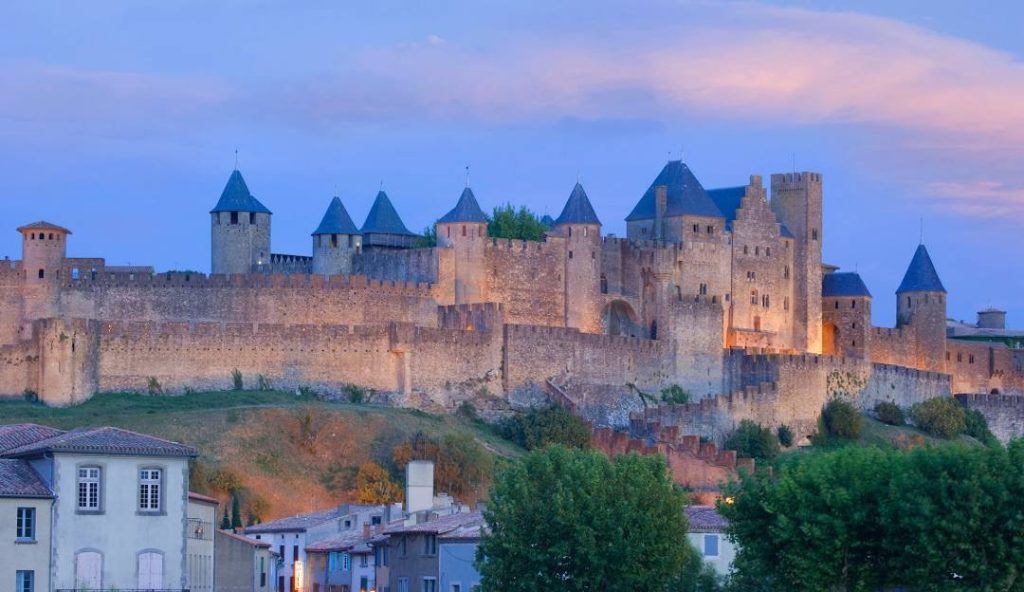
Rising above the plains of southern France, surrounded by massive stone walls and dozens of towering watchtowers, Carcassonne looks less like a real city and more like something from a medieval legend. Its enormous double fortifications, narrow cobbled streets, and imposing castle have inspired writers, artists, filmmakers, and millions of visitors from around the world. Yet behind its fairy-tale appearance lies a history stretching back more than two thousand years—a history of Roman soldiers, Visigothic kings, Muslim armies, crusaders, religious persecution, French monarchs, and one of the greatest architectural restorations ever undertaken.
Today, the Cité de Carcassonne is one of Europe’s best-preserved medieval fortresses and a UNESCO World Heritage Site. But its survival was never guaranteed. More than once, the city stood on the edge of destruction before determined individuals fought to preserve it for future generations.
Before the Fortress
Long before stone walls surrounded the hill, people had already recognized the importance of this location. Archaeological evidence shows that the area around Carcassonne has been inhabited since the Neolithic period. Positioned between the Atlantic Ocean and the Mediterranean Sea and lying near routes leading toward the Pyrenees, it naturally became a crossroads for trade and communication.
By the sixth century BC, the Celtic tribe known as the Volcae Tectosages had established a fortified settlement, or oppidum, on the hill. Known as Carsac, it controlled important commercial routes across southern Gaul and prospered through trade long before the arrival of Rome.
Rome Builds a Fortress
Around 122 BC, Roman influence expanded into southern Gaul. Recognizing the strategic value of the hilltop settlement, the Romans gradually incorporated it into their growing empire. Around the first century BC, they transformed the site into a heavily fortified colony known as Julia Carsaco, strengthening its defenses with thick stone walls that would later become the foundation of the medieval fortress.
Unlike many Roman towns that disappeared after the fall of the Empire, Carcassonne survived because of these extraordinary fortifications. Even today, visitors can still identify sections of the original Gallo-Roman walls by their distinctive layers of red brick alternating with carefully cut stone—construction techniques used nearly two thousand years ago.
The Romans understood that whoever controlled Carcassonne controlled one of the most important gateways between northern Europe and the Iberian Peninsula. This strategic importance would shape the city’s destiny for centuries.
The Visigoths and a New Kingdom
As the Western Roman Empire collapsed during the fifth century, control of southern Gaul passed to the Visigoths. Rather than destroying the Roman city, they expanded and strengthened its defenses, making Carcassonne one of the principal strongholds of their kingdom in Septimania.
The Visigoths constructed churches, reinforced the existing walls, and transformed the Roman military outpost into an important political center. One of their earliest religious foundations eventually became the Basilica of Saints Nazarius and Celsus, which still dominates the skyline today.
For several generations, Carcassonne stood at the frontier between the shrinking Roman world and the emerging medieval kingdoms of Western Europe.
Saracens, Franks, and the Legend of Dame Carcas
The eighth century brought another dramatic chapter. Muslim armies advancing across the Iberian Peninsula crossed the Pyrenees and captured much of Septimania, including Carcassonne. Their rule, however, proved relatively brief. In 759, the forces of Pepin the Short, father of Charlemagne, reconquered the region and incorporated it into the expanding Frankish Kingdom.
No story connected with Carcassonne is more famous than the legend of Dame Carcas.
According to medieval tradition, during a long Frankish siege the city had almost exhausted its food supplies. Dame Carcas, the widow of a Muslim prince, ordered the last remaining pig to be fattened with the city’s final sack of wheat before throwing it over the walls. Believing the defenders still possessed enormous food reserves, the besieging army supposedly abandoned the siege. To celebrate the victory, the city’s bells rang loudly, giving birth to the name „Carcas sonne“—“Carcas rings.“
It is a wonderful story, but historians agree that it is a legend rather than historical fact. The city’s name existed centuries before the tale appeared, and the legend likely developed during the Renaissance. Nevertheless, Dame Carcas remains one of Carcassonne’s most beloved symbols, welcoming visitors near the Narbonne Gate today.
The Trencavel Dynasty and the Golden Age of Carcassonne
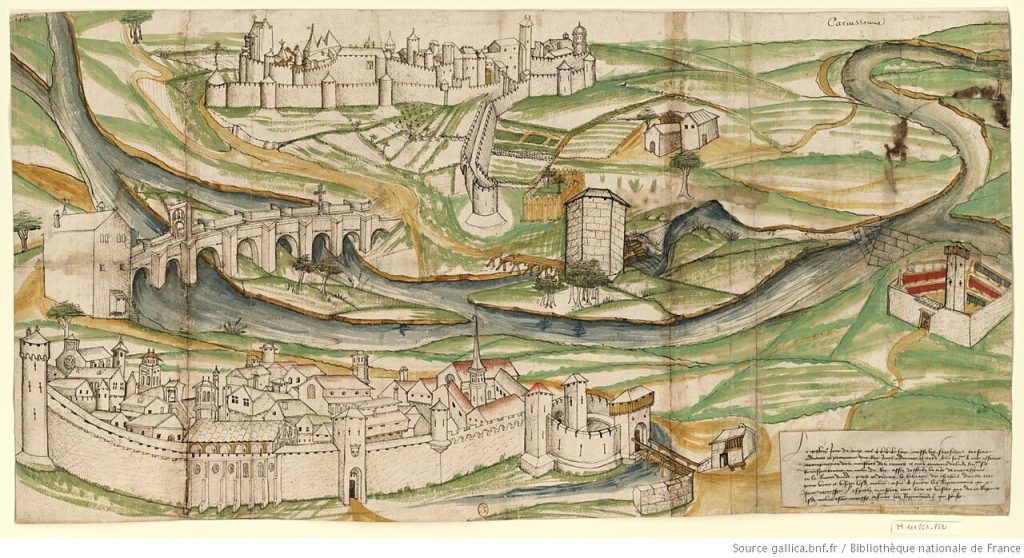
By the eleventh century, Carcassonne had become one of the most important strongholds in southern France. Control of the city passed to the powerful Trencavel family, whose influence stretched across much of the Languedoc region. Through marriage, diplomacy, and military alliances, the Trencavels transformed Carcassonne into both a political capital and a cultural center.
Their greatest achievement was the construction of the Château Comtal, the Count’s Castle, within the fortified city. Unlike ordinary medieval castles, it was designed as a fortress inside another fortress. Even if an enemy breached the city’s walls, defenders could retreat into the castle and continue resisting. Massive towers, deep ditches, drawbridges, and multiple defensive gates made it one of the strongest fortifications in medieval Europe.
At the same time, Carcassonne flourished economically. Merchants brought wine, wool, spices, metals, and luxury goods from across Europe and the Mediterranean. Its strategic position between Toulouse, Narbonne, and the Pyrenees made it a prosperous commercial center where cultures and ideas met.
The city also became famous for its vibrant intellectual life. Troubadours—poets and musicians of Occitania—performed in noble courts, celebrating chivalry, honor, and courtly love. Their influence spread across medieval Europe and helped shape the ideals of knighthood that later appeared in literature and legend.
Yet beneath this prosperity, religious tensions were growing.
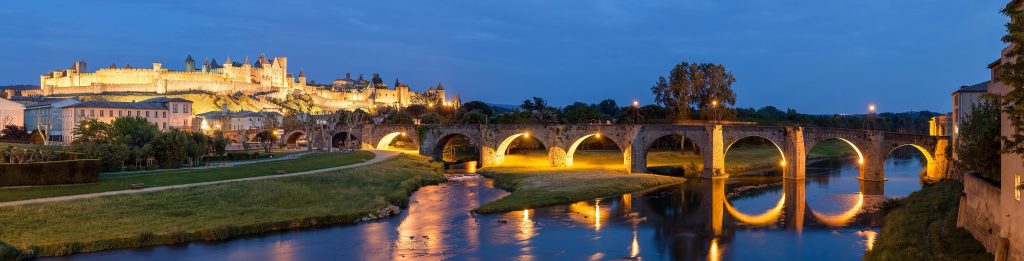
The Cathars and the Albigensian Crusade
During the twelfth century, a Christian movement known as the Cathars gained thousands of followers across southern France. They believed the material world was corrupt and rejected many teachings and practices of the Catholic Church. Because of these beliefs, the Church declared them heretics.
Unlike many rulers elsewhere in Europe, Raymond-Roger Trencavel, Viscount of Carcassonne, did not persecute the Cathars. Although he himself remained Catholic, he protected many of his subjects regardless of their faith. This policy made Carcassonne one of the most important Cathar strongholds.
Pope Innocent III considered the movement a serious threat. In 1209, after peaceful attempts to suppress Catharism failed, he called for what became known as the Albigensian Crusade—a military campaign against fellow Christians in southern France.
Thousands of crusaders from northern France marched south under the banner of the Cross. Their first major objective was Carcassonne.
The Fifteen-Day Siege
In August 1209, the crusading army surrounded Carcassonne. Refugees from nearby villages crowded inside the city, dramatically increasing the population while placing enormous pressure on food and water supplies.
Despite its impressive walls, Carcassonne faced one critical weakness: its principal water sources lay outside the fortifications. As the siege continued, drinking water became increasingly scarce.
Raymond-Roger Trencavel attempted to negotiate with the crusaders, hoping to spare his people from massacre. Instead, he was seized during the negotiations, imprisoned inside his own castle, and died only a few months later under mysterious circumstances. Many contemporaries suspected murder, although historians have never determined the exact cause of his death. He was only twenty-four years old.
Without their leader, the defenders had little choice but to surrender.
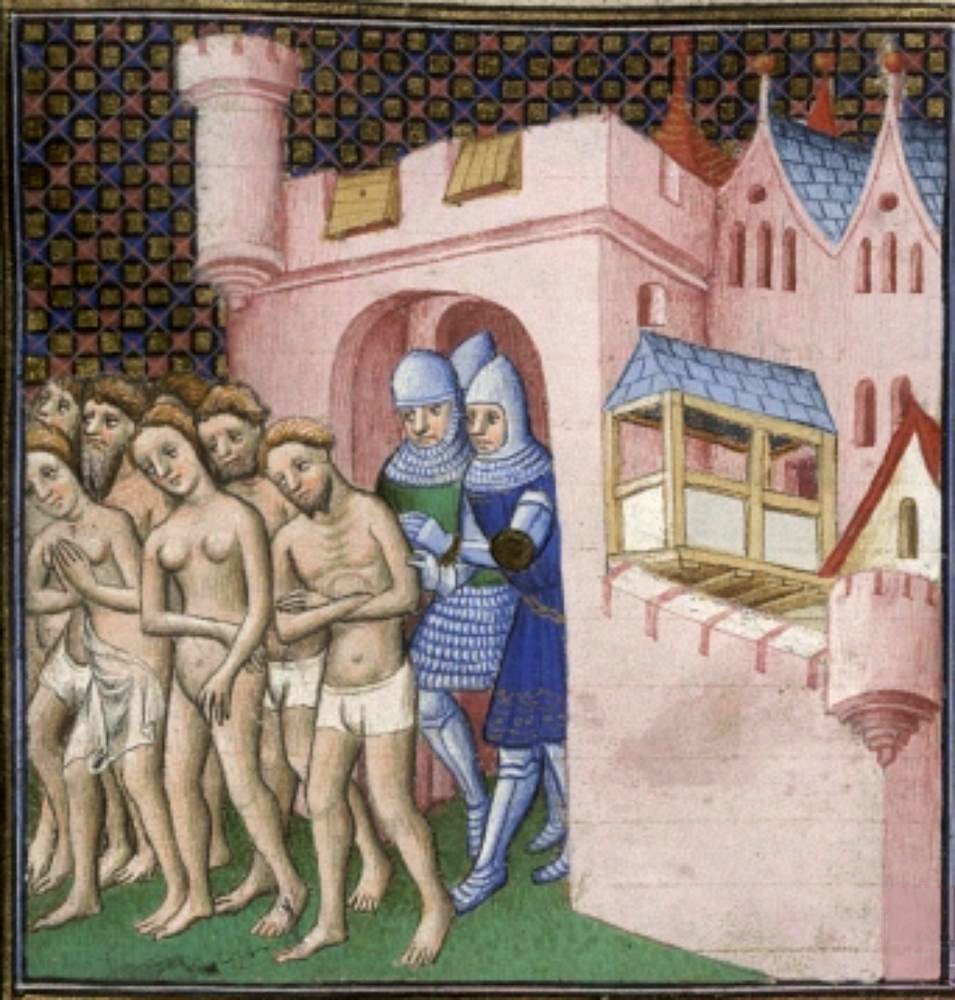
Unlike the brutal massacre that had occurred earlier that year at Béziers, the inhabitants of Carcassonne were allowed to leave the city alive. However, they were expelled with almost nothing, forced to abandon their homes, businesses, and possessions. According to medieval chroniclers, many departed wearing only the clothes on their backs.
The victory fundamentally changed the history of southern France.
Simon de Montfort and the Royal Fortress
After the conquest, leadership of Carcassonne passed to Simon de Montfort, the military commander who had led the crusade. Under his rule, and later under the French Crown, the city became one of the kingdom’s most important frontier fortresses.
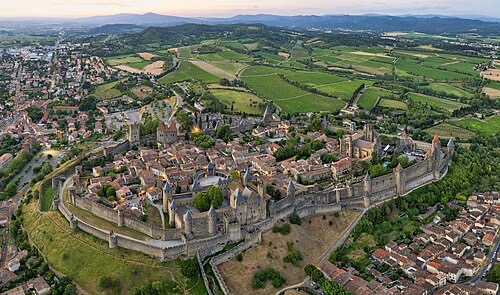
When the Treaty of Corbeil established the frontier between France and the Crown of Aragon in 1258, Carcassonne found itself guarding one of the kingdom’s most sensitive borders. French kings invested heavily in strengthening its defenses. New outer walls were constructed beyond the original Roman fortifications, creating the remarkable double-ring defensive system that survives today.
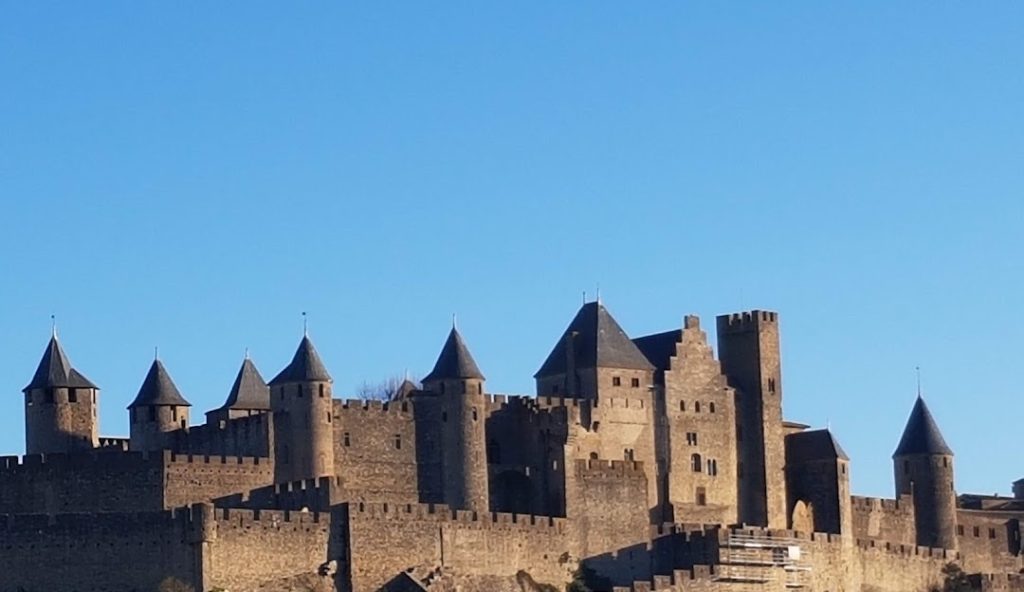
The fortress eventually stretched for nearly three kilometers and was protected by 52 towers, numerous gates, barbicans, and carefully designed killing zones where attacking armies could be trapped between two massive walls. At the time, military engineers considered Carcassonne virtually impregnable.
The Hundred Years’ War and the Fortress That Never Fell
During the fourteenth century, Europe was engulfed by the Hundred Years’ War, a conflict that would reshape the political landscape of France and England. Many great castles and fortified towns fell during the fighting, but Carcassonne proved to be one of the kingdom’s strongest defensive positions.
In 1355, Edward the Black Prince, one of England’s greatest military commanders, swept through southern France with his army. His campaign devastated countless towns and villages across the Languedoc. Although his forces burned much of the lower town outside the walls, they never succeeded in capturing the fortified Cité itself. The massive double walls, towering gates, and carefully designed defensive system once again demonstrated why Carcassonne had earned its reputation as one of Europe’s greatest fortresses.
For centuries, the fortress had fulfilled exactly the purpose for which it had been built.
From Mighty Fortress to Forgotten City
Ironically, Carcassonne’s decline did not come through conquest but through peace.
In 1659, France and Spain signed the Treaty of the Pyrenees, moving the frontier far to the south. Overnight, Carcassonne lost the strategic importance it had held for nearly a thousand years. No longer guarding a dangerous border, the great fortress became unnecessary.
Military technology had also changed dramatically. Powerful cannons could now destroy medieval walls that had once seemed invincible. Maintaining such enormous fortifications was expensive, and the French Crown gradually abandoned them.
Life slowly shifted to the Ville Basse, or Lower Town, built across the River Aude. Merchants, craftsmen, and wealthy families preferred the newer district, where trade expanded and industries such as textile manufacturing flourished. The medieval citadel, meanwhile, became increasingly poor. Families built houses directly against the ancient walls, stones were removed from abandoned structures for new construction, and many towers fell into disrepair.
By the early nineteenth century, Carcassonne’s glorious past seemed destined to disappear forever.
The Battle to Save Carcassonne
In 1849, the French government reached a shocking conclusion: restoring the decaying fortress would cost too much. Officials proposed demolishing large sections of the medieval walls altogether.
Fortunately, several influential voices refused to let that happen.
Local historian Jean-Pierre Cros-Mayrevieille tirelessly campaigned to protect the fortress, while the celebrated writer and Inspector of Historic Monuments Prosper Mérimée convinced the French government that Carcassonne represented one of the nation’s greatest architectural treasures. Their efforts succeeded in preventing demolition.
In 1853, restoration work began under the direction of the famous architect Eugène Viollet-le-Duc, whose ambitious vision transformed the ruined fortress into the spectacular monument seen today. He carefully reinforced collapsing walls, rebuilt damaged towers, restored the Château Comtal, and reconstructed many sections using historical drawings and archaeological evidence. After his death in 1879, his student Paul Boeswillwald continued the project.
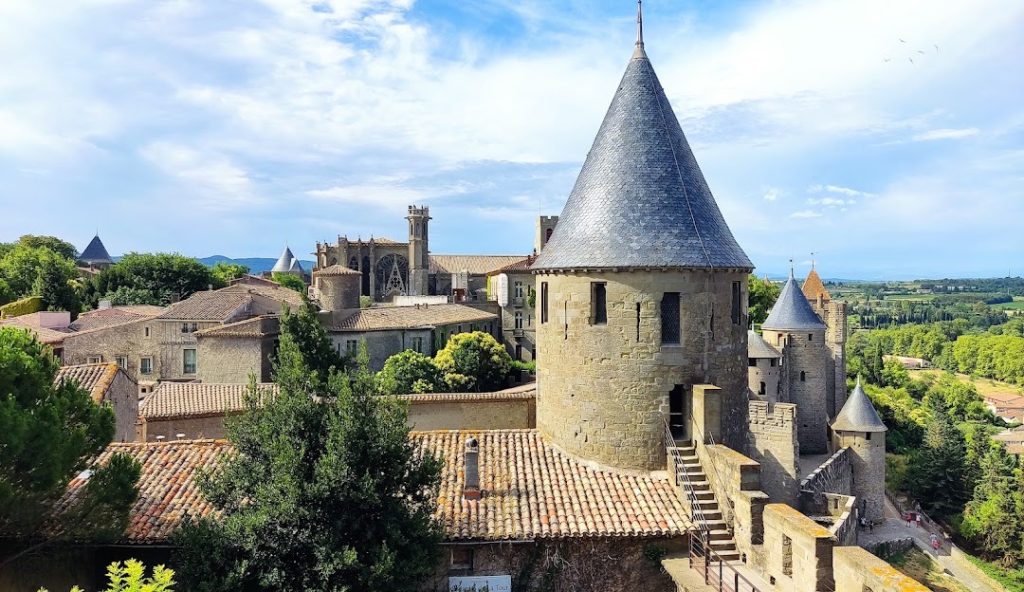
Not everyone agreed with Viollet-le-Duc’s methods. Critics argued that some details—particularly the pointed slate roofs added to many towers—reflected northern French architecture rather than the traditional terracotta roofs of southern France. The debate continues among historians and conservation specialists today. Nevertheless, without his work, much of Carcassonne would almost certainly have been lost forever.
Carcassonne Today
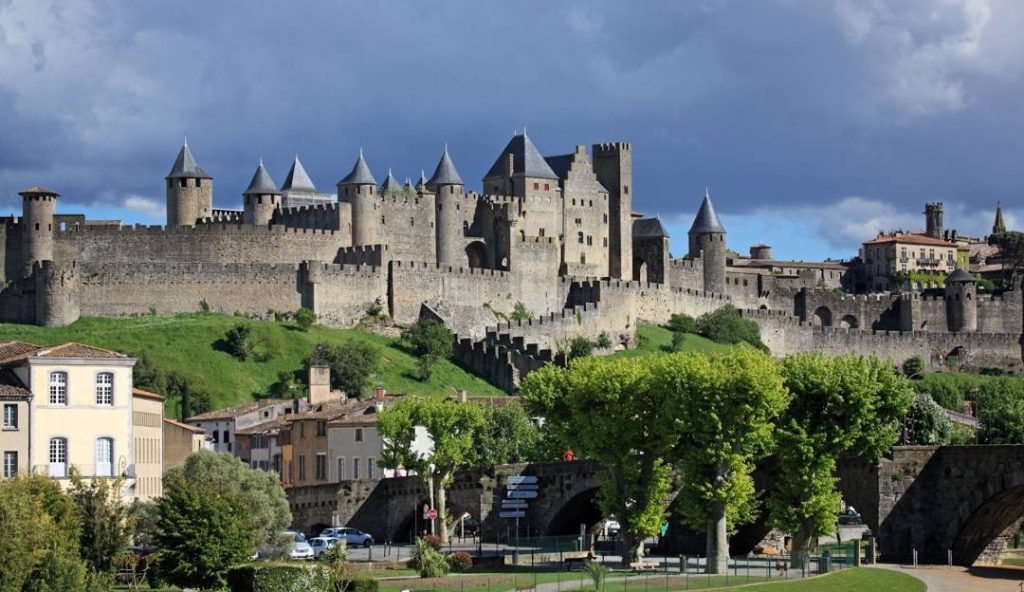
Today, the Cité de Carcassonne is one of the most spectacular surviving medieval fortresses anywhere in the world. Surrounded by nearly three kilometers (1.9 miles) of defensive walls, protected by 52 towers, barbicans, gates, and the Château Comtal, it represents the largest and best-preserved fortified medieval city in Europe. Walking through its gates is like stepping back into the Middle Ages.
The city was recognized internationally in 1997, when UNESCO inscribed the Cité de Carcassonne on the World Heritage List. UNESCO praised not only the exceptional preservation of the fortress itself but also the remarkable nineteenth-century restoration that saved one of Europe’s greatest medieval monuments from destruction.
Today, more than three million visitors explore Carcassonne every year. They walk across the drawbridge into the Château Comtal, climb the ancient ramparts, visit the Basilica of Saints Nazarius and Celsus, and wander through the narrow streets that once echoed with the footsteps of Roman soldiers, Visigothic nobles, Cathar believers, crusaders, and French kings. Tourism has become one of the city’s most important industries, ensuring that the fortress remains carefully protected for future generations.
Although modern cafés, restaurants, and small shops now occupy many of the medieval buildings, the fortress has retained its extraordinary atmosphere. Few places in Europe allow visitors to experience medieval military architecture on such a grand scale while still preserving so much of its original layout.
Legacy
Carcassonne is far more than a beautiful fortress. It is a monument to more than two thousand years of European history.
Its walls witnessed the rise and fall of the Roman Empire, the rule of the Visigoths, the advance of Muslim armies into Western Europe, the expansion of the Frankish Kingdom, the flowering of Occitan culture, the tragedy of the Cathars, the ambitions of French kings, and the changing nature of medieval warfare. Few cities on the continent can tell such a continuous and dramatic story.
Equally remarkable is Carcassonne’s survival. Had nineteenth-century officials succeeded in their original plans, much of the fortress would have been demolished, and one of Europe’s greatest medieval landmarks would exist today only in paintings and written descriptions. Instead, thanks to the determination of historians, writers, architects, and preservationists, the city became one of the world’s greatest examples of historic conservation.
Today, Carcassonne stands as a symbol of medieval Europe at its most magnificent. Its soaring towers, massive stone walls, and winding streets continue to remind visitors that history is not merely preserved in books—it can still be walked, explored, and experienced. More than two thousand years after the first settlers chose this strategic hilltop, Carcassonne remains one of the world’s most extraordinary fortified cities, a place where every stone tells the story of civilizations that shaped Europe itself.
Вашият коментар